Why Don't Drone Batteries Last Long? A Troubleshooting Guide for Beginners
Why don't drone batteries last long? Discover practical troubleshooting steps, health checks, and safety tips to extend flight time for beginners, including charging, storage, and in-flight usage.


Why don't drone batteries last long? The quick answer is high current draw, aging cells, and harsh conditions that shorten flight time. If you’re asking this, start by reducing payload and flight distance, then verify your charger and monitor battery health. This guide breaks down symptoms, causes, and practical fixes to extend flight time safely.
Understanding Battery Drain in Drones
Drone batteries drain quickly for a few broad reasons. Flight requires high current to turn motors, stabilize the frame, and run sensors and video transmitters; even modest payloads increase current draw. Battery chemistry isn’t ideal after repeated cycles; LiPo cells lose capacity and voltage sag as they age, which reduces available flight time. Temperature and storage conditions also affect performance: cold weather slows chemical reactions, while charging at extreme temperatures can degrade cells. According to Beginner Drone Guide, understanding these factors helps you diagnose why your flights feel short and what you can do right away to improve endurance. In practice, most beginners notice the biggest gains by adjusting how they fly, what they carry, and how they charge and store their batteries.
What Drains Battery Time Most: Key Culprits
The biggest culprits tend to be the most visible: payload weight, motor load, and how aggressively you fly. Heavier payloads demand more current, while rapid accelerations, climbs, and sustained high throttle consume power faster. Wind, altitude, and maneuvering patterns also contribute to faster battery depletion. Simple habits, like leaving video transmission on during long descents or keeping the drone in high-power hover, can shave precious minutes. Start by trimming unnecessary payload, planning efficient routes, and using conservative throttle settings to see immediate gains.
Battery Chemistry and How It Impacts Longevity
Batteries in drones are typically LiPo cells designed for fast discharge. With every charge-discharge cycle, capacity and effective voltage decline a little, so a battery that started with a long flight time will gradually degrade. The internal resistance of aging cells also increases, causing more energy to be lost as heat during flight. While you can't reverse aging, you can slow its impact by avoiding deep discharges, using proper chargers, and storing batteries at a safe voltage. Understanding these fundamentals helps you set realistic expectations and prioritize maintenance actions.
Flying Habits That Hurt Battery Life
Aggressive acceleration, frequent rapid climbs, and repeated quick directional changes demand bursts of power that drain the pack quickly. Hovering at a high throttle to manage camera gimbals or transmitters also wastes energy. Flying with a heavy GPS lock, high wind exposure, or in return-to-home mode increases energy use. By adopting smoother throttle control, planned flight paths, and efficient camera operation, you can noticeably extend your flight time without sacrificing results.
Charging Practice: How to Charge for Longevity
Charging habits determine how much usable life your battery retains. Use a high-quality charger that supports balance charging and follows the manufacturer’s recommendations for charging voltage per cell. Avoid charging in extreme temperatures or leaving batteries on chargers unattended for long periods. If you’re not flying soon, consider a storage charge around 3.8V per cell. Regularly balance charges help keep cells even, reducing the risk of one cell dragging down the entire pack.
Storage and Temperature Effects
Store batteries in a cool, dry place away from direct sunlight and heat sources. Temperature extremes accelerate chemical aging and can cause swelling or reduced capacity. Before long storage, discharge to a safe storage level and check for any physical signs of damage. When you fly, avoid exposing batteries to direct sun on hot days and don’t leave a charging battery in your car where temperatures spike. Consistent storage and transport practices pay off with longer usable life.
How to Test Battery Health Without Special Tools
Beginner-friendly checks include observing voltage readings during charge, noting how quickly voltage drops under load, and comparing expected flight times with actual performance. If your drone shows signs of voltage sag during modest maneuvers, or your flights feel dramatically shorter than usual, it’s worth inspecting for swelling, puffing, or damaged connectors. While professional testing equipment provides precise data, honest field observations and careful visual checks are a solid starting point for beginners.
Step-by-Step Fixes You Can Try This Weekend
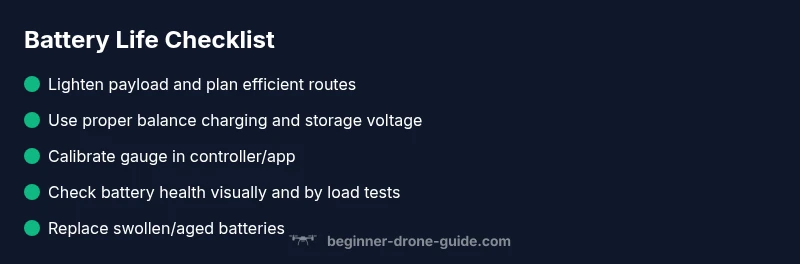
If you’re racing against a short flight time, try these fixes in order: 1) Lighten the payload by removing nonessential gear; 2) Switch to a calibrated charger and perform a balance charge; 3) Check battery health visually and with basic load tests; 4) Recalibrate the battery gauge in the controller; 5) Practice smoother, more efficient flight patterns; 6) Replace any swollen or aged batteries. You’ll often see immediate benefits from these low-risk adjustments.
Real-World Scenarios and Solutions
In practice, most pilots see improvements by addressing the top three factors: payload, charging practices, and flight technique. A drone used for basic aerial shots benefits from a lighter setup and slower, steadier flights to maximize endurance. For FPV or heavy-use drones, investing in fresh batteries and a capable charger, paired with careful flight planning, provides the best long-term gains. Real-world results come from consistent maintenance and mindful operation rather than dramatic one-off fixes.
Steps
Estimated time: 25-40 minutes
- 1
Inspect the battery for damage or swelling
Powerful indicators of trouble include swelling, a puffy appearance, or obvious damage to the casing. Inspect connectors and the pack’s wrap. If you see swelling, discontinue use immediately and replace the battery. This quick check can prevent safety hazards.
Tip: Always handle swollen packs with dry hands and store them in a fire-safe container until disposal. - 2
Check charger and storage conditions
Use a charger that matches the battery chemistry and cell count. Ensure storage voltage is appropriate if you won’t fly soon. Avoid charging in extremes of temperature and never leave charging batteries unattended for extended periods.
Tip: When in doubt, re-check the charger’s balance function and verify individual cell balance during a full charge. - 3
Run a quick flight-log sanity check
Review recent flight logs for unusual power draw, long hover times, or aggressive maneuvers. Note any changes in flight performance after updates or accessory additions. This helps isolate whether the issue is use-related or a battery problem.
Tip: Compare current flight times to baseline measurements you recorded when the battery was healthy. - 4
Mitigate load and optimize flight
Reduce nonessential payload and adjust flight paths to minimize peak throttle. Use efficient maneuvers, maintain steady speed, and avoid unnecessary hovering. These changes can yield noticeable flight-time gains with minimal cost.
Tip: Plan routes with airtime in mind; smoother, slower climbs are energy savers. - 5
Calibrate and test battery gauge
Recalibrate the battery gauge in your transmitter or app if readings seem off. Inaccurate voltage readings can lead you to misjudge remaining life."
Tip: A fresh calibration helps prevent unexpected power-downs mid-flight. - 6
Decide on replacement or professional check
If the battery still underperforms after fixes, replace with a new pack or have the battery professionally tested. Safety first—don’t push a failing pack to perform.
Tip: Do not mix old and new cells in a pack; dispose of damaged cells per local regulations.
Diagnosis: Drone battery drains quickly during flight, even with light payload
Possible Causes
- highAging battery cells and reduced capacity
- mediumIncreased power draw from heavy payload or aggressive flight
- mediumCharger or storage voltage issues
- lowExtreme temperatures affecting chemistry
- lowFirmware power management or accessories increasing draw
Fixes
- easyPerform a full health check with the manufacturer’s recommended procedure
- easyStore batteries at storage voltage (around 3.8V per cell) when not flying for extended periods
- easyCalibrate the battery gauge in the controller/flight app
- easyBalance-charge with a high-quality charger and inspect for swelling or damage
- easyReduce payload and optimize flight plan to lower peak power draw
- easyReplace worn-out or swollen batteries
Frequently Asked Questions
Why do drone batteries drain faster in hot or cold weather?
Extreme temperatures accelerate chemical reactions and can reduce voltage stability, leading to perceived faster drain. Always fly within the recommended temperature range and allow batteries to warm up to near ambient before use in cold weather.
Extreme temperatures can shorten battery life. Fly within the recommended range and let batteries acclimate before use.
Is it safe to discharge LiPo batteries fully to test capacity?
Full discharge of LiPo batteries can harm cells and increase fire risk. Use manufacturer-recommended testing methods and avoid deep discharges.
Never fully discharge LiPo batteries; use safe testing methods and follow manufacturer guidelines.
How can I tell if my battery needs replacement?
Look for swelling, loss of capacity, rapid voltage sag, or reduced flight time despite proper charging. If symptoms persist after maintenance steps, replace the battery.
Watch for swelling or rapid power loss—these indicate a replacement is likely needed.
Do higher discharge batteries improve flight time?
Using batteries with a higher discharge rating does not automatically boost flight time. Choose batteries compatible with your drone’s power needs and avoid over-specifying to prevent safety risks.
Higher discharge alone doesn’t guarantee longer flight time; ensure compatibility and safety.
What simple habit yields the biggest gains in endurance?
Reducing payload and planning efficient flight routes often deliver the most noticeable improvements in endurance without extra cost.
Lighten the load and fly smarter for big gains in endurance.
Should I always balance-charge my LiPo packs?
Balance charging helps equalize cell voltages and prolongs life, especially after multiple cycles. Use a charger with a proper balance function.
Balance charging helps keep cells even and extend pack life.
Watch Video
Quick Summary
- Assess and fix load before buying new batteries
- Use proper charging and storage to extend life
- Calibrate gauges and monitor health consistently
- Replace worn or swollen packs to maintain safety and performance