Who Do You Register a Drone With: A Beginner's Guide to Registration
Learn who to register a drone with, the documents you need, and the steps to complete registration. This beginner-friendly guide from Beginner Drone Guide covers licensing, regulations, and practical steps for safe, legal flying.


You register a drone with the appropriate aviation authority or agency for your country, not with the drone manufacturer. The exact process varies by region, but most beginners create an online account, provide basic ownership details, and pay any required fees. This guide walks you through who to contact, what documents you’ll typically need, and how to complete the registration so you can fly legally and safely.
Why registering a drone matters
Registration matters because it formalizes your responsibility as a pilot and helps airspace managers track who owns which aircraft. In many jurisdictions, flying without registration can lead to fines, flight restrictions, or denied insurance claims. For beginners, registration is more than a legality; it’s a foundation for safe, predictable flights, especially in populated areas or near airports. According to Beginner Drone Guide, early registration is a sign of responsible piloting and a prerequisite for many common flying scenarios. When you register, you create an official link between you and your drone that stays with it through ownership changes, upgrades, and potential service issues. This simple step also opens doors to tools and resources—like official safety reminders and maintenance records—that support steady progress as you learn to fly. If you plan to fly commercially or in regulated airspace, you’ll likely encounter additional licensing steps, but registration remains the first and most critical baseline. The broader message from the Beginner Drone Guide team is clear: start with proper registration, and you’ll avoid many avoidable headaches later.
Who you register with (by region)
Airspace governance is typically organized around national or regional authorities. In the United States, the FAA oversees drone registrations and issues numbers that must be displayed on the aircraft. In Canada, Transport Canada manages drone registrations and pilot certifications, while in the United Kingdom the Civil Aviation Authority provides guidance and licensing pathways. In the European Union, regulatory oversight falls to the coordinating bodies under EASA rules, with country-specific implementations. Outside these regions, most countries have a single aviation authority or a designated department responsible for UAV registration and operator rules. The common thread is that you register with a designated authority, not with a drone brand or retailer. Beginner Drone Guide analysis shows that many new pilots misinterpret which agency applies to them, especially when they travel or use drones across borders. Always verify with your local authority’s official site before attempting registration.
Required documents and information
The typical package includes proof of ownership (receipt or bill of sale), the drone’s serial number and model, an identification document (driver’s license, passport), and contact information for the owner. You’ll usually need a name, physical address, email, and a phone number as part of the profile. Some authorities require proof that the drone is yours (e.g., a purchase receipt) and details about the drone’s weight category or intended use. In many cases you’ll also need to provide a brief description of how you plan to use the drone (recreational, educational, or commercial). It’s common to have to upload scans or photos of documents; keep these files ready. Having your drone’s camera, controller, and any accessories on hand helps ensure you’re not scrambling for missing details during the online form. Keeping a digital copy of proof of ownership and your registration receipt is a smart habit for future reference.
Regional differences and common pitfalls
Though the core idea is universal, regional rules differ on thresholds, required certifications, and renewal timelines. A frequent pitfall is assuming the same rules apply everywhere. For example, some regions require registration before the first flight, while others allow a grace period after purchase. Another mistake is neglecting renewals or updating registration when ownership or address changes. Always double-check your regulator’s site for the latest requirements, and be mindful of airspace restrictions and no-fly zones that vary by location. The Beginner Drone Guide Team stresses the importance of thorough record-keeping and timely updates to avoid fines or flight bans. If you travel, research the rules of your destination country or region; some jurisdictions permit temporary registrations for travelers, while others require full enrollment.
How to speed up the process
Prepare by gathering all required documents in advance, including a valid ID, proof of ownership, and drone serial information. Use a device with reliable internet access and complete fields carefully to minimize back-and-forth corrections. Create a dedicated email for registration correspondence so you don’t miss confirmations or renewal reminders. If you’re unsure about a field, consult the regulator’s help portal before submitting. Having digital copies of all documents and a clear scan of your drone’s serial number can dramatically reduce processing time. Finally, budget a small window for potential verification checks; some authorities perform extra identity checks or require additional information.
After registration: what to do next
Once registered, you’ll typically receive a registration number or certificate. Display the number on your drone as required by your authority, or keep the certificate accessible in digital form. Set reminder dates for renewal, if applicable, and update any contact information if you move or change emails. Keep a backup of your registration on a cloud drive or secure storage so you can retrieve it quickly in case of a flight review or insurance claim. If you use your drone commercially, ensure your business records align with regulatory requirements and that you meet any additional licensing needs.
Best practices for beginners to stay compliant
- Always fly within the rules laid out by your regulator and your local airspace.
- Keep your registration up to date and readily accessible during flights.
- Maintain accurate ownership records and proof of insurance if required.
- Plan flights in advance, check for temporary restrictions, and respect no-fly zones.
- Revisit your registration and licensing requirements annually or when you change ownership, use, or location.
- Consider taking a basic safety course to accelerate proficiency and reduce risk. Keeping these habits will help you build confidence and reduce the chance of run-ins with authorities.
Tools & Materials
- Internet-connected device (computer or smartphone)(Ensure a secure connection and a supported browser for regulator portals.)
- Valid government-issued ID(Bring or upload a digital copy and a physical copy if requested.)
- Drone serial number and model information(Locate on the drone body or battery compartment; record exactly as printed.)
- Proof of ownership (receipt or bill of sale)(Needed to prove you own the drone; some authorities accept alternate proofs.)
- Payment method (credit/debit or online wallet)(Fees vary by region and may include a registration or processing charge.)
- Digital copies of all documents(Helpful for quick uploads; store securely in cloud storage.)
Steps
Estimated time: 30-40 minutes
- 1
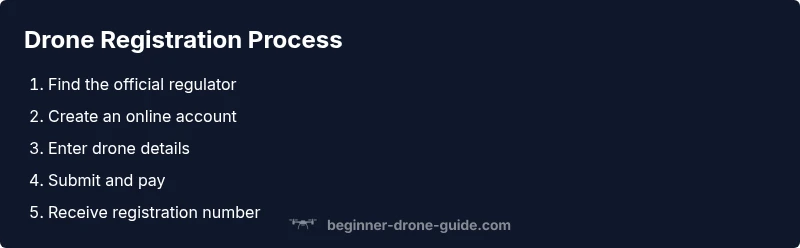
Find the correct registering authority
Identify the official regulator for your country or region. This may be a national aviation authority or a dedicated drone regulator. Start at the regulator's official website to avoid fraudulent portals.
Tip: If you’re unsure, search for your country + drone registration official site and bookmark it. - 2
Create an online account
Register for an online portal if required. Use a strong password and enable two-factor authentication where offered. You’ll use this account to submit drone information and receive confirmations.
Tip: Use a dedicated email for registration to keep messages organized. - 3
Gather required documents
Collect your ID, proof of ownership, drone serial, and any other documents listed by the regulator. Having these ready prevents delays during form filling.
Tip: Scan documents at high quality to avoid blurry uploads. - 4
Enter drone details
Enter exact drone model, serial number, weight category (if requested), and intended use. Double-check for typos before submission to avoid rejected applications.
Tip: Take a photo of the drone’s label for accurate entry. - 5
Submit form and pay fees
Review all information, attach required documents, and submit. Complete the payment using a secure method; keep a receipt or confirmation number.
Tip: Save the confirmation email and take a screenshot of the receipt. - 6
Receive registration number or certificate
You’ll receive a registration ID or certificate, either instantly or by email. Record this information in a safe place.
Tip: If not received promptly, contact regulator’s help desk using the official site. - 7
Print or store digital proof
Keep a digital copy and, if required, print a physical certificate. Ensure the registration number is clearly visible on your drone if mandated.
Tip: Keep a laminated copy in your flying bag for quick access. - 8
Confirm ongoing compliance
Set reminders for renewal, re-registration after changes, and annual checks of airspace rules. Revisit your regulator’s site for updates before each major flight season.
Tip: Add renewal reminders to your calendar at least 30 days before expiry.
Frequently Asked Questions
Do I need to register if my drone is lightweight or used for education?
Registration rules often depend on weight and use. Some regions require registration for any drone, while others set a threshold or limited exceptions for educational use. Always check your regulator’s official guidance.
Some drones may not need registration depending on weight and use; check your regulator’s guidance to be sure.
Can I register my drone ahead of purchasing it?
In most cases you register after purchase to link the drone’s serial number and ownership, though some regulators allow pre-registration of the model or anticipated serial range. Follow the official site instructions.
You generally register after buying to link the drone’s serial number to you.
How long does registration last and when must I renew?
Registration durations vary by country. Some require annual renewals, others extend longer or have no renewal if ownership changes are reported. Check your regulator’s renewal schedule and set reminders.
Renewals depend on your country; mark your calendar for the official renewal period.
Do I need a separate registration for each drone?
Many jurisdictions require each drone to be registered individually, especially if ownership details or use cases differ. Some regions permit a single operator account with multiple drones; verify with your regulator.
Usually each drone needs its own registration, but check local rules.
What documents should I keep after registration?
Keep your registration certificate, the registration number, and proof of ownership. Store digital copies securely and bring proof if requested during a flight or inspection.
Keep your certificate and number handy for flights and checks.
If I move to another country, what should I do?
You typically need to re-register with the new country’s regulator or adjust your existing account if supported. Do not assume rules cross-border automatically; review the destination country’s requirements before flying.
Moving countries usually means re-registering; check the new rules before you fly.
Watch Video
Quick Summary
- Register with the official authority, not a retailer or brand.
- Gather and verify documents before starting the online form.
- Keep registration details accessible during flights.
- Stay aware of regional differences and renewal timelines.
- Practice safe, compliant flying from day one.