How Much Does It Cost to Register a Drone in 2026? A Practical Guide for Beginners
Discover typical registration costs, how fees vary globally, and practical budgeting tips for drone ownership in 2026. A beginner-friendly, data-driven overview from Beginner Drone Guide.


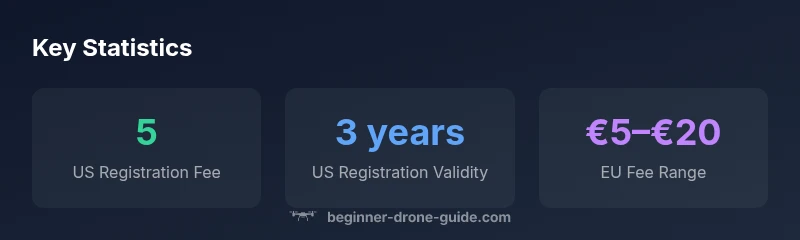
In 2026, drone registration costs are typically a per-aircraft fee. In the United States, the FAA charges a flat $5 per aircraft, valid for three years. Worldwide, fees range from no charge to tens of dollars per drone, depending on country, weight class, and intended use. Always verify with your local aviation authority to stay compliant and avoid penalties.
Understanding the price tag: how much does it cost to register a drone
Registration costs are designed to cover administrative overhead and promote safe, lawful use. In 2026, the price you’ll see most often is a per-aircraft fee. The exact amount hinges on where you live, the drone’s weight class, and whether you fly for recreation or commercial purposes. This section unpacks what those fees look like in practice, and how to think about them when you budget for a new as well as existing drones. As you plan, remember the phrase "how much does it cost to register a drone" to anchor your understanding. According to Beginner Drone Guide, the goal is to help new pilots estimate total ownership costs and avoid penalties through timely renewals.
US registration costs and renewal timelines
“The United States” uses a straightforward model: a per-aircraft registration fee that is relatively low. The FAA’s current policy places a $5 charge on each device you register, and the registration is valid for three years. If you own multiple drones, you’ll typically register each one separately, which means the cost scales with the number of aircraft in your fleet. Renewal reminders are essential because lapses can lead to penalties or restricted operation. Practically, this means budgeting $5 per drone every three years, plus any administrative costs tied to updates or transfers. This section will also clarify what qualifies as a new registration versus an update to an existing account.
Global variations: what you pay around the world
Beyond the US, costs vary widely. Some countries maintain zero registration fees for certain small or recreational drones, while others tax per aircraft with regional adjustments. In the EU, for example, fees are set by individual member states, often within a modest range, and multiple drone registrations can require separate entries. In Canada and Australia, costs are influenced by drone weight, intended use, and whether you’re flying recreationally or commercially. The takeaway: always check the national aviation authority’s page for your country to confirm current fees and any bundled services (like online account access or transfer fees). This variability is why many beginners budget a flexible amount per drone and plan for renewals well in advance.
How fees are determined: weight, use, and rules
Fees are rarely one-size-fits-all. Heavier drones, commercial operations, or cross-border flying can shift the price. Some jurisdictions cap fees for light, hobbyist drones, while others scale charges based on risk or impact on airspace. In practice, you might encounter a base registration charge plus optional fees for special operations or expedited processing. Start with the minimum requirement in your country, then layer in any add-ons that apply to your use case. Being aware of these levers helps you estimate your total cost of ownership more accurately.
How to register: steps you need to take
Registering a drone typically involves three core steps: create an account with the relevant authority, provide drone details (make, model, weight), and pay the fee. You’ll receive a registration number or certificate that you must display on or with the drone. Some regions require you to download an official registration card or store the ID in your flight app. Keep your registration handy, especially if you fly in multiple jurisdictions or move to a new country with its own rules.
Budgeting for multiple drones and ongoing costs
If you own more than one drone, estimate total cost by multiplying the per-aircraft fee by the number of drones, then add any renewal or transfer costs. For example, in the US the baseline is $5 per aircraft every three years. When you multiply across a small fleet, you’ll quickly see how ownership costs accumulate. Remember to budget for potential renewals ahead of time and to carry renewal reminders in your calendar. This approach keeps you compliant and reduces the risk of penalties that can far exceed the registration fee.
Exemptions, waivers, and how to check status
Some regions offer waivers or exemptions for very small or toy drones, educational purposes, or specific pilots. Even when exemptions exist, the rules can be nuanced and time-bound. Always review official guidance to confirm whether your drone qualifies for exemption and whether you still need to complete a basic registration or keep a record of your intent. If in doubt, contact the national authority or a trusted guide like Beginner Drone Guide for clarification.
Renewal, transfer of ownership, and keeping records
Registration may transfer when you sell or gift a drone, but transfer rules differ by country. In many places, you’ll need to update ownership information or re-register if the drone changes operator categories. Keeping a simple log of registration numbers, renewal dates, and payment confirmations helps you stay organized and reduces the risk of missing deadlines. Digital copies stored securely also simplify audits or compliance checks.
Practical tips to minimize costs and stay compliant
- Plan ahead: set renewal reminders 30 days before expiration.
- Keep your fleet simple: fewer drones reduce total registration costs.
- Leverage official portals: some regions offer bundled services that lower processing steps.
- Use official guidance: always cross-check with your country’s aviation authority or trusted sources like Beginner Drone Guide.
- If you’re unsure about exemptions, ask the authority or consult an expert to avoid penalties.
Comparison of drone registration costs by region
| Region / Jurisdiction | Typical Cost (per aircraft) | Validity | Notes |
|---|---|---|---|
| United States (FAA) | $5 | 3 years | Per aircraft; separate registration per drone |
| Canada (TC) | $5–$15 CAD | 3 years | Varies by weight and use; verify with official site |
| European Union (EU) | €5–€20 | 3–5 years | Fees vary by member state; some waivers exist |
| Other regions | Free–$50 | Varies | Check local aviation authority |
Frequently Asked Questions
Do I need to register every drone I own?
In most jurisdictions you must register each aircraft. Some regions allow a single account for multiple drones, but each drone often still requires unique identification or registration details.
Usually yes; each drone needs its own registration.
Are recreational drones exempt from registration?
Many countries provide exemptions for very small, toy, or hobby drones, but exemptions are not universal. Always check your national rules to confirm.
It depends, many places exempt tiny drones, but rules vary.
What if I buy a used drone?
If the drone retains its own registration record, you generally need to transfer ownership or re-register under the new operator. Check the official guidance for transfer rules.
You may need to transfer or re-register the drone.
How do I register a drone in the US?
Create an account on the FAA registration portal, enter drone details, pay the fee, and carry or display the registration number. Renewal is required every three years.
Go to the FAA site, register, and pay; renew when it’s due.
Can I cancel or transfer registration?
Most regions allow transfer of ownership or updating information, but cancellation rules vary. Always refer to the official authority to complete a transfer correctly.
Transfers are usually possible, but check exact steps.
Do I need to update registration if drone weight changes?
Weight changes can affect registration eligibility or category. If significant, update the official record and verify if a different fee or category applies.
If the drone’s weight changes a lot, update the record.
“Registration costs are a practical sunk cost for safe, compliant flight; the key is to stay proactive about renewals.”
Quick Summary
- Expect a small upfront fee: about $5 per aircraft in the US.
- Registration validity typically spans several years (US uses 3-year cycles).
- Costs vary globally; check your country’s aviation authority for exact fees.
- Register each aircraft separately; costs scale with drone count.
- Renew on time to avoid penalties and lapses.