How difficult is the drone license test: a practical guide for beginners
An analytical, beginner-friendly look at how difficult the drone license test is, what it covers, prep strategies, and tips to boost your first-attempt success rate. Based on Beginner Drone Guide Analysis, 2026.


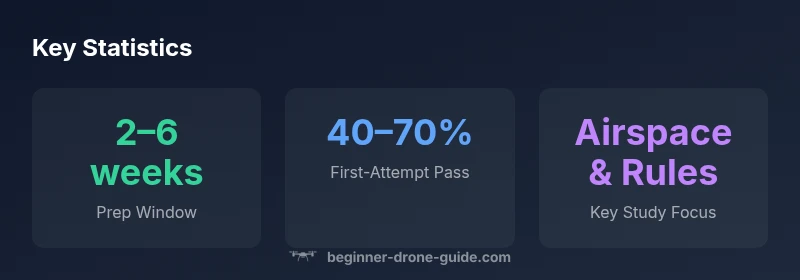
Most first-time test-takers describe the drone license exam as moderately challenging, but approachable with focused study. Core topics include airspace rules, flight operations, weather considerations, and safety procedures. Beginner Drone Guide analysis indicates a typical prep window of about 2–6 weeks, depending on prior experience, with a structured plan boosting confidence for the first attempt. According to Beginner Drone Guide Analysis, 2026, disciplined study improves outcomes.
how difficult is the drone license test
Determining how difficult is the drone license test is a common starting point for aspiring pilots. In practice, most first-time testers describe the exam as moderately challenging but approachable with a focused study plan. The key is to understand the exam's domains—airspace rules, weather considerations, flight operations, and safety procedures—and to relate them to real-world flying scenarios. According to Beginner Drone Guide, well-structured preparation reduces uncertainty and builds confidence before you sit the test. The study journey typically involves a mix of reading, practice questions, and hands-on flight practice; many learners find that applying the rules to actual flight situations makes the material easier to retain. While individual backgrounds vary, a steady pace—commonly two to six weeks of study for a focused learner—helps most beginners progress from familiarity to mastery without feeling overwhelmed. Since the test measures both knowledge and judgment, a practical prep approach that blends theory with simulated decision-making tends to yield better results.
What the test covers
The drone license exam covers a structured set of domains designed to assess knowledge and judgment in real-world flight. Core areas typically include airspace classifications and operating rules, aeronautical charts and flight planning, weather effects and interpretation, regulatory compliance, and safety protocols for preflight checks, maintenance, and emergency procedures. In addition, the test evaluates risk assessment, decision-making under typical flight scenarios, and the ability to apply rules to avoid common hazards such as controlled airspace incursions or crowded events. For beginners, the breadth of topics can feel daunting at first glance, but the material is designed to be learned progressively. Think of it as a map of what you need to know to fly safely and legally, rather than a narrative course you can breeze through in a single weekend. The emphasis on safety and compliance is consistent across jurisdictions, making foundational study worthwhile regardless of where you plan to operate.
How the test is structured
Most drone license tests employ multiple-choice questions and scenario-based items to gauge both recall and applied judgment. The question bank typically covers the domains mentioned earlier, with a mix of direct factual queries and situational prompts that require choosing the safest or most compliant action. Tests are often administered on a computer at certified test centers or via remote proctoring, depending on your region. Time limits vary, but many candidates report needing about 60–120 minutes to complete the exam, with some centers offering additional time for accessibility accommodations. Expect a pass mark in the vicinity of 70–80%, though exact thresholds can differ by jurisdiction. The format rewards careful reading and the ability to translate regulatory language into practical flight decisions. To maximize success, use practice exams that mirror the structure of the real test and pace yourself during the session to avoid rushing through questions you know well.
Preparation strategies for beginners
A practical preparation plan blends theory with hands-on practice. Start by mapping the core domains into a study calendar, assigning time blocks to airspace rules, weather basics, and safety processes. Use official FAA/administrative resources where available and complement them with reputable guides that translate regulatory text into practical flight decisions. Active learning methods—flashcards, summarizing regulations in your own words, and teaching concepts to a peer—can improve retention. Regular practice exams are essential; aim for a progression from easy to more challenging questions, then loop back to review explanations for every incorrect answer. Hands-on practice with a small drone in controlled environments reinforces concepts like line-of-sight operation, altitude limits, and emergency procedures. Finally, simulate test conditions: time-limited practice sessions, strict adherence to instructions, and a calm testing mindset. A steady, iterative approach reduces anxiety and builds the competence needed to perform well on test day.
Common pitfalls and how to avoid them
Even well-prepared candidates stumble on a few recurring pitfalls. One is underestimating the breadth of the airspace rules and not applying them to real flight scenarios—not every question is a pure fact; many require applying rules to a situation. Another is neglecting weather concepts or misinterpreting weather data, which can lead to unsafe decisions. Time management is another risk; rushing through questions invites careless mistakes, while overthinking can waste limited minutes. Finally, relying solely on memorization rather than understanding the underlying principles often results in difficulty when presented with novel scenarios. To avoid these issues, practice with explanations that connect regulatory concepts to practical flight decisions, practice with timed quizzes, and review every incorrect answer to uncover the underlying reasoning. Remember that the aim is to fly safely and lawfully, not merely to memorize a list of facts.
A sample 4-week study plan
Week 1: Focus on core concepts—airspace structure, classification, and flight rules. Read official summaries, watch briefing videos, and start a glossary of terms. Week 2: Dive into weather implications and operational procedures, with daily practice questions. Week 3: Practice mixed-question quizzes and engage in hands-on flight practice in a safe environment. Week 4: Take full-length practice tests, review explanations, and refine test-taking strategies. Throughout the four weeks, incorporate a frequent review of common mistakes and rephrase regulatory language into simple, memorable rules. On weekends, simulate test conditions with a timer to gauge pacing and confidence. If you’re still unsure about a domain, allocate additional review time before test day. The goal is steady progress, not perfection, and to build a calm, confident approach to the testing experience.
Licensing variations by region
Drone licensing and knowledge tests differ across countries. In many places, the core ideas—airspace awareness, flight safety, and regulatory compliance—are common, but the exact questions, passing thresholds, and required prep time can vary. If you plan to fly internationally, check the local authority’s guidance (for example, the national aviation authority in your country) to understand the specific exam format and the permitted operational categories. Even when the wording differs, the underlying principles—maintaining situational awareness, respecting airspace, and performing safe takeoffs and landings—remain consistent. For beginners, starting with a country you plan to operate in and then expanding your study to nearby jurisdictions can help scale your knowledge without overwhelming yourself.
Authorities and references
For official guidance on drone licensing, consult primary regulatory sources. The U.S. Federal Aviation Administration (FAA) provides the primary framework for Part 107 knowledge testing and safe operation of small unmanned aircraft. See the Knowledge Test page for requirements and study resources, the Getting Started page for flying for work, and the official FAQ for common questions. These references, combined with practical guides like this one, help new pilots prepare effectively while staying compliant.
- FAA Knowledge Test: https://www.faa.gov/uas/commercial_operators/knowledge_test/
- FAA Getting Started: https://www.faa.gov/uas/getting_started/fly_for_work_and_school/
- FAA UAS FAQs: https://www.faa.gov/uas/faqs/
Assessing readiness before test day
To gauge readiness, use a mix of practice exams and real-world scenario reviews. If you consistently score above 80% on timed practice, you're in a good position. If not, identify weak domains and reallocate study time. It's also helpful to schedule a dummy test day, replicate the environment, and observe your pace and confidence. Remember to review explanations for every question, not just the ones you missed. This reflective loop helps cement understanding and reduces test-day anxiety.
Final note on preparation mindset
Approach the drone license test with curiosity rather than fear. A calm, confident mindset improves recall and decision-making under time pressure. Build a habit of daily short study sessions, maintain a running glossary, and reward yourself for milestones. Real-world practice—safe flights, preflight check rehearsals, and a respectful attitude toward airspace users—complements book knowledge. By combining structured study with hands-on practice, Beginner Drone Guide's recommended approach can help new pilots feel capable and ready to fly, whether you’re preparing for your first exam or planning future licensure steps.
Overview of drone license exam components
| Exam Component | Description | Typical Range |
|---|---|---|
| Content domains | Airspace rules, weather, flight operations | Moderate |
| Question format | Multiple-choice and scenario-based items | 60–70 questions |
| Passing criteria | Minimum score to pass | 70%–80% |
Frequently Asked Questions
What is the typical preparation timeline for most learners?
Most learners benefit from a multi-week plan, commonly 2–6 weeks, depending on prior knowledge. A structured pace helps cover airspace rules, weather, and safety, with periodic practice exams to track progress.
Most learners take a few weeks to study; a structured plan helps you pass on the first try.
Is the drone license test the same everywhere?
Tests vary by country or region; core concepts are similar, but passing thresholds, formats, and prep requirements differ. Always check local regulations.
Tests differ by country; check your local authority for exact formats.
What resources are best for studying?
Use official regulatory materials first, then trusted prep guides and practice exams that mirror the real test. Diversify formats to reinforce understanding.
Official rules first, then mock exams and practical drills.
What if I fail the test on the first attempt?
Most jurisdictions allow retakes after a waiting period. Review incorrect answers, adjust your study plan, and retake with a refreshed strategy.
Yes, you can retake; review what went wrong and try again.
Do I need to renew or recertify to keep my license?
Licensing often requires periodic renewal or continuing education; check local regulations for your area.
Yes, you may need renewals; verify with your authority.
Are there practice exams available?
Yes, many providers offer practice exams and question banks to simulate the real test. Use them to track progress and identify weak domains.
Practice exams are common; use them to gauge readiness.
“The drone license test measures both knowledge and practical judgment; a structured, iterative prep approach consistently yields better outcomes.”
Quick Summary
- Map a clear study plan with a 2–6 week window.
- Prioritize airspace rules, safety, and weather concepts.
- Use timed practice exams to build test stamina.
- Review explanations to deepen regulatory understanding.