FPV Drone vs Normal Drone: A Practical Comparison for New Pilots
A thorough, beginner-friendly comparison of FPV drones and normal drones, covering flight experience, use cases, safety, licensing, setup tips, and practical buying guidance.


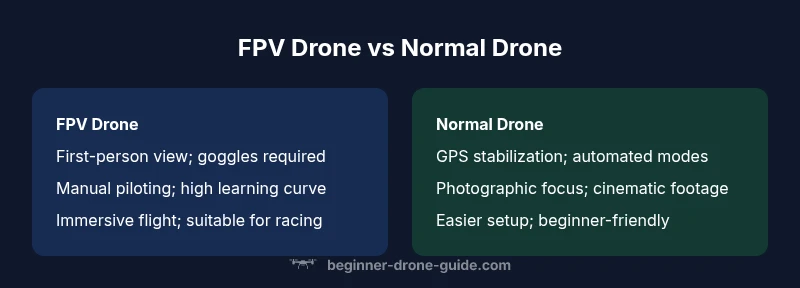
According to Beginner Drone Guide, FPV drone vs normal drone highlights two distinct flying experiences: FPV drones offer immersive, agile control via live video, while standard drones prioritize stability and photography. FPV relies on goggles and manual piloting; normal drones use GPS and obstacle sensing for easier, slower flights. For beginners, choose based on your goal: practice piloting or capture steady footage.
What is FPV Drone vs Normal Drone? Definition, Scope, and Real-World Implications
In plain terms, what is fpv drone vs normal drone? It pits two flight philosophies against each other: FPV drones transmit a live video feed to goggles, letting you pilot in first-person perspective with high responsiveness; normal drones rely on GPS, stabilization, and a camera for automated or semi-automatic flight. For beginners, understanding this distinction helps set expectations about control, safety, and learning curves. FPV is often pursued by hobbyists and racers who value immediacy and immersion, while standard drones are favored by photographers, videographers, and casual flyers seeking reliability and simple operation. This article unpacks the differences, benefits, trade-offs, and practical advice tailored to newcomers. According to Beginner Drone Guide, the choice often comes down to whether you want to learn nimble piloting or capture stable aerial footage.
The two paths share a common foundation in radio control signals, battery technology, and basic flight dynamics, but they diverge sharply in user experience and required setup. Throughout, we use real-world scenarios and practical steps to help beginners decide which route aligns with their goals, budget, and local regulations. The goal is not to push one option but to illuminate what each requires so you can start confidently.
How FPV Drones Work: The Core Tech and Interfaces
FPV drones rely on a live video feed from a camera mounted on the aircraft, transmitted to goggles or a screen worn by the pilot. The control system is typically a radio transmitter linked to an onboard flight controller that interprets stick inputs into motor speed changes. Unlike standard drones, FPV systems prioritize latency and precision, so pilots experience immediate feedback and high responsiveness.Pilots often customize firmware, tune rates, and adjust PID settings to match their style—for racing, freestyle, or cinematic flying. Goggles come in various field-of-view options, refresh rates, and builds, which means comfort and fit matter as much as image quality. The flight controller, video transmitter, and a quality receiver create the essential FPV loop. For newcomers, starting with a ready-to-fly (RTF) kit can reduce setup friction, while modular builds maximize learning opportunities as skills grow.
Real-World Use Cases: Learning, Racing, Filming
The FPV pathway suits people who crave immediacy and skill-building: you’ll learn throttle control, push-pull coordination, and rapid decision-making in dynamic environments. FPV pilots often participate in local or online races, practice freestyle maneuvers, and capture motion in tight spaces where traditional drones struggle. Normal drones shine for photography, videography, and automated tasks: they typically feature stable flight modes, obstacle sensing, return-to-home, and cinematic camera mounts. For beginners focusing on landscape shots or smart hobby flights, a camera-centric normal drone offers predictable performance with fewer crashes and less time spent on tuning. The choice depends on whether you value sport and immersion or stability and payload capability.
Key Differences in Flight Experience and Safety
Flight experience divides the two into core dimensions: control style, situational awareness, and risk profile. FPV requires ongoing situational judgment under rapidly changing conditions and often involves maintaining lock-on to the aircraft via line-of-sight or goggles. It’s thrilling, but crashes are more common during learning, which means a robust space and protective gear are essential. Normal drones emphasize stability, GPS-assisted hovering, and smart safety features like geofencing and automated flight modes. They are easier to reuse for multiple missions, from interior inspections to aerial photography, with a lower risk of significant damage during first flights. Safety considerations for both paths include battery handling, airspace awareness, and keeping line-of-sight where required by local rules.
Licensing, Registration, and Safety Considerations for Beginners
Most regions require some form of aircraft registration and pilot awareness even for hobby flights. It’s crucial to understand airspace rules, altitude limits, and the local requirements for FPV activities, especially if you plan on using goggles outside a controlled area. Beginners should prioritize training modes, safe flying environments, and a conservative learning curve. For FPV, practice with small, low-cost airframes to minimize risk while you learn orientation, throttle control, and spatial awareness. When in doubt, consult official aviation or drone-regulatory sources and consider a certified training path to build foundational safety habits.
Budgeting, Buying Guide, and Setup Tips
Starting with FPV typically involves more components: airframe, flight controller, radio transmitter, video transmitter, goggles, batteries, and spare parts. A basic normal drone kit may include the airframe and camera with fewer accessories, often resulting in lower initial costs and faster setup. When budgeting, factor in spare parts, replacement props, and charging equipment. For early practice, choose a kit that includes beginner-friendly modes and integrated safety features. Setup tips include verifying transmitter calibration, configuring beginner modes, updating firmware, and testing in a clear, open area away from people or property. Regular maintenance—checking props, motors, and battery health—will prevent most avoidable issues.
Learning Curve and Training Path: From Starter to Confident Pilot
The learning curve for FPV is steep: you’ll progress from basic hover to controlled flight, then to precise maneuvers and complex gaps. A structured progression is recommended: start with a simulator to build muscle memory, then move to a small FPV quad in a safe space, and finally graduate to your first real flight with protective gear and spotters. Normal drones offer a gentler ramp: begin with the automated modes, practice stable altitude holding, and gradually introduce manual flight as confidence grows. A well-planned training path reduces risk and accelerates skill development.
Common Mistakes and How to Avoid Them
New pilots чаще crash due to overconfidence, lack of pre-flight checks, or misinterpreting the flight environment. Always perform a pre-flight checklist: battery health, prop integrity, transmitter calibration, and firmware compatibility. When learning FPV, practice in a controlled environment with a safety net (nerf areas, soft ground, and protective guards). For camera drones, avoid aggressive maneuvers near people or sensitive property, and respect no-fly zones. Recording and reviewing flight footage, keeping a log of crashes and fixes, helps identify recurring issues and accelerates improvement.
Choosing Between FPV and Normal Drone: Decision Framework for Beginners
To decide, map your goals to flight experience, budget, and risk tolerance. If you want immersive piloting and racer-style thrills, FPV is your path but plan for additional gear and practice time. If you seek reliable photography, simple operation, and fewer crashes, a camera-equipped normal drone is usually the better starting point. Consider future growth: many pilots transition from a beginner-friendly normal drone into FPV later as confidence and skills mature.
Conclusion
No single choice fits every beginner. The FPV path delivers excitement and rapid skill-building at the cost of a steeper learning curve and more gear; the normal drone path prioritizes stability, simplicity, and steady results with less setup. Your best bet is to start with the option that aligns with your immediate goals and gradually expand as you gain confidence and knowledge.
Comparison
| Feature | FPV Drone | Normal Drone |
|---|---|---|
| Flight Experience | First-person view with goggles; high responsiveness | GPS-stabilized, automated modes; steadier flights |
| Control System | Manual piloting; requires precise stick control | Autopilot-assisted with beginner modes; easier to fly |
| Camera and Footage | Often action-oriented; camera may be lightweight and forward-facing | Integrated stabilized camera; higher image quality possible |
| Setup & Maintenance | More components (goggles, VTx, airframe) and tuning | Fewer components; easier upkeep and fewer adjustments |
| Learning Curve | Steep; frequent crashes common during learning | Gentle; beginner-friendly modes and predictable handling |
| Cost Range | Higher upfront for complete FPV kit | Lower upfront in many cases; higher-quality cameras add cost |
| Best For | Aspiring racers, pilots seeking immersion | Photographers/videographers and casual flyers |
Benefits
- Immersive, engaging flight experience
- Rapid skill development for piloting
- Strong community and racing opportunities
- Flexible setups and customization
Weaknesses
- Steeper learning curve and higher crash risk
- More gear and maintenance demands
- Higher initial cost and ongoing component upgrades
- Regulatory considerations can be complex
FPV drones deliver thrill and skill-building; normal drones prioritize ease and stable results
Choose FPV if immersion and piloting prowess are your primary goals. Opt for a normal drone if you want reliable photography, simple operation, and quicker results.
Frequently Asked Questions
What is the difference between FPV drone and a normal drone?
FPV drones provide a live video feed to goggles and are piloted manually, delivering immersive control and high maneuverability. Normal drones rely on GPS stabilization and automated flight modes, prioritizing stability and ease of use for photography and general flying.
FPV drones feed video to goggles for immersive piloting, while normal drones use GPS and automated modes for easy flights.
Do I need a license to fly FPV?
Licensing requirements vary by country. Many regions require drone registration and adherence to airspace rules for all pilots, especially for FPV activities. Always check local aviation authority guidance before flying.
Check your local regulations; most places require registration and following airspace rules.
Are FPV drones safe for beginners?
Yes, when practiced in safe environments with proper training modes and protective gear. Start in a controlled space and progress gradually to reduce crash risk.
Yes, with proper training and safe practice spaces.
What equipment do I need to start FPV?
You’ll need an airframe, flight controller, radio transmitter, video transmitter, FPV goggles, spare parts, and a charger. A ready-to-fly kit can simplify the initial setup for beginners.
An FPV airframe, flight controller, radio, video transmitter, goggles, and batteries to start.
Can I fly FPV indoors?
Indoor FPV is possible in large, obstacle-free spaces or with micro quads designed for indoor use. Always consider safety, people, and property when choosing a venue.
Yes, in safe, open indoor spaces with small FPV quads.
Which is cheaper to start with, FPV or a normal drone?
Normal drones generally cost less upfront due to fewer components, though high-end camera drones can approach FPV kit costs. FPV systems add goggles and extra gear that increases initial investment.
Normal drones usually start cheaper, but FPV costs rise with goggles and gear.
Quick Summary
- Define your goal: piloting skill vs photographs
- FPV offers immersion; normal drones offer stability
- Expect extra gear and training for FPV
- Check local rules and registration requirements
- Start with beginner-friendly setups before upgrading