How to Drone on Guitar: A Practical Beginner Guide
A practical, beginner-friendly guide to creating drone textures on guitar using open strings, looping, and effects. Learn setup, techniques, practice plans, and tips for safe, musical drone playing.


Today you’ll learn how to drone on guitar: sustain a drone note while you pick melodies, using open strings, a loop pedal, or a synth-like delay. The key requirements are a guitar, a looping device or delay, and careful volume control to keep the drone steady. This approach helps beginners explore atmospheric textures without advanced gear.
What does it mean to drone on guitar?
According to Beginner Drone Guide, a guitar drone is a sustained pitch or pedal point that acts as a sonic backdrop while you play melodies or chords over it. Droning uses the guitar’s natural resonance, open strings, or repeated notes to create a continuous soundscape. This technique is central to ambient, folk, and post-rock genres, and it trains your ear to balance melody with sustain. Start by choosing a single drone note and a comfortable tempo for your melodic ideas. The goal is a stable undercurrent rather than a flashy lead, so focus on consistency, intonation, and subtle timbre control. Experiment with different strings and frets to hear how the drone interacts with your articulation.
Core concepts: drone, pedal point, and texture
A drone is a fixed pitch that anchors your music. A pedal point repeats under the harmony, often using open strings or a fretted note held with the fretting hand. Texture comes from how loud the drone is relative to your melody, the timbre of your guitar, and effects such as delay, reverb, or chorus. For beginners, open-string drones on the low strings provide stable foundations. As you grow, you can layer harmonics, double-stop drones, or even gentle detuning for richer textures. The key is listening for how your melody evolves over the drone rather than fighting the sustain.
Open-string drone vs fretted drones
Open-string drones are typically the easiest to control because they require minimal fretting. Common choices are the low E, A, or D strings. Fretted drones involve holding a note with one finger while you play other notes—the advantage is wider pitch options but the challenge is keeping the drone in tune while moving. For beginners, start with one open string and a simple scale or motif. Once comfortable, try a second drone note on a higher string to create a two-note drone that supports more melodic movement.
Pedals, loops, and the practical setup
A loop pedal or delay pedal is a practical way to maintain a steady drone while you explore melodies. Connect your guitar to the looper, then route the output to your amplifier or direct box. Set a conservative feedback level and a modest delay time so the drone sustains without overpowering your melody. If you don’t own pedals, a basic delay in your amp’s effects loop or a software delay can work in a home studio. The objective is consistency—practice dialing in a drone level that stays present but never masks your melodic phrasing.
Tunings, harmonics, and drone stability
Open tunings (like open D or open G) can greatly simplify drone work by making the open strings harmony-friendly. If you stay with standard tuning, use a fixed drone on the low string and keep fretted notes aligned with the drone pitch. Harmonics add shimmer without changing the fundamental drone. Always check intonation and avoid drastic tremolo or whammy use when your drone needs to stay steady; subtlety keeps the texture clean and musical.
A practical practice plan for drone mastery
Begin with a 15-minute warm-up: lightly pick a drone note and play a simple scale over it, keeping the drone’s volume constant. Add 10 minutes of looping or delay practice, focusing on keeping a smooth loop without pops or glitches. Then dedicate 15 minutes to a short melodic phrase, ensuring your drone underpins every note. Finally, spend 10 minutes recording a rough take to listen for balance. Consistency is more important than speed; the objective is a stable, musical drone that supports your phrasing.
Recording, performance, and audience-ready drones
In performance, drones can be used to accompany singing, instrumental solos, or ensemble pieces. Record with a simple stereo setup to capture both the drone and the melody. In a live setting, keep monitoring levels to avoid feedback, and consider a dedicated monitor for the drone so your audience hears a cohesive texture. Practice transitions between sections to ensure the drone remains the anchor rather than a distracting loop.
Troubleshooting common issues
If your drone sounds wobbly, check tuning and intonation first. Loose guitar parts or a poorly set truss rod can cause pitch drift; tighten as needed or consult a professional. If the drone overwhelms the melody, reduce the loop level or lower the delay mix. Feedback is a frequent problem in loud rooms—practice at lower volumes and use a gate or EQ to control it. Finally, ensure your cables are clean and secure to avoid crackling sounds that break the drone’s atmosphere.
Tools & Materials
- Guitar (electric or acoustic-electrified)(Open-string drones are easiest on a guitar with functional pickups or an output suitable for effects.)
- Looper pedal or delay pedal(A looper allows you to sustain a drone while you craft melodies; a delay can create a repeating drone texture.)
- Amplifier or audio interface(Use an amp for live feel or an audio interface for recording; ensure your monitoring is clear and at safe levels.)
- Patch cables and power supply(Keep signal path tidy to avoid pops and noise that disrupt the drone.)
- Tuner (optional but recommended)(Stable pitch helps the drone remain musical, especially when layering harmonics.)
- Headphones or studio monitors (optional but recommended)(Critical for accurate listening when practicing at home or in a studio.)
Steps
Estimated time: 45-60 minutes
- 1
Choose a drone note
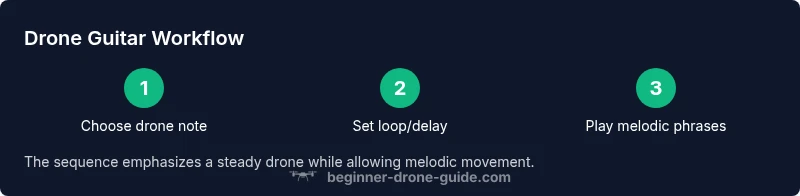
Decide on a stable drone pitch, preferably an open string such as E or A. Hold the note as you begin a simple melodic fragment to establish balance between drone and melody. The drone should be felt as a musical backdrop, not a separate lead.
Tip: Start very softly; you can gradually increase the drone volume once your melody sits clearly on top. - 2
Set up your looping/delay chain
Connect your guitar to the looper or delay, then route to your amp or interface. Choose a short delay time (e.g., under 200 ms) so the drone repeats in a controlled manner without muddying the melody.
Tip: Leave the feedback low to avoid a muddy wash; you want a clean, steady foundation. - 3
Record or select a melodic motif
Play a simple motif that fits over the drone; aim for three to five notes that you can repeat or modify. Focus on phrasing that complements the drone, not fights it.
Tip: Keep your motif within a narrow pitch range to maintain coherence with the drone. - 4
Play the drone and melody together
Begin the drone first, then introduce your melodic motif. Maintain even dynamics so the drone acts as an anchor rather than a loud foreground.
Tip: Use a light touch on picking to avoid exaggerated attack that destabilizes the drone. - 5
Experiment with dynamics and timbre
Adjust your guitar’s tone, the loop’s mix, and the delay to explore different textures. Try a softer, ensemble-like sound with chorus or a brighter, glassy texture with vibrato.
Tip: Small tonal changes dramatically alter how the drone sits in the mix. - 6
Refine transitions and endings
Practice ending phrases gracefully so the drone drops smoothly back to silence or stays as a deliberate tail. Transitions are where drone playing often shines or falters.
Tip: Plan a clean pickup or a short rest to reset the drone for the next section. - 7
Record a test take
Record a short performance to evaluate balance, tempo, and sustain. Listening back helps you identify where the drone is too loud or too soft.
Tip: Listen for phase relationships; a slight detuning can wreck or enhance the texture.
Frequently Asked Questions
What is a drone in guitar playing?
A drone in guitar playing is a sustained pitch used as a harmonic foundation for melody. It can be an open string, a fretted note, or a pedal point created with effects like loopers or delays. The goal is a steady, musical backdrop that supports melodic phrases.
A drone is a constant note that stays under your melody, like a soft fog that lets your tune breathe more clearly.
Do I need special gear to drone on guitar?
Not necessarily. A basic setup with a guitar and a looper or delay pedal is enough to start. A good amp or interface helps you hear the drone clearly, and optional pedals can expand textures over time.
A simple looper and your guitar is a strong start; you can grow your rig as you get comfortable.
Which tunings work best for guitar drones?
Open tunings like open D or open G can make drones easier, while standard tuning works fine with a single drone note and careful pedal settings.
Open tunings simplify drone harmony, but standard tuning still works with patience and good tone control.
How should I practice drone technique with limited time?
Start with a focused 15-20 minute routine: set a drone note, loop a simple motif, and practice transitions. Consistency matters more than session length.
Even short daily sessions add up—focus on keeping the drone stable while you explore melodies.
Can I use laptop software instead of hardware pedals?
Yes. A DAW with a looping plug-in and a digital delay can simulate a drone setup. Ensure latency is minimized for tight timing.
Software can work well; just check latency and keep the drone reliable.
What common mistakes break the drone effect?
Overdriving the drone, uneven tempo, or letting the melody fight the drone are typical issues. Keep the drone level and your melody autonomous.
Avoid loud drones and uneven timing; keep the backdrop steady.
Watch Video
Quick Summary
- Practice a stable drone note before melodies.
- Use a looper or delay to sustain the drone evenly.
- Open tunings simplify drone harmony for beginners.
- Balance melody and drone with careful dynamics.
- Record practice to refine balance and tone.