When a Drone Show Starts: A Beginner's Timing Guide
Discover when drone shows start, what factors influence timing, and practical steps for beginners to verify schedules, stay safe, and participate confidently.


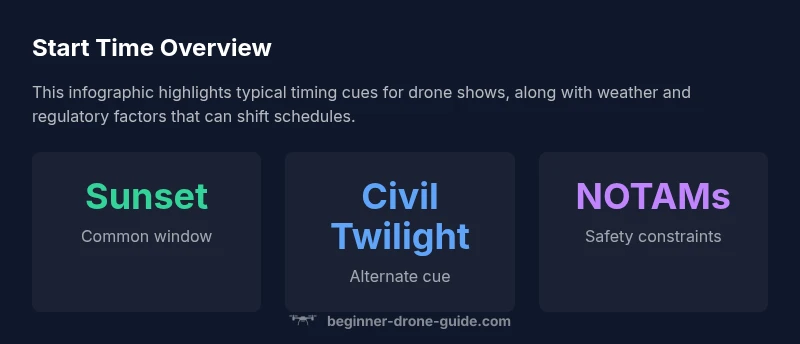
When drone show starts, the typical window is after daylight fades—to sunset or civil twilight—depending on the venue and local regulations. Event organizers usually publish the official start time, and shows may shift for weather or airspace restrictions. Always check the posted schedule and arrive early to observe the countdown, ensuring you’re prepared for the display safely.
Understanding the Timing Framework
Timing a drone show blends daylight management, airspace rules, and event logistics. For beginners, the central question is often not a fixed clock time but a window aligned with light conditions and safety clearances. When the show starts, you’ll typically see a countdown on official displays, followed by a synchronized rise of drones. The exact minute can shift due to weather, crowd density, or regulatory waivers, so it’s wise to monitor official channels for the latest update. Organizers plan the start to maximize visibility while keeping flight operations legal and safe. They coordinate with the venue, air traffic control if applicable, and local law enforcement to ensure compliant operations. For your planning, note that many events publish a separate viewing window—sometimes a "soft start" for warm-up, then the main sequence. As such, the headline timing is dynamic rather than fixed.
According to Beginner Drone Guide, timing a drone show requires careful alignment of spectacle, safety, and regulatory expectations. Always verify the published schedule in advance and seek out any weather or airspace advisories from organizers. Being proactive reduces confusion and helps attendees enjoy the show from a safe, authorized vantage point.
Regulatory and Safety Factors That Influence Start Time
A host of rules shape when a drone show begins. Light conditions influence visibility requirements, while airspace restrictions and permits can insert delays if a waiver isn’t in place. In many regions, civil twilight is the practical boundary for flight operations; beyond that, operations may shift to daylight-only or require lighting that signals the show is ready to commence. Local authorities may also issue temporary flight restrictions during the event, affecting the start window. Weather plays a crucial role: wind, precipitation, and electrical conditions can trigger immediate or anticipated delays. Event staff monitor NOTAMs, advisories, and ground conditions as the clock ticks. For beginners, recognizing that timing isn’t just a clock readout but a composite signal helps set realistic expectations and reduces last-minute nerves.
How to Verify Start Time and Prepare
To avoid missing the start, rely on official channels: the event app, the venue page, digital signage, and social updates from organizers. Arrive early—ideally 30–60 minutes before the posted start—to observe the warm-up sequence and to find a safe viewing spot with a clear line of sight to the flight area. Bring a charged device for updates, a small program or checklist for safety reminders, and proper personal weather protection if conditions change. If you’re volunteering or part of a crew, confirm your role and stand by your assigned position well before the countdown begins. Practically, a quiet pre-show routine helps you acclimate to the visual and auditory cues that precede the main display.
Real-World Scenarios: What Attendees Experience
In many showcases, attendees report a short pre-show warm-up featuring a handful of test drones or light sequences. Then comes the main choreography, often enhanced by synchronized music and a light show. Weather delays are common and can happen with little warning; organizers post updates via the official app or stage signage. Crowd control measures are typically in place and staff direct viewers to permitted areas to keep safe distances from flight paths. For newcomers, the experience is part science, part spectacle, and part community event. If you’ve never watched a drone show live, use the first minutes to observe how the drones respond to cues; this helps you appreciate the complexity and safety considerations behind the timing.
Practical Gear and Crew Readiness for Show Start
Preparation is the key to a smooth start. Drone operators and ground crew run through checklists covering battery levels, propeller inspection, and transmitter calibration. Spectators should wear comfortable footwear, bring rain gear if necessary, and have a plan for safe viewing that respects barriers and signage. For a beginner, knowing where and when to stand can affect your experience: choose elevated vantage points with open sightlines and ensure you’re not in restricted airspace or in line with flight paths. A reliable timing app, a small portable charger, and a personal safety reminder card can help keep you calm and focused as the countdown begins.
Key timing cues and considerations for drone shows
| Aspect | Start cue | Notes |
|---|---|---|
| Official Start Cue | Published start time | Check the event page or app for the exact time |
| Weather Readiness | Forecasted wind or rain | Shows may delay or pause for safety |
| Airspace Approval | Waivers/NOTAMs | Confirm clearance before the show |
| Audience Coordination | Viewing zones | Follow staff directions for safety |
Frequently Asked Questions
Who decides when a drone show starts?
Start times are determined by event organizers in coordination with local authorities and airspace restrictions. They publish a schedule and may adjust for weather or operational needs.
Organizers set the start time with safety in mind; always check the official schedule.
Is sunset required, or can shows start earlier?
Shows often start after daylight ends, but requirements vary by venue and regulations. Always confirm on the official schedule.
Most shows begin after sunset, but check local rules and the event page.
What should I do if the start time is delayed?
Expect updates through official channels and be prepared for minor changes. Keep clear of flight paths and follow staff directions.
If delayed, watch official updates and stay safe.
Can I determine start time from the app?
Yes, many events publish the start time in the official app or website; check the countdown and alerts.
Yes—check the official app or site for start times.
Where can I view reliable start time information?
Refer to the event organizer's page, official social channels, or on-site signage for the most accurate timing.
Check the official site or app for the exact time.
“Start times are set to balance spectacle with safety and regulatory compliance; always follow official guidance from event organizers.”
Quick Summary
- Verify official schedule before attending
- Arrive early to observe warm-up and cue readiness
- Monitor weather and airspace advisories
- Follow event staff and safety guidelines
- Check for updates via official channels before show start