What Drone Do Police Use? A Practical Guide for Beginners
A beginner-friendly guide to the drones used by police, how platforms are chosen, common payloads, training, privacy, and safety considerations. Learn what drone do police use and why, with practical steps for safe, responsible use.


There is no single drone model used by police; agencies rely on a mix of small and mid-size quadcopters for different missions, with common capabilities like high-resolution cameras and thermal imaging. Procurement weighs safety, privacy, and licensing, and many programs combine in-house pilots with contracted operators. A variety of platforms may be used depending on local rules, weather, and mission type.
What drone do police use
When people ask what drone do police use, the honest answer is: there is no single model. Law enforcement agencies rely on a mix of small, portable quadcopters for rapid response and larger, more capable platforms for longer missions. The decision hinges on mission type, environment, and regulatory constraints. According to Beginner Drone Guide, police programs emphasize safety, privacy, and data protection from the outset. The Beginner Drone Guide team found that successful deployments blend thorough training, clear governance, and careful procurement that respects civil liberties while enabling real-time situational awareness. In practice, you will see devices equipped with high-resolution cameras, lighting, and sometimes thermal imagers. Some departments use multiple operators for redundancy and coverage; others rely on on-call contracts for specialized tasks. The overarching goal is to balance rapid, actionable information with accountability, privacy, and transparency toward the public. As you explore this topic, keep in mind that the exact mix of tools varies by city, county, and national regulations, but the underlying principles remain consistency, safety, and proportionality.
How agencies choose a platform
Choosing a platform starts with a clear operational need. Agencies assess mission profiles such as quick surveillance, search and rescue, traffic accident assessment, or tactical entry support. Endurance and payload capability are weighed against cost, maintenance, and training requirements. Weather resilience, aircraft redundancy, and ease of deployment also matter. Procurement teams often favor modular systems that can be upgraded as technology evolves, and many departments maintain a core fleet while partnering with contractors for specialized missions. Data management policies—how footage is stored, who can access it, and how long it’s retained—are integral to the decision process. The balance between capability and privacy is a guiding principle; public-facing privacy statements, transparency reports, and governance boards influence which platforms are deemed appropriate. The Beginner Drone Guide approach emphasizes starting with well-documented, safe configurations and expanding as pilots gain experience and as community expectations evolve.
Typical mission profiles and payloads
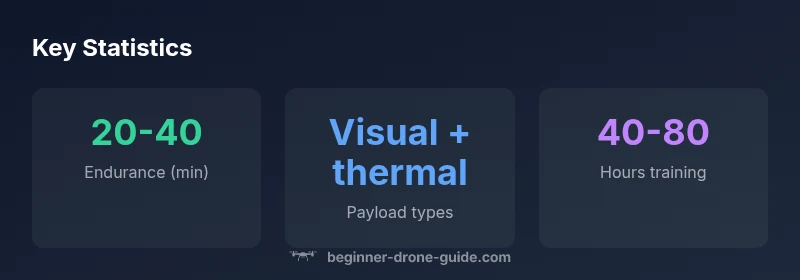
Police drone missions span a wide spectrum. In fast-response scenarios, compact quadcopters provide close-up views, license-plate recognition support in traffic incidents, and immediate situational awareness for incident command. For longer-range tasks, mid-size platforms with thermal imaging help locate suspects, missing persons, or fire hotspots in low-visibility conditions. Payload configurations commonly include high-resolution visual cameras, thermal imaging sensors, and, in some cases, optical zoom or loudspeakers for crowd management and public safety announcements. Data links and redundancy are often built in to maintain connectivity during critical operations. It’s important to note that payload choices are closely tied to regional rules and mission approval processes; a payload that works well in one jurisdiction may be restricted in another. The trend is toward multi-sensor kits that enable a single drone to perform multiple roles without frequent swaps.
Training, licensing, and governance
Operators typically undergo formal flight training that covers airspace rules, pre-flight risk assessment, emergency procedures, and basic maintenance. Licensing requirements vary by country, state, and city; in many places, pilots must hold a recognized remote pilot certificate or equivalent. Ongoing training, periodic recertification, and scenario-based drills ensure that operators stay proficient. Governance structures—such as data handling policies, privacy impact assessments, and use-of-force review guidelines—help translate capability into responsible practice. Agencies document flight logs, maintain incident reports, and publish annual transparency notes to demonstrate accountability. The Beginner Drone Guide team emphasizes that a successful police drone program rests on strong governance that respects civil liberties while enabling effective public safety responses.
Privacy, ethics, and legal context
Drones in policing bring legitimate safety benefits but also concerns about privacy and civil liberties. Effective programs implement minimization strategies (record only what is necessary), data retention schedules, and robust authorization protocols for sensitive locations (schools, hospitals, and private properties). Public-facing policies explain how footage is used, who can view it, and how redaction is applied when sharing evidence. Operational approvals should include privacy impact assessments and community engagement efforts to build trust. The legal context varies widely; some jurisdictions require warrants for persistent surveillance, while others permit temporary, situational use under emergency powers. For beginners, this section is a crucial reminder to respect people’s privacy and to stay informed about evolving rules that govern where, when, and how drones may operate.
Operational logistics: maintenance, procurement, and contracts
Maintenance is a core component of any drone program. Agencies schedule routine checks, firmware updates, propeller replacement, and battery cycle testing to minimize downtime. Procurement may involve a mix of in-house inventory and contracted services, particularly for specialized missions or surge operations. Life-cycle planning, including spare parts availability and depreciation, helps agencies stay within budget while maintaining reliability. Contracts often specify service-level agreements, pilot qualifications, data-handling requirements, and privacy safeguards. For beginners, understanding the lifecycle concept is useful: a drone is not a one-off purchase but part of a scalable program with ongoing training, upkeep, and governance.
Data management, cybersecurity, and incident response
Data produced by police drones requires strict handling procedures. Secure radio links, encrypted storage, and controlled access reduce the risk of interception or leakage. Incident-response plans outline steps for data breach investigations, evidence chain-of-custody, and cooperation with other agencies. When drones stream live video or transmit telemetry, metadata hygiene becomes important to protect privacy. Regular audits, access controls, and secure deletion practices help maintain trust with the public. Beginners should appreciate that even a well-built drone system can be undermined by weak data management practices; software updates, strong passwords, and multi-factor authentication are essential.
Future trends and how beginners fit in
The drone landscape is evolving rapidly, with advances in autonomy, sensor fusion, and affordable training options. For beginners, the best path is to master the fundamentals of safe flight, understand basic privacy principles, and participate in local flying clubs or community programs that emphasize responsible practice. As police technology grows, opportunities arise to study how data is used, challenged, and regulated, which can inform ethical, practical drone work in non-enforcement contexts as well. Start with a solid grounding in aviation rules, build hands-on flight experience, and stay curious about how multi-sensor systems can expand what a single drone can accomplish while upholding safety and civil liberties.
Comparison of generic drone types used in law enforcement
| Drone Type | Typical Use | Payload Options | Endurance |
|---|---|---|---|
| Small quadcopter | Rapid response & surveillance | Visual camera; LED lights | 20-40 minutes |
| Mid-size quadcopter | Tactical operations | Visual camera + thermal imaging | 30-60 minutes |
| Fixed-wing or hybrid | Long-endurance missions | Visual camera + thermal imaging + zoom | 60-120 minutes |
Frequently Asked Questions
Do police departments own drones or rely on contracts?
Both models exist; many departments own some platforms while others rely on contracted operators or pooled resources. Ownership decisions depend on budget, strategic goals, and regulatory environment.
Many departments own some drones and also hire contractors for specific missions.
What licenses are required to operate police drones?
Licensing requirements vary by country and jurisdiction; in many places pilots need a recognized remote pilot certificate or local equivalents, with exemptions possible for certain operations.
Pilots typically need a license or permit, depending on where you are.
Can drones fly over crowds during police operations?
Overflight of crowds is tightly controlled. Operations usually require risk assessment, explicit authorization, and privacy safeguards; waivers may be needed for certain scenarios.
Usually not without waivers and careful planning.
What training is typical for police drone operators?
Operators undergo formal flight training, safety briefings, and privacy compliance instruction, with ongoing drills and periodic certification updates.
There’s formal training plus ongoing practice.
What sensors are most common on police drones?
Most include a visual camera; many add thermal imaging and sometimes zoom capabilities. Sensor suites vary by agency and mission.
Most use cameras and thermal sensors.
How can beginners learn about police drone use responsibly?
Begin with aviation rules, practice with consumer drones, and study privacy and safety best practices. Join local clubs or classes to build skills in a responsible, ethical way.
Begin with rule basics and hands-on practice.
“There isn’t a universal drone program for law enforcement; agencies must balance capability with privacy, safety, and public trust.”
Quick Summary
- There is no one-size-fits-all police drone.
- Expect a portfolio of platforms and payloads.
- Licensing, privacy, and governance shape deployments.
- Training and maintenance are ongoing costs.
- Begin with fundamentals; scale as skills and policy evolve.