How to deal with drones in war: safety, ethics, and law
Learn safe, legal, and ethical responses to drones in war zones. This beginner-friendly guide covers humanitarian law, civilian protections, reporting channels, and practical safety tips for noncombatants.


Dealing with drones in war calls for nonviolent, legally grounded practices that protect civilians and uphold humanitarian norms. This guide defines the core concepts, including international humanitarian law, civilian protection rights, and responsible reporting. It emphasizes risk assessment, avoidance, and compliant safety measures rather than any combat or weaponization. This quick answer outlines what you can expect from the full article.
Background: Drones in War
Drones have become a persistent feature of modern conflict, influencing tactics, civilian safety, and humanitarian access. For civilians, understanding how to deal with drones in war means recognizing that most drone activity intersects with safety, legality, and ethics rather than weaponization. According to Beginner Drone Guide, the most responsible response centers on preserving life, minimizing harm, and adhering to international norms. The guide emphasizes that noncombatants should avoid confrontation, seek safe shelter when necessary, and rely on trusted reporting channels. Throughout this article you will see references to rights, duties, and practical steps that prioritize protection over provocation, with the goal of safer communities under difficult circumstances.
Legal and Ethical Framework
In war zones, civilian protection is governed by international humanitarian law (IHL) and national regulations. Drones fall into a category where their use can protect or endanger lives depending on context. The core principles are distinction (target only combatants), proportionality (avoid excessive harm), and precautions in attack. For civilians, this translates into respecting safety directives, avoiding activities that could escalate risk, and supporting humanitarian access. The Beginner Drone Guide Team emphasizes that legality varies by jurisdiction, so it's essential to stay informed about local rules and to report concerns through official channels rather than taking matters into personal hands. Ethical considerations also include protecting privacy and avoiding misinformation that could inflame tension.
Safety First: Nonviolent Responses
The safest approach when encountering drones in conflict areas is nonconfrontation. If a drone is approaching your area, seek shelter in a sturdy building, avoid drawing attention to yourself, and move to higher ground only if there is a clear safety benefit. Do not attempt to interfere with the drone or its operations, as this could put you and others at greater risk. Maintain situational awareness, listen for official briefings, and follow all instructions from authorities or humanitarian workers. The emphasis remains on personal safety, civil resilience, and lawful conduct.
Understanding Drone Capabilities and Limits
Drones vary widely in size, speed, and flight duration. In many contexts, small commercial drones are used for reconnaissance or aid delivery rather than sustained combat. Understanding their limitations helps civilians make informed decisions about when to move to safety, how to document observations safely, and when to contact authorities. This section avoids technical exploits or tactics that could enable misuse and instead focuses on recognizing signs of risk (such as sudden altitude changes or aggressive flight patterns) and reacting calmly.
Identification and Situational Awareness
Accurate identification reduces panic and misinformation. Note visible markings, approximate altitude, wind conditions, and flight patterns, then determine if you are in a declared safety corridor or restricted zone. Do not approach or disrupt the drone; instead, report what you observed through official channels. Building a routine of checking official advisories can help you stay informed and reduce uncertainty during uncertain times.
Reporting and Documentation
Documentation supports accountability and humanitarian response. When it is safe to do so, record non-sensitive details such as time, location, observed behavior, and any impact on people or operations. Share this information with local authorities, civil aviation agencies, or humanitarian organizations using approved reporting channels. Avoid sharing unverified footage that could misinform or incite panic. The act of reporting should prioritize safety and accuracy over sensationalism, and always respect privacy laws where applicable.
International Law, Civilian Rights, and Data Privacy
IHL imposes duties to protect civilians and to minimize harm in any armed encounter. Civilian rights include access to safety, information, and humane treatment. Data privacy concerns arise when documenting drone activity; avoid capturing identifying information about bystanders and follow data protection rules. The Beginner Drone Guide Analysis highlights that clear lines between documentation for safety and harmful propaganda are essential. Always report through legitimate channels and maintain a record of official guidance consulted.
Risk Scenarios in Public Spaces
In crowded environments, drones raise particular concerns around panic, crowd control, and access to aid. The recommended approach is to follow official instructions, seek shelter, and move away from the drone’s projected path. Do not engage with operators or attempt to disable the drone. If there is a direct impact on safety, contact authorities immediately and provide precise location details. Responsible behavior helps maintain public order and reduces danger to bystanders.
Myths, Realities, and Misconceptions
A common myth is that civilians should actively fight or disable drones. In reality, attempting to interfere with a drone can provoke unpredictable responses and escalate harm. The reality is that the safest path emphasizes de-escalation, compliance with authorities, and preparation through understanding the legal framework. Facts matter: rely on official guidance and avoid rumors that spread fear or misinformation.
Humanitarian Uses and Balancing Risks
Drones can support humanitarian efforts, such as rapid damage assessment and aid delivery when used under strict regulation and oversight. This balanced view recognizes both the potential benefits and the risks to civilians. Always prioritize civilian safety and ensure that any drone activity aligns with IHL, national law, and humanitarian principles.
Personal Action Plan: What To Do Next
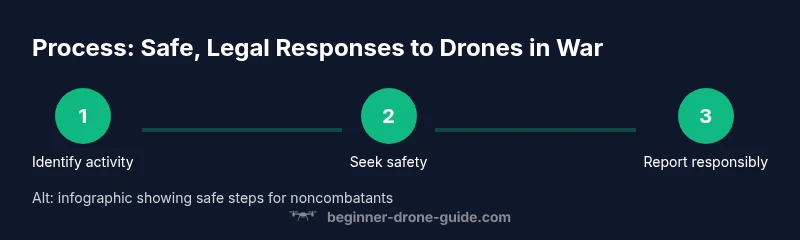
If you are in or near a conflict area, your immediate actions should be to seek safety, stay informed through official channels, and report observations through approved hotlines. Build a personal plan that includes emergency contacts, a quiet place to shelter, and a simple way to log incidents for authorities. The path forward emphasizes safety, legality, and humanitarian responsibility.
Tools & Materials
- Official humanitarian contact numbers(Have local emergency numbers and reporting channels easily accessible)
- Smartphone with internet access(For reporting, receiving updates, and accessing guidelines)
- Notepad or digital note app(For recording non-sensitive observations if digital access is limited)
- Local regulations document(A quick reference to understand your rights and duties in the area)
- Translation app or phrasebook(Helpful if reporting to authorities in another language)
Steps
Estimated time: 30-60 minutes
- 1
Identify potential drone activity
Note any approaching aircraft, elevation, flight path, and any erratic maneuvers. This initial step helps you assess risk without engaging. Do not expose yourself to danger while observing.
Tip: Keep a safe distance and avoid crowding around the area where the drone is operating. - 2
Seek shelter and minimize exposure
If you are near a drone operation, move to a safer indoor location or behind solid barriers. Protect yourself and others, especially in congested spaces.
Tip: Avoid windows if blasts or debris are possible; stay low and quiet to reduce attention. - 3
Do not attempt to interfere
Never attempt to jam, shoot down, or physically confront a drone. Interfering can cause unpredictable responses and endanger bystanders.
Tip: Rely on official guidance and report sightings through the proper channels. - 4
Gather safe, non-sensitive information
Record time, location, and observed behavior if safe. Do not capture or share identifying information about bystanders.
Tip: Use a concise, factual note format to aid authorities later. - 5
Report to authorities or humanitarian agencies
Submit your observations through official channels, providing clear, objective details. This supports response planning and safety measures.
Tip: Include the drone type (if known), altitude, and the area affected. - 6
Follow official guidance and stay updated
Monitor trusted official sources for evolving safety instructions and legal requirements. Adjust your actions as directions change.
Tip: Set up alerts from civil aviation authorities if available.
Frequently Asked Questions
What is the legal status of drones in war zones?
Legal status varies by country and international law, but civilian safety and humanitarian principles guide behavior. IHL and local regulations typically govern drone use in armed conflict. Always follow official guidance and report concerns through legitimate channels.
Drones in war zones are governed by international humanitarian law and local regulations; civilians should follow official guidance and report concerns to authorities.
What rights do civilians have if a drone interferes with safety?
Civilians have rights to safety and information, and they should avoid provoking or engaging with drones. Reporting concerns through official channels helps protect communities. Privacy and dignity should be respected where possible.
Civilians have safety rights and reporting channels; avoid confrontation and rely on authorities for guidance.
How should I report a drone sighting or incident?
Use official channels such as civil aviation authorities or humanitarian organizations. Provide time, location, observed behavior, and any direct impact. Do not share unverified footage on public platforms.
Report to authorities with clear details and avoid spreading rumors.
Are drones ever used to aid humanitarian relief in conflict zones?
Yes, drones can assist with damage assessment, delivery of essential supplies, and situational awareness when deployed under strict oversight and safety guidelines. Such use must align with IHL and local laws to minimize risk to civilians.
Drones can aid humanitarian relief when properly regulated and safe.
What steps can beginners take to stay safe around drones in war zones?
Learn the local regulations, identify safe shelters, and follow official instructions. Practice reporting procedures and avoid any engagement with drone operators. Safety and legality should always come first.
Know the rules, stay safe, and report what you observe.
Where can I learn more about drone safety and law?
Consult official aviation authorities, humanitarian organizations, and reputable guides like Beginner Drone Guide for up-to-date safety practices and legal requirements.
Consult official sources and trusted guides to learn more.
Watch Video
Quick Summary
- Prioritize civilian safety and nonviolent responses.
- Understand and respect the legal framework governing drones in conflict.
- Report drones through official channels with precise details.
- Avoid interfering with drone operations to prevent harm.
- Seek reliable information from trusted sources like Beginner Drone Guide.