How Drone Delivery Works: A Practical Beginner's Guide
Explore how drone delivery works—from drones and routing to safety, regulations, and real-world applications. A practical, beginner-friendly overview for 2026.


Drone delivery works by autonomously transporting small parcels from a distribution hub to a customer using unmanned aerial systems. Drones follow predefined routes, guided by GPS, onboard sensors, and safety protocols, with ground teams loading, monitoring, and releasing packages. Real-time telemetry, geofencing, and airspace clearance help prevent collisions, while return-to-base procedures ensure reliability. A successful mission combines hardware, software, and policy to move items quickly and safely.
How Drone Delivery Works: An Overview
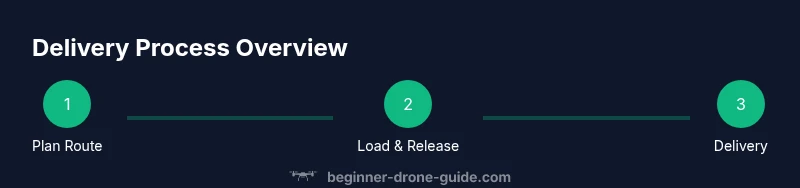
If you’re curious about how drone delivery works, you’re not alone. This overview explains the core idea, the players involved, and the flow from order to doorstep. According to Beginner Drone Guide, drone delivery combines aerial transport, lightweight cargo handling, and logistics software to move small items faster than traditional ground routes. In practice, a parcel leaves a regional hub, is assigned a flight path, is carried by a drone to a designated landing zone, and is securely released to the recipient. Along the way, navigation, telemetry, weather awareness, and regulatory checks keep the mission safe and compliant. The result is a dynamic, end-to-end system that blends hardware with software and policy to expand what’s possible for home delivery.
From the user’s perspective, the process starts with an order, then a courier system assigns the drone, and finally the package arrives by air, often landing at a safe, designated area like a driveway, yard, or street-site pad. Behind the scenes, teams monitor airspace permissions, check weather, and coordinate return logistics. This integration of hardware, software, and governance makes drone delivery a practical option for time-sensitive or hard-to-reach parcels while maintaining safety and accountability.
The Delivery Drone: Key Components
A modern delivery drone is a compact flying platform with several essential subsystems. The airframe provides structure and stability, while propulsion and power systems deliver lift and endurance. A dedicated payload bay, net, or clip secures the parcel during flight and allows for a controlled release at the destination. Onboard sensors—including GPS, inertial measurement units (IMUs), barometers, and collision avoidance sensors—help the drone navigate and avoid obstacles. A flight controller processes real-time data to keep the drone stable and on course. Communication links—typically radio frequency (RF) or cellular—relay telemetry between the drone and the ground control system, enabling operators to monitor position, battery status, and mission progress. In practice, these components work together so a drone can safely lift a small parcel, navigate around buildings, and deliver to the target area with precision.
The Ground Infrastructure: Launch Pads, Hubs, and Parcel Handling
Delivery missions require more than the drone itself. Hub facilities act as staging grounds where parcels are scanned, loaded, and matched to flight plans. Launch pads are often secure, clearly marked zones with defined takeoff and landing areas designed to minimize risk to people and property. Ground teams oversee loading and unloading, verify parcel integrity, and manage tracking codes so recipients can confirm receipt. At the receiving end, a designated drop zone or doorstep pad ensures a predictable landing area. The integration of hub operations, ground handling, and customer-facing data systems is what makes drone deliveries scalable and efficient rather than isolated test flights.
The Flight Path: Route Planning and Airspace Rules
Effective drone delivery hinges on smart route planning and strict adherence to airspace rules. Operators map the most efficient path using terrain data, weather conditions, and potential obstacles, while ensuring the route complies with local regulations and geofencing constraints. Preflight checks include battery status, sensor calibration, and verification of clearance in controlled or restricted airspace. Real-time monitoring allows the ground team to respond to changes, such as sudden weather shifts or temporary flight restrictions. In many regions, drone routes are designed around designated corridors or zones where legal permissions are established, helping to minimize conflicts with manned aviation and protect people on the ground.
Package Handling: Loading, Securing, and Release
Loading and securing the parcel is a critical step. The package is placed into a secure payload container or net that protects it from wind and vibration while enabling a clean, controlled release at the destination. The ground team attaches a delivery code so the recipient can verify the parcel, and the release mechanism is tested before flight. During flight, the drone’s sensors and software govern when and where the parcel is released, ensuring accuracy and minimizing risk to people nearby. Post-delivery, the system logs the delivery event for traceability and customer updates.
Safety and Compliance: Training, Certification, and Risk Management
Safety is non-negotiable in drone delivery. Operators typically complete training on drone handling, airspace rules, and emergency procedures. Certification requirements vary by jurisdiction but commonly cover basic piloting, maintenance, and safety protocols. A robust risk management framework addresses weather risk, obstacle avoidance, and collision avoidance. Regular maintenance checks, software updates, and incident reporting processes help ensure ongoing reliability. Because drone delivery intersects with public airspace and people, adherence to privacy norms and noise considerations is also part of responsible operation.
Technologies Behind Efficiency: Autonomy, Sensing, and Communication
The efficiency of drone delivery comes from advances in autonomy, sensing, and communication. Autonomy enables safe navigation with minimal human intervention through waypoint planning, obstacle avoidance, and dynamic rerouting. Advanced sensing—such as lidar, stereo cameras, and computer vision—helps detect obstacles and adapt to changing environments. Reliable communication links between the drone and ground control support real-time telemetry, mission updates, and remote intervention if needed. Together, these technologies reduce flight times, improve safety, and enable scalable drone delivery networks.
Real-World Use Cases: Medical, E-Commerce, Agriculture
Drone delivery has moved beyond demos into real-world applications. In medical contexts, drones can carry essential supplies, test kits, or vaccines to remote clinics or during emergencies. In e-commerce, lightweight parcels—like medicines or small electronics—reach customers faster, expanding delivery windows and reducing human labor requirements. Agricultural applications include transporting crop samples or delivering targeted inputs to fields. Each use case demonstrates the versatility of drones, while highlighting the need for reliable planning, community engagement, and regulatory compliance to maximize impact.
Challenges and Future Trends: Weather, Privacy, Regulation
Drone delivery faces challenges including variable weather, privacy concerns, and evolving regulations. Wind, rain, and low visibility can affect flight stability and battery performance, so many systems favor conservative weather thresholds and contingency planning. Privacy considerations require transparent data practices when drones operate over neighborhoods. Regulatory landscapes continue to mature, with common themes around airspace access, certification, and incident reporting. Looking ahead, improvements in battery technology, sensor fusion, and standardized safety frameworks are expected to broaden where and how drone delivery can operate.
Getting Started for Beginners: Steps to Try Safe, Legal Practice
Starting with drone delivery concepts is approachable for beginners. Begin by learning basic drone operation, local laws, and safety practices. Practice with a small, beginner-friendly drone in open, non-congested spaces away from people and buildings. Build experience in waypoint navigation, obstacle avoidance, and manufacturer safety checks before attempting any delivery-related activity. As you grow more confident, seek formal training, join local drone clubs, and stay updated on regulatory changes. This gradual, safety-first approach helps new pilots build competence and confidence.
Tools & Materials
- Delivery-capable drone(Should support payloads suitable for small parcels and have reliable stabilization.)
- Spare batteries(Extra batteries to extend practice and testing cycles.)
- Payload container or net(Secure, easy-to-load container with a safe release mechanism.)
- Ground control software(Used for planning routes, monitoring telemetry, and logging missions.)
- GPS-enabled tablets or handheld device(For offline maps, waypoints, and real-time status checks.)
- Safety markers and takeoff area signage(Helps define a safe, visible launch/landing zone.)
- First-aid kit(Basic safety item for on-site emergencies.)
Steps
Estimated time: 40-60 minutes
- 1
Identify destination and payload
Clarify what will be delivered and to where. Confirm recipient details, access instructions, and any special handling needs. This step sets the mission scope and helps select the appropriate drone and release method.
Tip: Double-check the address and any on-site hazards before loading. - 2
Inspect drone and safety checks
Perform a preflight check of the airframe, propulsion, battery health, sensors, and release mechanism. Verify firmware and ground-control connectivity. Correct any issues before proceeding.
Tip: Document any anomalies and do not fly with unresolved faults. - 3
Plan flight path and permissions
Create a route that avoids restricted zones and minimizes risk. Ensure airspace permissions are documented, weather conditions are suitable, and emergency contingency options are prepared.
Tip: Prefer reserved corridors or approved flight boxes when available. - 4
Load payload securely
Place the parcel into the payload container and verify secure attachment. Ensure balance and minimize movement during transit to protect the contents.
Tip: Use padding and restraints to prevent shifting inside the container. - 5
Calibrate and verify systems
Calibrate sensors, confirm compass heading, and test release mechanism. Check battery levels and ensure telemetry streams are active.
Tip: Run a short hover test to confirm stability before ascent. - 6
Launch and monitor ascent
Takeoff smoothly within the defined safe zone and monitor the flight path as the drone climbs to altitude. Maintain visual and radio contact with the drone if possible.
Tip: Be prepared to abort and return if wind spikes or sensor warnings occur. - 7
Track midflight status
Continuously monitor position, battery, and environmental data. Adjust the plan if new hazards appear or if weather changes.
Tip: Share location updates with the recipient and logging systems. - 8
Release payload at destination
Execute the release sequence at the designated landing zone. Confirm receipt with the recipient and record the delivery event in the system.
Tip: Verify the parcel is secure after release and clear the area of bystanders. - 9
Return to base and inspect
Fly back to the hub or safe landing zone and perform a post-flight inspection. Replenish energy, inspect the release mechanism, and log mission data.
Tip: Inspect for wear or damage that could affect future flights. - 10
Document and review
Capture lessons learned, update procedures, and review timing and routes for future improvements. Share insights with the team to improve reliability.
Tip: Keep a simple, consistent delivery log for ongoing learning.
Frequently Asked Questions
What makes drone delivery different from traditional courier services?
Drone delivery uses aerial routes, automation, and real-time tracking to move small parcels quickly, often bypassing traffic. It relies on regulatory permissions, pilot oversight, and safe release mechanisms. Traditional couriers rely on ground transport and human handling for most deliveries.
Drone delivery uses air routes and automation for speed, while traditional couriers use ground transport with more direct human handling.
Are there payload size or weight limits for drone delivery?
Payload limits vary by drone design and local regulations. Operators must match the drone’s capabilities with the parcel and ensure secure attachment and safe release.
Payload limits depend on the drone and local rules; don’t exceed it and secure the package properly.
Which regulations govern drone delivery in most regions?
Regulations are usually set by national aviation authorities and may include permits, pilot certification, and airspace restrictions. Operators must comply with privacy, safety, and noise guidelines as part of routine operations.
Drone rules come from national aviation authorities and cover permits, pilots, and airspace, plus safety and privacy guidance.
What weather conditions are suitable for drone delivery?
Stable conditions with good visibility, light to moderate wind, and no precipitation are preferred. Severe weather can impact stability, battery efficiency, and safety, so deliveries may be paused.
Good weather is essential; wind and rain can derail flights, so plans adjust with conditions.
How can beginners start learning about drone delivery safely?
Start with basic drone operation and safety training, practice in open spaces, and join local clubs or courses. Stay updated on regulations and use manufacturer-provided safety features during practice.
Begin with basic flight skills, practice in safe spaces, and learn the rules before attempting delivery tasks.
Watch Video
Quick Summary
- Understand core drone delivery steps and stakeholders.
- Prioritize safety, compliance, and good planning.
- Use practice flights to build confidence and competence.
- Document deliveries for accountability and learning.