How Can Drones Be Detected? A Practical Guide for Beginners
Learn practical, beginner-friendly methods to detect drones safely and legally, covering RF sensing, radar, acoustic cues, and best practices for building a layered detection plan.


How can drones be detected? This guide explains, in practical steps, how to identify drone activity using layered methods—RF sensing, radar, acoustic cues, and visual observation—while staying within legal boundaries. By the end, you’ll know which tools to start with and how to build a basic detection plan for safe, responsible monitoring.
What is drone detection and why it matters
How can drones be detected? It’s not a simple yes/no; detection is a layered practice that combines multiple sensors, context, and policies. According to Beginner Drone Guide, understanding the concept helps communities protect airspace, privacy, and public safety around events and critical infrastructure. The Beginner Drone Guide team found that a multi-sensor approach is typically more reliable than relying on a single tool. By recognizing a drone’s presence, estimating its position, and inferring its operating intent, you can respond more effectively while respecting rights and regulations. In practice, detection means turning scattered signals into a clear, actionable picture: where the drone is, how close it is, and what it’s doing. Starting with this mindset helps you craft practical procedures that scale from a backyard to a small event.
In this guide, you’ll learn how detection concepts translate into real-world steps, the pros and cons of each method, and how to weave them into a compliant plan. The goal is not to “block every drone” but to improve safety, accountability, and situational awareness for people on the ground.
Core detection modalities
Drones emit signals and create cues that skilled observers can interpret. The most common modalities are RF sensing, radar, acoustic cues, and visual verification. Each method has strengths and limits, and the strongest setups use a layered blend. Based on Beginner Drone Guide analysis, a combined approach increases detection confidence and reduces false alarms. When you combine several indicators, you’re more likely to detect drones in varied environments—day or night, open fields or urban canyons, calm weather or wind. Remember that context matters: a bustling festival, a private property boundary, or a restricted airspace will shape how you deploy sensors and respond to detections.
Below are the four main modalities you’ll encounter, with practical notes on when and how to use them.
RF-based detection: how it works and when to use
Radio frequency (RF) detection listens for drone control and video transmission signals. In many consumer drones, the most common bands are in the 2.4 GHz and 5.8 GHz ranges, and devices can sometimes reveal approximate direction and distance when analyzed over time. RF sensors excel in detecting both piloted drones and some autonomous units, even when visual sighting is difficult. They are most effective in open areas with clear line-of-sight and relatively few RF sources that could cause interference. For beginners, start with a simple RF scanner and a basic logging routine to track signal strength patterns during typical activity. RF-based detection is a foundational layer, but it can missinactive drones or stealth designs that minimize emissions.
From a safety perspective, use RF data to augment other cues, not as a sole basis for action.
Radar-based detection: strengths, limitations, and setup
Radar systems actively emit signals and measure reflections to determine an object's range, velocity, and size. For drone detection, radar can identify small, fast-moving objects that might blend into visual backgrounds. Its strengths include performance in poor lighting and ability to operate over longer ranges than visible-light cues. However, radar setups can be costly and require careful calibration to distinguish drones from birds and weather clutter. A practical path for beginners is to pilot a small, affordable radar module in a defined outdoor area and pair it with a basic tracker. Start with environment-specific baselines to minimize false positives, especially near trees, power lines, or dense crowds where many moving objects exist.
Radar is powerful when used alongside RF and optical cues, forming a triangulated picture of what’s in the air.
Acoustic and visual cues: interpreting signals and indicators
Drones produce distinctive sounds, especially from rotors at certain speeds. Acoustic sensing can flag unusual, repetitive chirps that correlate with drone flight patterns, particularly in quiet or semi-quiet environments. Visual confirmation—using binoculars, cameras, or video feeds—helps verify detections and refine estimates of drone location and trajectory. For beginners, train to notice consistent rotor cadence and steady flight patterns rather than fleeting sounds that could come from wildlife or weather. Visual cues also benefit from simple, repeated observation across different angles and times of day to build confidence in the assessment.
Legal and ethical considerations when detecting drones
Detection activities intersect with privacy rights, airspace rules, and expectations of safety. Always align with local regulations and obtain any required permissions when monitoring public or shared spaces. Keep records of detections, responses, and communications to support accountability and avoid misunderstandings. Ethical detection means avoiding intimidation or retaliatory actions and focusing on safe, lawful responses such as notifying authorities, informing property owners, or stepping back to deconflict the area. Remember, results should inform decisions, not punish individuals without due process.
Building a practical detection plan for your property
A practical plan begins with clear goals: what you want to protect, your acceptable risk level, and how you’ll respond. Start with a basic, layered setup using RF, radar (if feasible), acoustic cues, and visual verification. Develop simple logging templates to capture time, location, and observed behavior, plus a response workflow that respects privacy and laws. Training and rehearsal make the plan robust—practice with safe, legal demonstrations or simulations and adjust your tools as you learn what works best in your environment. A well-designed plan increases safety and reduces ambiguity during real detections.
Tools & Materials
- RF spectrum analyzer(A handheld or USB-based unit capable of monitoring the 2.4 GHz and 5.8 GHz bands)
- Directional antenna kit(For triangulating signal sources and narrowing down drone origin)
- Drone detection software/app(Software that aggregates RF/radar cues and presents alerts with timestamps)
- Close-range optical sighting tools(Binoculars or a camera for verification when a drone is suspected)
- Notepad and incident logging template(Record times, locations, and actions for each detection)
- Legal and policy templates(Templates for incident reports, privacy notices, and compliance notes)
- Safety gear for outdoor use(PPE as needed (gloves, sun protection, weather-appropriate gear))
Steps
Estimated time: Total time: 30-60 minutes
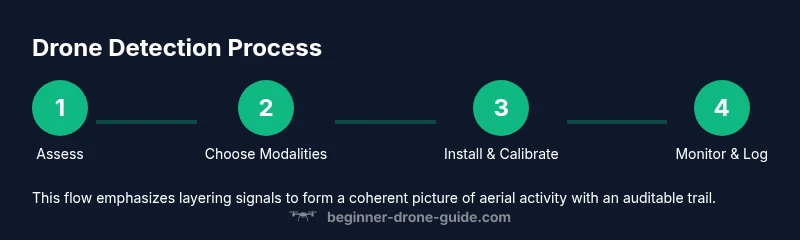
- 1
Assess environment
Survey the area for boundaries, potential drone-prone zones, and sources of RF interference. Establish what counts as a detectable event based on your goals and local rules. Document your starting conditions so you can measure improvements later.
Tip: Create a simple map of the site and mark potential RF hotspots or obstructions. - 2
Choose modalities
Decide which sensors to deploy first (RF, optical, acoustic, radar) based on budget and environment. Prioritize layered coverage to reduce blind spots and false positives. Plan for future expansion if needed.
Tip: Start with one or two core sensors and add more as you validate results. - 3
Install gear
Set up your RF scanner and antenna in stable, weather-protected locations. Power solutions should be reliable, with backup options where feasible. Ensure software is configured to collect consistent data fields.
Tip: Position antennas away from metal clutter and reflective surfaces to improve signal quality. - 4
Calibrate sensors
Run baseline tests to capture normal airspace activity and environmental noise. Adjust sensitivity to balance detection rate and false alarms. Document baseline metrics for future comparisons.
Tip: Record a baseline during typical activity times (e.g., day and night). - 5
Monitor activity
Begin real-time monitoring, logging each event with time, location, and any corroborating cues. Use automated alerts where supported, and establish a simple response workflow for immediate actions.
Tip: Validate detections with a quick visual check when safe to do so. - 6
Review and improve
Periodically review logs to identify gaps and refine thresholds. Update the plan based on new drone types or regulatory changes. Train any team members on procedures and safety.
Tip: Schedule quarterly reviews and practice drills.
Frequently Asked Questions
What is drone detection?
Drone detection is the process of identifying that a drone is present, locating it, and understanding its behavior or intent. It typically uses multiple signals—RF, radar, acoustics, and visual cues—to form a reliable assessment. Effective detection supports safety, privacy, and compliance.
Drone detection involves identifying a drone, locating it, and noting its behavior using several signals. It helps keep people and property safe while respecting laws.
Which detection method is best for beginners?
There is no single best method for all situations. Beginners benefit from a layered approach, starting with RF sensing and basic visual observation, then adding radar or acoustic cues as needed. The goal is to reduce blind spots and improve confidence without overcomplicating the setup.
Start with RF sensing and simple visuals, then add radar or sound cues as you gain experience.
Is drone detection legal in public spaces?
Laws vary by jurisdiction. In many places, detection activities are allowed if they don’t interfere with lawful drone flights or violate privacy rights. Always check local airspace rules and obtain permissions when required. When in doubt, consult a legal professional or authority.
Laws differ by area; check local rules and seek permissions if needed before conducting detection.
Can civilians jam drones or take control?
Jamming or intercepting drones is typically illegal without explicit authorization and can create safety risks. Focus on detection and safe, passive responses like notifying authorities or owners.
No—jamming is usually illegal. Detection and lawful response are the safe path.
How accurate are RF detectors?
RF detectors can reveal the presence of drone signals but accuracy depends on interference, signal strength, and distance. They are most effective when combined with other cues to confirm flight activity.
RF detectors are helpful but should be cross-checked with other cues for accuracy.
Do these methods work indoors?
Indoors detection is more challenging due to walls and signal reflections. A combination of RF sensing, vision, and acoustic cues can still provide useful indications, but expect reduced range and higher false positives.
Indoor detection is harder, but a layered approach can still work with tighter thresholds.
Watch Video
Quick Summary
- Use a layered sensor approach for reliable detection.
- Never bypass laws; prioritize safety and privacy.
- Maintain thorough logs for accountability and improvement.
- Start small, scale thoughtfully with guided training.
- Regularly review and adapt your plan to evolving drone activity.