Safe Drone Payload Drops: A Beginner's Guide to Ethical Bait
A comprehensive, beginner-friendly guide on how to safely and legally use drone payload release for bait-like demonstrations, with steps, safety tips, and regulatory considerations.


According to Beginner Drone Guide, you can learn how to safely and legally drop a payload from a drone for authorized uses by selecting a compliant payload release system, staying within local laws, and testing first with inert items. This guide explains setup, safety checks, and best practices for responsible drone payload work.
What does 'drone to drop bait' mean in practical terms?
In practical terms, the phrase drone to drop bait describes using a drone to release a small payload—often bait or lure-like items—from a safe altitude to achieve a specific, approved goal. For example, researchers may release inert markers, acoustic tags, or non-toxic signaling devices; fisheries might trial bait delivery in controlled environments; or land-management teams could use inert samples to study wildlife response. It’s critical to emphasize that any form of bait or attractant must comply with local laws and wildlife protections. The Beginner Drone Guide notes that most responsible use cases involve inert payloads or non-harmful simulations to test systems and attitudes before any real deployment. Always ensure you operate within the rules for your country and region, and never use a drone payload in a way that could harm people, pets, or wildlife.
wordCountOnlyForInternalUse
Tools & Materials
- Drone with payload release mechanism(Release system rated for the intended payload weight and tested for reliability)
- Payload container or bags(Secure, non-hazardous materials; weather-resistant if outdoors)
- Inert payloads for testing(Foam blocks or water-filled weights to simulate real payloads)
- Ground target setup (cones, mats, or markers)(Defines a safe drop zone and helps calibrate accuracy)
- Safety gear(Gloves and eye protection for ground crew during loading and testing)
- Emergency stop device(Ensure immediate shutoff if something goes wrong)
- Notebook or digital logs(Record payload weights, release timings, environmental conditions)
- Calibration tools(Tools to verify release timing and mechanism alignment)
- Permits/authorization documents(Keep on hand if required by local regulations)
Steps
Estimated time: 60-90 minutes
- 1
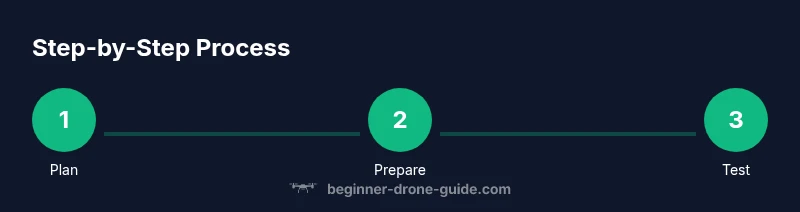
Plan the operation
Define the objective, confirm legality, and select a safe drop scenario using inert payloads first. Identify a wide, unobstructed area away from people, pets, and wildlife, and establish a clear safety zone.
Tip: Document the legal requirements before any flight; approvals can vary by country and region. - 2
Prepare the drone and payload
Attach the payload container securely, verify the release mechanism is free of obstructions, and ensure all connections are tight. Load inert payloads for initial testing and confirm weight compatibility with the drone's payload limit.
Tip: Do a visual inspection of wiring and hinges before connecting the payload system. - 3
Install and calibrate the release
Mount the release mechanism and run a dry run with no payload to ensure the actuator engages smoothly and that the ground crew is ready for a safe detachment.
Tip: Use a soft ground target during calibration to avoid damage to gear. - 4
Calibrate for wind and altitude
Assess wind speed, hover altitude, and drop height using inert weights. Adjust drop timing to account for drift and ensure repeatable releases.
Tip: Record wind data and altitude for every test run to build a reliable baseline. - 5
Conduct a controlled dry run
Perform a test flight over a secured area at low altitude with inert payloads. Observe the drop, confirm the payload lands in the intended area, and verify that the release does not impart unsafe motion to the drone.
Tip: Have a ground observer and a safety perimeter during tests. - 6
Review, document, and proceed
Analyze the test results, correct any mechanical or operational issues, and confirm you have proper authorization for any live payload work. Only proceed to live tests if permitted and safe.
Tip: Keep a detailed flight log and wear PPE during live tests.
Frequently Asked Questions
Is it legal to drop bait with a consumer drone?
Legality depends on your jurisdiction and the specific use case. Always check local aviation and wildlife regulations and obtain any required permits before attempting payload drops.
Dropping payloads from a drone is regulated; check your local rules and obtain approvals before any live tests.
What payload weight can a typical consumer drone drop?
Payload limits vary by model. Do not exceed the manufacturer’s specified payload, and conduct thorough ground and flight testing with inert weights before any real deployment.
Payload limits differ by drone; never exceed the stated weight and test with safe, inert weights first.
What are safe alternatives to dropping bait?
Consider signaling devices or non-harmful markers, or conduct on-ground deployments. Use drone payloads only in controlled, approved research or management contexts.
Use non-harmful alternatives or conduct on-ground deployments in approved contexts.
How do I test a payload release safely?
Use inert payloads, choose a safe test site, and have a defined safety perimeter. Verify the release works reliably without destabilizing the aircraft.
Test with inert payloads in a safe area and confirm stability and release reliability.
Do I need a license to fly payload drops?
Many jurisdictions require authorization, waivers, or licenses for payload-release operations. Check with local aviation authorities and follow their guidance.
Often you need authorization or a waiver; consult your local aviation authority.
Can I drop to wildlife or in parks?
Most places prohibit feeding or baiting wildlife and dropping in parks without express permission. Seek alternatives in approved research or conservation programs.
Dropping bait over wildlife or in parks is generally restricted; obtain proper permissions.
Watch Video
Quick Summary
- Plan legality before flight; approvals vary by region.
- Test with inert payloads first; validate release mechanics.
- Follow a strict safety perimeter and keep records.
- The Beginner Drone Guide team recommends prioritizing ethics and safety.