Drone Near Airport: Safe Flying Guide for Beginners
Learn how to fly a drone near an airport safely with practical steps, authorization guidance, and safety tips. This beginner-friendly guide covers airspace rules, LAANC access, and real-world scenarios.


Flying a drone near an airport is typically prohibited without official airspace authorization. If you must operate, obtain airspace authorization (LAANC or FAA-approved process), know where controlled airspace begins, and follow all FAA rules and NOTAMs. Always verify airspace status with official maps before takeoff. If you encounter an emergency or special event, coordinate with airport operations and request temporary authorization.
Why flying near airports is risky and often illegal
According to Beginner Drone Guide, the airspace around most airports is tightly controlled to protect aircraft in all phases of flight. For beginners, attempting to fly a drone near an airport without permission can lead to enforcement actions, interruption of operations, and risk to people on the ground. In practice, what looks like a simple scouting flight can quickly intersect with active flight paths, air traffic control directives, and emergency operations. The result is not just a citation; it can cause safety hazards for pilots and bystanders. This section explains the core reasons airspace near airports is restricted and how you can approach any operation with a safety-first mindset.
Air traffic controllers manage routes and altitudes to keep aircraft safely separated. Even small drones can compete for airspace and create conflicts if your equipment malfunctions or you misjudge weather. In addition to legal risk, there is the practical burden of navigating complex permission processes, crowded airspace, and limited takeoff windows. By understanding why these restrictions exist, you’ll be better prepared to plan compliant flights or choose safer alternatives, such as designated UAS test zones or private sites away from active airports.
How airspace works for drones
Airspace around airports is categorized to reflect levels of control. For drones, the key idea is that some zones require formal authorization before you fly, while others are more open to recreational or certain commercial operations. Near busy hubs, air traffic control priorities and instrument flight rules take precedence over casual drone flights. This structure helps minimize conflicts with piloted aircraft, protect people on the ground, and maintain orderly airspace for all users. As a beginner, recognizing that airspace is not a static zone but a living set of rules—changing with weather, time of day, and flight activity—will help you plan safer, compliant missions. The best practice is to treat any flight near an airport as potentially restricted until you confirm otherwise with official sources.
How to determine whether you're near controlled airspace
Before you power up, verify your location against official airspace data. Start with a reputable airspace map or app that shows controlled airspace, temporary flight restrictions, and active NOTAMs. Cross-check with sectional charts and, if available, the FAA LAANC system for near-real-time authorization. If your planned route intersects any controlled or restricted airspace, you must obtain permission and comply with any altitude or timing restrictions. Always keep your flight plan on file and be ready to adjust or abort if the airspace status changes. Regular checks help prevent accidental incursions and protect both you and nearby air traffic.
The legal steps to operate legally near an airport
When your flight site lies in proximity to an airport, you will usually navigate a formal authorization process. Start by confirming whether the airspace is controlled and whether any special use airspace applies. If authorization is required, request it through LAANC or the official FAA process, making sure to specify your drone model, weight, flight time, altitude, and the exact location. Comply with any imposed geofencing, time windows, or route constraints. Maintain communication with a designated observer if you have one, and be prepared to land if airspace status changes. After the flight, document the operation and review any advisories to inform future missions.
Tools and apps to help you stay compliant
Leverage a combination of official and third-party tools to stay compliant. Use LAANC-enabled apps for real-time authorization, and supplement with apps like B4UFLY to view current restrictions. Keep a reliable airspace map handy, and subscribe to NOTAM updates related to your location. Practicing with sandbox environments or designated training sites away from airports can help you build proficiency without risk. Regular software updates and firmware checks on your drone will also ensure that warnings and geofencing behave as expected when you approach sensitive airspace.
Respect safety and privacy near airports
Safety near airports is about more than following the letter of the law. It also means respecting privacy, minimizing noise, and avoiding crowded venues where people are present. Maintain a strong line of sight, use a visual observer when possible, and plan for emergencies with a clear landing area in case you lose GPS signal or if weather shifts suddenly. If you’re unsure, choose safer alternatives like private training grounds or open fields far from runways and taxiways. Following these practices reduces risk for everyone and reinforces responsible drone piloting as a beginners' habit.
Authority sources and further reading
To deepen your understanding of operating near airports, consult official FAA resources and trusted educational pages. The FAA’s UAS portal provides current airspace information, authorization pathways, and safety guidelines. You should also review NOTAMs and local air traffic advisories from your region’s control facilities. The following sources are valuable starting points: FAA UAS (https://www.faa.gov/uas/), LAANC information (https://www.faa.gov/uas/programs_activities/remote_id/), and general airspace guidance for UAS operators (https://www.faa.gov/uas/). These references offer authoritative explanations and up-to-date procedures for safe, legal drone flights near airports.
Tools & Materials
- Drone(Ensure it is registered if required; confirm weight class for your operation)
- Controller/Remote(Keep within normal control range and monitor signal quality)
- Smartphone or tablet with flight apps(Install FAA-approved apps like LAANC or B4UFLY for real-time status)
- Airspace maps or apps(Have up-to-date digital access to current airspace information)
- Visual observer (spotter)(Strongly recommended for maintaining line of sight and safety)
- Flight log or notebook(Record dates, times, locations, and authorization IDs)
Steps
Estimated time: 30-45 minutes
- 1
Verify airspace status
Check whether the intended flight area falls inside controlled airspace or a special use area. Use official maps and apps to confirm status before you power on.
Tip: Consult multiple sources to confirm accuracy. - 2
Obtain necessary authorization
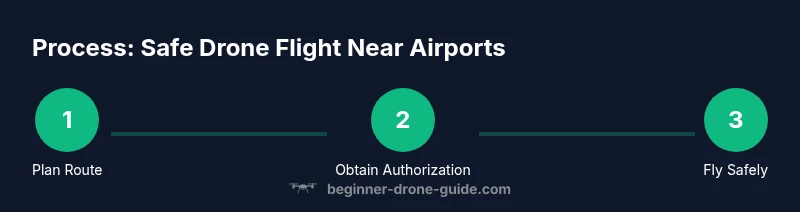
If the area is controlled or near an airport, obtain airspace authorization through LAANC or the official FAA process before takeoff.
Tip: Never assume permission without verification. - 3
Plan your flight path
Draft a route that keeps you well clear of airport operations, crowds, and restricted zones. Prefer higher margin for safety and emergency landing options.
Tip: Pre-program a conservative return-to-home plan. - 4
Prepare safety measures
Set return-to-home, altitude limits, and enable obstacle avoidance if available. Have a visual observer and maintain line of sight.
Tip: Do a pre-flight check of batteries and firmware. - 5
Monitor airspace during flight
Keep watching the airspace status during the flight and be ready to land immediately if the airspace status changes.
Tip: Communicate with your spotter if conditions shift. - 6
Post-flight review
Log the flight, review airspace advisories, and file a post-flight report if required by your local regulations.
Tip: Note any anomalies for future improvements.
Frequently Asked Questions
Is it legal to fly a drone near an airport without authorization?
No. Flights near airports typically require airspace authorization and strict compliance with FAA rules. Always check current airspace status and obtain permission before flying.
You generally cannot fly near an airport without authorization; check airspace status and get permission first.
What is LAANC and how do I use it near airports?
LAANC is the FAA’s system that provides near real-time authorization to operate in controlled airspace. Join a certified service provider and request authorization for your planned flight area.
LAANC gives real-time clearance to operate in controlled airspace; apply through a certified provider.
Do recreational pilots need a license to fly near airports?
Recreational pilots must follow the FAA recreational rules and adhere to airspace restrictions. A remote pilot certificate is required for commercial operations.
If you fly commercially, you need a remote pilot certificate; recreational pilots must still obey airspace rules.
What safety practices help when operating near airports?
Maintain visual line of sight, use a spotter, plan a conservative flight path, and have an emergency landing plan. Check weather and airspace status before takeoff.
Stay within sight, have a spotter, and plan for emergencies.
What should I do if airspace status changes mid-flight?
If airspace restrictions change, immediately land or follow the new authorized path. Communicate with your spotter and monitor official advisories.
If airspace changes, land safely or follow the authorized path and stay updated.
Watch Video
Quick Summary
- Know airspace rules before takeoff
- Obtain proper authorization for controlled areas
- Plan, monitor, and log every flight near airports
- Use trusted apps to stay compliant