Can You Use Drones to Recover Deer? A Beginner's Guide
Learn how beginners can safely use drones to locate and assist deer, with planning tips, sensor options, safety practices, and legal considerations for humane wildlife recovery.


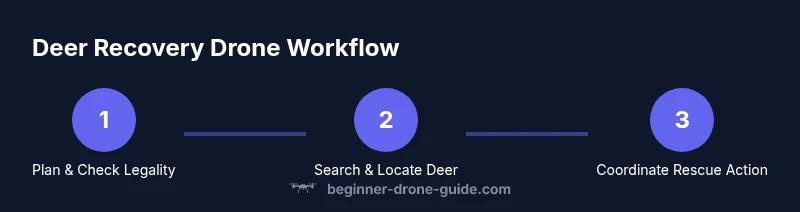
According to Beginner Drone Guide, can you use drones to recover deer? Step 1: Check local regulations and permits to avoid legal issues. Step 2: Plan a non-intrusive flight path that minimizes wildlife disturbance. Step 3: Deploy a suitable drone with thermal imaging or high-resolution cameras to locate the deer. Step 4: Coordinate with ground responders for humane recovery.
Can you use drones to recover deer responsibly?
The question can you use drones to recover deer has practical implications for safety, ethics, and effectiveness. From an aerial vantage point, drones can help locate distressed deer across rugged terrain, monitor movement, and provide real-time situational awareness to ground crews. However, success depends on choosing appropriate sensors, planning flights that minimize disturbance, and coordinating with wildlife authorities. In many regions, wildlife agencies encourage or regulate drone use during rescue operations to reduce harm to animals and people. This guide discusses how to balance the benefits with potential risks and outlines a humane, compliant approach when a deer is stranded or injured. Throughout the process, it’s essential to prioritize the welfare of the animal and the safety of responders.
How aerial scouting complements ground teams
Aerial scouting via drones can dramatically expand search coverage, especially in dense vegetation or uneven terrain where ground teams might struggle to reach. Drones provide real-time maps showing deer location, movement corridors, water sources, and potential escape routes. When used responsibly, reconnaissance from above supports ground teams by narrowing search areas, reducing fatigue, and guiding responders to the most probable deer locations. It’s important to maintain clear communication between pilots and ground crews and to avoid duplicating efforts. By integrating aerial data with ground observations, the rescue operation becomes more efficient and less stressful for wildlife. This collaboration also helps in documenting outcomes for wildlife agencies and land managers.
Choosing the right drone and sensors for wildlife recovery
Selecting the right platform for can you use drones to recover deer starts with sensor choice and flight capability. A daylight camera is useful for general scouting, while a thermal imaging sensor can help distinguish warm-bodied deer in cooler environments or through light cover. A drone with stable flight, good GPS positioning, and sufficient flight time is essential for covering large habitats. Consider a camera with a reasonable zoom to avoid close approaches and a processor that can stitch maps or create simple overlays for the team. Remember to verify that the drone’s noise and rotor design minimize disruption to nearby wildlife. Calibration of sensors and regular maintenance are also critical to reliable performance in field conditions.
Flight planning to minimize disturbance
Effective flight planning reduces risk and keeps can you use drones to recover deer ethical. Begin by defining the objective (location, visibility, or behavior observation) and identifying no-fly zones or sensitive wildlife areas. Plan an altitude that provides useful coverage without getting too close to deer; avoid sudden maneuvers or rapid altitude changes that could startle animals. Choose weather conditions with manageable wind and clear visibility to prevent drift and ensure stable imagery. Pre-brief the team on communication protocols and escape plans if deer relocate. Establish a communication channel for real-time updates, and set a time window that minimizes repeated disturbance to the same area. All actions should prioritize animal welfare and comply with local wildlife and aviation rules.
Step-by-step use-case: locating and stabilizing a deer
This section presents a practical scenario to illustrate can you use drones to recover deer in action. Step-by-step workflows from planning to on-the-ground coordination help beginners understand how to apply drone-assisted search sensibly and safely. Begin with a clear objective: locate a deer that appears distressed and assess its condition from a safe altitude. Then deploy the drone along a planned grid or transect to cover the area efficiently, using thermal imaging if visibility is limited. As soon as a deer is located, relay precise coordinates to ground responders, and maintain a watchful, non-intrusive observation until teams reach the site. Do not attempt to move or handle wildlife without trained professionals. Debrief the operation afterward to capture lessons learned and update local wildlife response plans.
Legal, ethical, and regulatory considerations
Understanding the legal landscape surrounding can you use drones to recover deer is essential. Always check local aviation regulations, wildlife protection rules, and hit-list any permits or agency approvals required for drone use in wildlife rescues. Ensure privacy considerations are respected when deploying drones on public or private lands. Ethical practice means delaying or avoiding drone use if the animal is highly stressed or if ground teams can reach the deer without drone assistance. Coordinate with wildlife agencies or land managers to ensure operations align with conservation goals and do not inadvertently harm the animal or its habitat. Documentation and accountability help build public trust and support for responsible drone-assisted wildlife recovery.
Training, safety, and community guidelines
Successful can you use drones to recover deer operations require proper training and safety discipline. Enroll in a formal drone safety course, especially one that covers wildlife interactions and mission planning. Always perform a preflight check, including battery health, sensor calibration, and fail-safe settings. Wear PPE as appropriate if you’ll be on the field, and maintain line-of-sight when possible to quickly intervene if the animal moves toward danger. Communicate with nearby volunteers and landowners, and respect posted signs and access restrictions. Foster a culture of safety and care for wildlife where every drone flight is treated as a conservation activity as well as a technical exercise.
Real-world scenarios and case studies (fictional examples)
In this hypothetical note, a ranger team responds to a deer that appears entangled on a hillside after a storm. A drone equipped with a thermal camera helps locate the deer beneath thick brush. The team coordinates with ground crews to approach from a safe angle, avoiding loud noises. After confirming the deer’s status, responders request transport support from a wildlife veterinarian and await instructions. This scenario emphasizes the necessity of calm, coordinated action and the value of combining aerial data with on-the-ground expertise to achieve humane outcomes. While fictional, it mirrors common best practices in wildlife rescue where drones serve as a supplementary tool, not a substitute for trained responders.
Common mistakes and how to avoid them
A few frequent errors occur in can you use drones to recover deer operations. Flying too close, without considering wind and noise, can cause stress and displacement. Overreliance on thermal imaging without ground validation can produce false positives. Failing to coordinate with wildlife agencies or ground teams can lead to unsafe or non-compliant actions. Inexperience with wildlife behavior may cause delays or unsafe flight paths. To avoid these mistakes, establish clear protocols, conduct regular drills, and maintain open lines of communication with partners. Always prioritize the animal’s welfare and document outcomes for ongoing improvement.
Tools & Materials
- Drone with wildlife-friendly sensors (thermal imaging and daylight camera)(Prefer a platform with stable flight and gentle noise profile; ensure sensor calibration.)
- Extra batteries and a portable charger(Have enough capacity for multiple sorties; rotate to keep operations continuous.)
- Spare propellers and basic toolkit(Carry for quick on-site repairs if needed.)
- Two-way radio or mobile communication device(Coordinate with ground teams when line-of-sight is limited.)
- Ground markers (flags, high-visibility markers)(Helpful for marking search boundaries or deer locations on the ground map.)
- Field safety guide for wildlife encounters(Printed or digital copy to reference during operations.)
Steps
Estimated time: 30-90 minutes
- 1
Define objective and area
Clarify what you aim to achieve (location, status check, or assist ground team) and map the search area. Identify potential wildlife-sensitive zones and ensure you have authorization from landowners or wildlife authorities.
Tip: Document objectives in a shared briefing so all team members are aligned. - 2
Verify permissions and preflight
Check local drone regulations, land access rules, and wildlife guidelines. Perform a preflight check of battery health, sensors, and GPS signal; confirm weather suitability.
Tip: If in doubt about legal requirements, pause and consult the relevant agency before flight. - 3
Plan flight path and altitude
Create a safe, non-intrusive flight plan that provides coverage without crowding the deer. Choose an altitude that balances visibility with disturbance risk and determine a transect or grid pattern.
Tip: Avoid sudden moves and maintain a thoughtful, predictable flight tempo. - 4
Execute search and observe
Launch the drone and follow the planned route while monitoring wildlife reactions. Use thermal imaging if visibility is limited, and relay deer coordinates to ground responders in real time.
Tip: Keep a constant line of sight if required by local rules and minimize hovering near potential habitats. - 5
Coordinate with ground teams
Share live feeds, maps, and location data with responders. Provide ongoing status updates and be prepared to adjust plans if the deer moves.
Tip: Have a clear stop-work rule if deer shows signs of distress or agitation. - 6
Debrief and share learnings
After the operation, review what worked and what didn’t. Update procedures and training materials to improve future responses and maintain documentation for wildlife agencies.
Tip: Record lessons learned to refine ethical guidelines.
Frequently Asked Questions
Is it legal to use drones for deer recovery?
Legal requirements vary by location. Always check local aviation and wildlife regulations and obtain any required permits before drone use for wildlife recovery. If in doubt, contact the relevant authority.
Legal use varies by place, so check local aviation and wildlife rules and ask authorities if you are unsure.
Do thermal cameras reliably detect deer in dense cover?
Thermal imaging can help identify heat signatures through some cover, but visibility depends on conditions and terrain. It should be used as a support tool alongside ground validation.
Thermal can help, but it isn’t perfect; use it with ground checks.
What altitude is best for searching deer with a drone?
Start at a conservative altitude to reduce disturbance and descend as you locate the animal, while preserving a safe flight margin.
Begin higher, then lower once you spot the deer, staying safe and respectful.
Should I contact wildlife services before operating?
Yes. Reach out to wildlife agencies or land managers to obtain guidance and authorization, and to coordinate responders if needed.
Yes—coordinate with wildlife services before you fly.
What should I do if a deer is injured or trapped?
Do not attempt to move or handle the deer. Call trained wildlife professionals and follow their instructions.
Don’t move an injured deer—call professionals right away.
Do I need a license to use drones for wildlife rescue?
Licensing and registration requirements vary by jurisdiction. Check local laws and obtain any required certifications before operating.
License rules depend on where you are; verify local requirements.
Watch Video
Quick Summary
- Plan, obtain permissions, and brief the team before flight.
- Choose sensors and flight parameters that minimize wildlife disturbance.
- Drones support ground responders, they do not replace them.
- Prioritize animal welfare and comply with regulations.
- Document outcomes for ongoing improvement.