Can You Use Drones in National Forests? A Practical Guide for Beginners
Explore whether you can fly drones in national forests, the FAA rules you must follow, permit needs, and practical safety tips for beginner pilots. Learn how to plan flights responsibly with forest regulations.


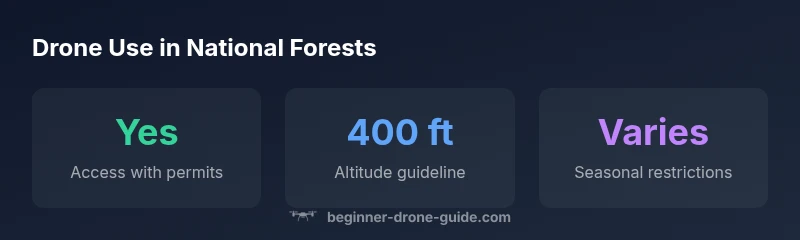
Yes—national forests generally allow drone flights with conditions. You must follow FAA rules (Part 107 for commercial use or recreational rules for hobbyist pilots), fly within visual line of sight and under altitude limits, and obey forest district rules. For commercial work or filming, most districts require a forest permit; always confirm seasonal closures or fire restrictions with the local ranger district.
Can You Use Drones in National Forests? A Practical Overview
According to Beginner Drone Guide, national forests generally allow drone flights, but pilots must comply with FAA regulations and forest-specific restrictions. The Beginner Drone Guide team found that most districts permit recreational and some commercial operations, provided you have proper authorization and stay mindful of wildlife and other forest users. The key is to research the specific forest district before you fly, since rules can vary by jurisdiction and season. In practice, you’ll want to map your route, verify current closures, and contact the district office if you plan anything beyond a basic recreational flight.
How FAA Rules Apply in National Forests
FAA rules govern drone operations across the United States, and national forests are no exception. Recreational flyers must follow the safety guidelines established by the FAA, while commercial operators typically use Part 107 with a remote pilot certificate. In addition to federal rules, you must respect airspace restrictions, temporary flight bans, and geofenced areas. The 400-foot altitude ceiling, visual line-of-sight requirements, and precautions around people and property generally apply in forested areas as they do elsewhere. Always carry your FAA registration and, if applicable, your Part 107 certificate. The interplay between federal rules and local forest policies is the core reason you should confirm permissions before each flight.
Local Forest Regulations and Permits
National Forest lands are managed by the U.S. Forest Service, and many units require a forest or special-use permit for commercial drone operations, especially those involving filming, mapping, or business activities. Permit processes vary by district and can depend on the terrain, proximity to trails, and wildlife. Some districts may provide blanket permissions for simple recreational flights, while others may require a formal application with a safety plan. Always contact the forest supervisor or the ranger district office well in advance of your planned flight to learn the exact requirements and any seasonal restrictions.
Practical Flying Tips in National Forests
Preparation is key: review current notices, download any district maps showing flight corridors, and identify no-fly zones. Pack a safety kit (first aid, spare batteries, charged controller, and a whistle for wildlife alerts). Choose quiet, respectful flight times to minimize disturbance to wildlife and other visitors. Maintain line-of-sight, monitor weather changes, and be prepared to land quickly if wildlife or hikers approach. Your etiquette should mirror Leave No Trace principles—keep noise down, avoid nesting areas during sensitive periods, and leave vegetation untouched.
Safety and Environmental Considerations
National forests host diverse ecosystems and wildlife. Birds, elk, and other species can be stressed by drone noise, especially during breeding seasons. Avoid flights near nesting sites, water sources, and high-traffic recreation areas. Weather variability in forests—changing wind patterns and microclimates—can affect battery life and flight stability. Plan for contingencies, including emergency landings and safe storage of your devices. In short, responsible drone use means balancing your data collection needs with the health of forest ecosystems and the safety of other visitors.
Edge Cases: National Forests, National Parks, and Special Areas
It’s crucial to distinguish between National Forests and National Parks. National Parks often prohibit drone flights altogether, while National Forest lands typically permit drone operations with the proper authorizations. Certain areas within forests—such as wilderness study areas, critical habitats, or near water features—may have tighter restrictions or temporary closures. Always verify with the local forest service office and check for any wildlife or fire danger alerts before you fly. This careful approach helps you stay compliant and minimizes risk during your flights.
Common Misconceptions and How to Avoid Them
A frequent misconception is that all federal lands share the same drone rules. In reality, local forest districts set permits and access rules that can change with seasons and conditions. Another myth is that a simple registration is enough for all operations; commercial filming often requires additional permissions, environmental considerations, and sometimes a COA (Certificate of Authorization) in limited contexts. Relying on outdated information can jeopardize your operation, so always verify current guidance with the Forest Service and the FAA prior to each flight.
Drone use in National Forests — regulation snapshot.
| Aspect | FAA Rule | Forest Regulation | Permit Required? | Notes |
|---|---|---|---|---|
| Recreational flight | Recreational UAS rules (TRUST test) | District-specific rules vary | Usually not required for pure recreation | Visual line-of-sight; watch for seasonal closures |
| Commercial flight | Part 107 applies | District permits often required | Yes | Coordinate with forest supervisor for approval |
| Filming/Photography | Part 107 or COA depending on project | Permits strongly recommended | Usually required | Plan ahead with district office |
Frequently Asked Questions
Can I fly a drone in a national forest for recreation?
Yes, you can generally fly for recreation, but you must follow FAA recreational rules and observe forest-specific restrictions. Always verify current local guidance before you fly.
Yes, for recreation you usually can, just follow FAA rules and check local forest rules before you fly.
Do I need a permit to film in a national forest?
Most commercial filming or business-related drone work requires a forest or special-use permit. Contact the district office early to understand permit steps, costs, and required safety plans.
For filming, expect to need a permit—check with the local district early to learn the process.
Are there altitude restrictions in national forests?
Altitude limits typically align with FAA guidelines (often around 400 feet AGL) unless local districts specify different ceilings. Always confirm with the district heli- or drone administrator.
Stay under the standard altitude limit unless the district says otherwise.
Can I fly during wildfire season or in fire restrictions?
During fire season, many forests impose stricter rules or closures. Check the day-of status with the forest or ranger district and comply with any temporary bans.
Fire restrictions can close flights; verify status on the day you fly.
How do I obtain a forest permit?
Permits are issued by the district office and may require a safety plan, purpose description, and contact information. Start the process well in advance of your planned flight.
Contact the district office to start the permit process early.
Is drone use allowed near wildlife or nesting areas?
Best practice is to avoid flights near sensitive habitats and during sensitive periods to minimize disturbance to wildlife.
Avoid nesting sites and high-traffic wildlife areas to protect animals.
“Drone pilots should treat National Forest lands with the same respect as any public land: follow FAA rules, secure necessary permits, and stay mindful of wildlife and other visitors.”
Quick Summary
- Fly under FAA rules first and foremost
- Check district-specific forest permits for commercial work
- Watch for seasonal closures and fire restrictions
- Respect wildlife and other forest visitors
- Always verify local rules before each flight