Drone Rent: A Practical Guide for Beginners
Learn how to rent a drone for your project with confidence. This beginner-friendly guide covers when to rent, choosing providers, safety, contracts, insurance, and real-world scenarios.


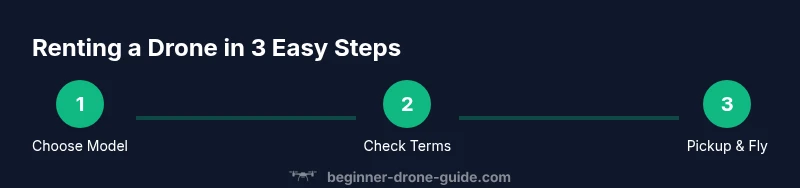
Renting a drone is often the most economical way to access newer models for a short-term project or test before you buy. To get started, pick a reputable rental provider, select a drone that fits your mission, verify insurance and terms, and sign the contract before pickup. This approach keeps costs predictable and reduces risk while you practice safe flying.
Why renting a drone makes sense for beginners
For many first-time pilots, drone rent is a smart way to access top-tier equipment without a long-term commitment. Renting lets you test different models, lenses, and flight characteristics before deciding what to buy, and it’s ideal for short-term projects, training, or seasonal shoots. The Beginner Drone Guide team has found that rental options often include flexible terms, on-demand support, and maintenance, making it easier to stay within budget while learning. When you see a drone rent option, you gain the chance to compare autopilot modes, obstacle avoidance, payload capacities, and user-friendly interfaces across multiple brands. This kind of hands-on exposure accelerates learning and builds confidence, especially for new pilots who want to fly smarter, safely, and with fewer up-front costs.
Beginner Drone Guide analysis shows that renting is a popular choice among beginners who want access to the latest models without the commitment of ownership. It also makes it easier to experiment with different control schemes and camera systems before investing in a specific setup.
If your goal is to complete a one-off project, practice skills, or train a team, drone rent provides flexibility, risk reduction, and a faster path to proficiency.
Choosing between rental and purchase for your project
Deciding whether to rent or buy hinges on how often you plan to fly, the specific use case, and your budget. If you’ll fly briefly for a single event or a one-off survey, drone rent is often the most economical path, avoiding storage, maintenance, and depreciation costs. Conversely, if you expect regular flights over months or years, purchase might eventually pay off, especially when you need specialized sensors or payloads. For beginners, renting first also reduces risk: you can learn hands-on control, practice safety protocols, and gain experience with different controllers before committing to a single setup. Always factor in training time, insurance options, and potential downtime from maintenance when weighing the choice. According to Beginner Drone Guide, many aspiring pilots switch to ownership after a few successful rentals, once needs and confidence align.
How to pick a rental provider
Start by evaluating provider credentials, fleet breadth, and what’s included in the rental package. Look for providers with well-maintained fleets, up-to-date firmware, and clear safety policies. Check whether insurance, spare batteries, and a preflight briefing are included or available as add-ons. Compare drone models for suitability to your mission: camera quality, stabilization, flight time, weight, and compatibility with your mission control apps. Read reviews from other beginners to gauge service quality, pickup convenience, and support responsiveness. Finally, verify the rental terms: deposits, returns, fuel or battery policies, and what happens if the drone is unavailable on your chosen date. The right provider will balance affordability with a solid safety ethos and helpful guidance.
What to verify before signing a rental agreement
Before you commit, read the contract line by line. Confirm the rental period, total charges, and any late fees or cancellation penalties. Note who owns the equipment during the rental and whether the contract covers damage, loss, or theft. Check the replacement cost or deposit and the required condition on return. Make sure an up-to-date safety briefing, preflight checklist, and operating manual are provided. Understand your responsibilities for batteries: charging, storage, and return state. If you’re unsure about a clause, ask for clarification or seek a longer trial period to test the drone under your typical workflow. Transparent terms help prevent surprises.
Insurance and liability basics for drone rental
Insurance coverage is a common rider with drone rent, but details vary widely. Some rental agreements include basic coverage for accidental damage, while others require you to secure your own policy. Be sure you know what is covered, the deductibles, and the process to file a claim. Liability coverage protects you against third-party injuries or property damage during a flight; check if it extends to your crew and location. If your project includes high-risk operations, discuss extra coverage options or a short-term policy tailored to your timeline. Keep a digital copy of the policy handy and confirm how to access claims support in case of an incident.
Understanding drone specs you actually need
Beginner-friendly rentals often emphasize ease of use over extreme performance, but you still want to match specs to your task. Focus on flight time per battery, reliability of GPS and obstacle sensing, and the camera system if you’ll capture imagery. Check stabilization features like gimbals and rolling shutter performance, especially for moving subjects. For real estate or event coverage, a drone with a decent camera and smooth footage is more valuable than raw speed. Be mindful of payload limits, wind resistance, and software compatibility with your editing workflow. If in doubt, ask the rental provider for a side-by-side comparison of models you’re considering.
Rental contracts and safety briefs
Most rental experiences begin with a safety briefing that covers airspace awareness, local regulations, and emergency procedures. Expect a walkthrough of the controller, return procedures, battery management, and a preflight checklist. You’ll learn how to calibrate IMU/GPS, activate return-to-home, and handle low-battery scenarios. Ask the staff to demonstrate a basic flight in an open area and to review your plan for the mission, altitude limits, and altitude compliance. Having this briefing before your first flight reduces risk and builds confidence.
Real-world rental scenarios and case studies
Imagine you’re filming a real estate property: you rent a compact camera drone with a stable flight profile and a high-resolution camera. The rental provider supports you with a fast pickup, battery swaps, and a brief on responsible flight near crowds. For a campus event, you select a longer-flight-time model with simple autonomous modes to capture wide-angle coverage while you monitor the screen. In a survey task, you choose a rugged, long-endurance drone with mapping software. These scenarios illustrate how rental flexibility enables experimentation and helps you pick the best tool for the job without a long-term purchase commitment.
Costs and budgeting when you rent
Budget planning for drone rent involves the rental rate, included services, and any add-ons like extra batteries or insurance, plus potential delivery fees. Rates vary by drone class, flight time, and regional demand, so shop around and compare total estimated costs for your project. Ask whether the price includes basic maintenance, firmware updates, and a prep flight. Also consider the cost of training or practice flights to reach a level of proficiency where your rental meets your objectives. A thoughtful budgeting approach prevents sticker shock and helps you stay within your project’s financial envelope.
Tips for first-time renters and common mistakes
Pro tip: Practice in a safe, legal area before your event or shoot, and arrive early to pick up and inspect the drone. Do a thorough preflight check, verify GPS lock, and confirm battery health before departure. Common mistakes include underestimating wind limits, skipping the safety briefing, and not clarifying who is allowed to operate the drone. Always document the equipment condition on pickup, bring spare batteries, and keep a simple flight log for quick reference during the rental period. Following these best practices helps you fly with confidence and finish your project smoothly.
Tools & Materials
- Government-issued photo ID(Bring to pickup; used for identity verification and contract signing)
- Credit or debit card(Needed for deposits, charges, or optional insurance)
- Smartphone with rental app(Used to sign contracts, receive instructions, and locate the drone)
- Preflight inspection checklist( Print or digital; ensure all items are checked before flight)
- Extra batteries and charger(Recommended for longer shoots or multiple flights)
- Carrying case or protective bag(Helpful for transport and storage between flights)
- Insurance documentation (if required)(Bring proof if your provider or policy requires it)
Steps
Estimated time: 60-120 minutes
- 1
Define your needs and budget
Identify your mission, desired camera quality, flight time, and environment. Set a realistic budget for rental fees, insurance, and potential add-ons. This clarity guides all subsequent decisions and helps you avoid overpaying for capabilities you won’t use.
Tip: WRITE DOWN your mission timeline and camera requirements before browsing models. - 2
Find and compare rental providers
Search for local and online rental services with beginner-friendly options. Compare fleets, included safety features, insurance options, and pickup/delivery convenience. Prioritize clear terms and responsive support.
Tip: Ask for a side-by-side model comparison to see differences in weight, wind rating, and camera specs. - 3
Check eligibility and contract basics
Confirm age requirements, license needs (if any), and what the rental covers (damage, loss, theft). Review deposits, return policies, and any fees for late returns or battery nadirs. Ensure you understand who owns the drone during the rental period.
Tip: Request a copy of the contract and flag any ambiguous clauses before signing. - 4
Reserve a drone and verify availability
Choose a model that aligns with your mission and reserve for your date. Confirm the pickup time, location, and required documents. If your date changes, ask about adjustments without penalties.
Tip: If possible, schedule a brief equipment test flight prior to your actual project. - 5
Attend safety briefing and perform a preflight
Participate in the safety briefing, review airspace rules, and follow the preflight checklist. Calibrate IMU/GPS, check battery health, and ensure geofencing is understood. Do a quick test flight in a safe area.
Tip: Have the staff demonstrate a basic flight and point out how to engage return-to-home. - 6
Execute your flight plan and return the gear
Execute the mission with a calm, methodical approach. Monitor battery levels and weather, and log any anomalies. Return the drone per the provider’s process, replenish batteries if needed, and complete any return inspection.
Tip: Keep a flight log and photograph the drone’s condition at return to avoid disputes.
Frequently Asked Questions
What is drone rent and how does it work?
Drone rent means leasing a drone for a set period, often including basic support and insurance options. You select a model, sign a contract, and return the gear after your project. This approach reduces upfront costs and lets you test different drones before buying.
Drone rent is like a short-term loan of a drone with support and insurance options, so you can use different models without buying one.
Do I need a license to rent a drone?
Licensing requirements vary by country and region. Some rental providers require basic operator training, while others let you rent with standard proof of identity. Always check local regulations and the rental agreement.
Licensing depends on your location. Check your local rules and the rental terms before you rent.
How do I verify the drone's condition on pickup?
Inspect the drone, batteries, and accessories with the rental staff and document any wear. Take photos or videos of the gear before use and note any existing damage on the contract.
Inspect everything, take photos, and note any wear before you fly a rental drone.
What happens if the drone is damaged during rental?
Most rentals have a damage policy outlining coverage, deductibles, and claims. Report incidents promptly and follow the provider's procedure for repairs or replacements.
If the drone is damaged, follow the rental's damage policy and report it quickly.
Can rental include training or practice flights?
Some providers offer beginner training or a brief hands-on orientation as part of the rental, especially for first-time pilots. If not, request a guided tutorial during pickup.
Some rentals include training; if not, ask for a quick tutorial at pickup.
What costs should I expect when renting a drone?
Costs vary by drone class, flight time, location, and add-ons like extra batteries or insurance. Expect an upfront deposit and periodic charges during the rental period; always ask for a full, itemized quote.
Rental costs depend on the drone and time; request a full quote before you sign.
Watch Video
Quick Summary
- Rent when you need flexibility and up-to-date gear.
- Compare providers for safety, support, and total cost.
- Read contracts carefully to avoid surprises.
- Insurance and safety briefs are essential for beginners.