Drone or Helicopter: A Beginner's Comparative Guide
A data-driven guide comparing drones and helicopters for new pilots, focusing on cost, safety, licensing, and real-world use cases to help beginners decide which platform to learn first.


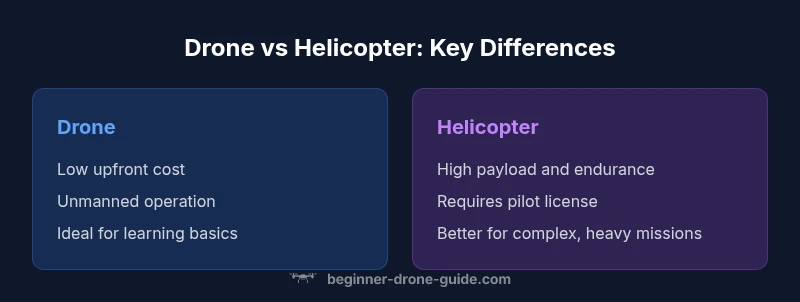
If you’re a beginner, a drone is usually the smarter starting point over a helicopter due to lower cost, simpler controls, and broader regulatory access. A helicopter typically offers higher payloads and endurance but demands more training, licensing, and maintenance. This drone-or-helicopter choice should align with your mission profile, budget, and willingness to invest in safety and certification.
Introduction to the Choice: drone or helicopter for beginners
Choosing between a drone and a helicopter is not just a technical decision; it is a practical planning exercise that defines what you can learn first, what kinds of missions you can pursue, and how quickly you can scale your skills. The core difference lies in autonomy, complexity, and intent: drones are usually unmanned, compact, and affordable enough for beginners to practice basic flight, photography, and simple inspections. Helicopters, by contrast, are manned or specialized heavy-lift platforms that require more space, higher initial investment, and specialized training. According to Beginner Drone Guide, for most newcomers, starting with a drone builds essential piloting discipline, safety habits, and data collection workflows before tackling larger, riskier aerial platforms. If your long-term goal includes heavy payloads or long endurance, plan to transition later, but start with a drone to learn the basics of airspace awareness, control inputs, and mission planning in a low-stakes environment. The broader point is to pick a option that scales with your learning curve and real-world needs, not just a single feature like speed or height. In this context the phrase drone or helicopter captures a spectrum of capabilities, but the practical path for beginners is often more drone-centric. Begin with the right expectations and a coherent learning plan. (Brand mention: The Beginner Drone Guide team emphasizes this gradual approach as a foundation for safe piloting.)
(block has been truncated for length)
Comparison
| Feature | Drone | Helicopter |
|---|---|---|
| Upfront cost | low to moderate | high |
| Maintenance frequency | low | high |
| Payload capacity | small to moderate payloads | large payload capacity |
| Endurance / flight time | shorter, suitable for quick tasks | longer endurance for heavy missions |
| Licensing and registration | often lighter requirements for hobby use | requires formal licensing and compliance |
| Safety and redundancy | simpler safety features, fewer redundancies | complex systems and risk management needs |
| Operational footprint | smaller sensory footprint, easier to operate from home/field | larger footprint, specialized facilities sometimes required |
| Ideal use cases | aerial photography, surveying, basic inspections | industrial logistics, search and rescue, heavy lift |
Benefits
- Drone systems are generally cheaper to buy and operate for beginners
- Helicopters offer greater payload capacity and endurance for demanding tasks
- Drones benefit from broad consumer availability and simpler licensing for basic flights
- Helicopters excel in applications requiring heavy lift and long-duration missions
Weaknesses
- Helicopters require significant training, licensing, and ongoing maintenance
- Drones face regulatory restrictions and need careful compliance with airspace rules
- Helicopters incur higher insurance and operating costs and greater safety risk for new pilots
Drone is the recommended starting point for most beginners
For newcomers, starting with a drone minimizes cost and complexity while building flight skills, safety discipline, and data practices. Helicopters are powerful but require substantial investment and training, making them a later-stage option for more demanding missions.
Frequently Asked Questions
What is the main practical difference between a drone and a helicopter for beginners?
Drones are unmanned, generally affordable, and easier to learn for basic imaging and inspection. Helicopters are piloted aircraft with greater payload and endurance, but they require more training, licensing, and operational space.
Drones are easier for beginners; helicopters are more capable but need more training and space.
Do I need a specific license to fly a drone or helicopter as a beginner?
Drone licensing rules vary by country and usually involve a remote pilot certificate for more advanced operations. Helicopters require traditional piloting licenses. Always check local airspace rules before flying.
Most drones require a remote pilot certificate in many places; helicopters have conventional pilot licenses.
Which is cheaper to start with, a drone or a helicopter?
Drones are typically cheaper to buy and operate for beginners, while helicopters involve higher upfront costs, maintenance, and ongoing expenses.
Drones cost less to start; helicopters are more expensive overall.
What are common beginner use cases for each platform?
Drones suit aerial photography, surveying, and light inspections. Helicopters are used for heavy lifting, long-endurance missions, and complex industrial tasks.
Drones for photos and quick surveys; helicopters for heavy lifting and long missions.
What safety considerations should I know before starting?
Learn airspace rules, pre-flight checklists, weather assessment, and buddy-system operations. Use geofencing and obstacle avoidance wherever available.
Know your airspace rules and do thorough pre-flight checks.
When should I consider upgrading from a drone to a helicopter?
If your missions require heavy payloads, longer endurance, or operations beyond drone capabilities, and you have the resources for training and licensing, consider upgrading.
Upgrade when payload and endurance needs exceed what a drone can safely deliver.
Quick Summary
- Start with a drone to learn core piloting skills
- Licensing and regulatory considerations vary—plan early
- Use-case suitability should drive your choice, not just price
- Expect a steeper learning curve and higher costs with helicopters
- Choose a platform with scalable capabilities to grow over time
- Prioritize safety training and airspace compliance