Drone for Fishing for Sale: A Practical Beginner’s Buying Guide
Explore how to choose the right drone for fishing for sale, with safety tips, key features, and buying strategies for beginners in 2026.


If you’re evaluating a drone for fishing for sale, start with models that are waterproof or water-spray resistant and offer buoyant flotation options. Prioritize reliable GPS, stable stabilization, and a battery life that suits your fishing trips. For beginners, choose an affordable kit with clear manuals and solid customer support, then upgrade as you gain experience and confidence on the water.
Why a fishing drone makes sense for anglers
For anglers, adding a drone to the toolkit can open new angles on catching fish and scouting water. The right tool can help locate active schools, survey shorelines, and plan routes for casting. When shopping for a drone for fishing for sale, prioritize water resistance, buoyancy, and stable flight over fancy features that are rarely used. According to Beginner Drone Guide, the best entry points emphasize reliability and ease of use, rather than sheer gimmicks that sound impressive but fail when exposed to spray or wind. The Beginner Drone Guide team found that new pilots benefit from models with clear manuals, responsive customer support, and a gentle learning curve. You’ll use the drone to map water depth, monitor access points, and retrieve gear on lakes or slow-moving rivers. By combining aerial data with on-water fishing, you can optimize trips and save time, especially in unfamiliar waters. In short, a purpose-built drone makes your time on the water more efficient and enjoyable.
Core capabilities that matter on the water
Water resistance, buoyancy, and stable flight are foundational for fishing applications. Look for waterproofing or water-spray resistance, and an optional flotation kit or foam floats to keep the craft afloat if you land in choppy water. Payload options let you carry small baits, line, or accessories without overloading the frame. A camera with good low-light performance and solid stabilization helps you identify fish structure from a distance. Flight features like GPS-based hold, return-to-home, and geofencing add safety when you’re near water. Radii of operation and link reliability matter too; ensure the control range covers the area you plan to fish. Finally, check power management: larger batteries add weight but extend flight time; many anglers prefer a balance of endurance and portability. By matching these capabilities to your typical fishing environment, you’ll narrow to a short list of strong candidates.
Durability and waterproofing for lake and saltwater use
Durability matters whenever you’re dealing with water exposure. Corrosion resistance, sealed electronics, and robust mounts help protect investments. If you fish in saltwater, opt for corrosion-resistant hardware and easily replaceable seals. A hull or chassis made from lightweight, durable materials reduces wear during trips. When you decide on a model, ensure it has a tested water-spray rating and customer-certified parts availability. Salt or mineral residue can accumulate on rotors and sensors, so rinse gently and dry after use, and store the drone in a dry environment. A hobbyist-friendly drone should also offer spare parts kits and friendly repair timelines so you can keep flying after rough days on the water.
Battery life and flight planning on the water
Flight time directly impacts how much water you can survey, bait, or scout in a session. Plan missions with realistic legs, accounting for wind, temperature, and remote-control range. A larger battery can extend flight, but it adds weight and may affect buoyancy and stability. For most beginners, targeting 20–30 minutes of active flight per leg is a practical starting point, with additional reserve time for return moves in case of weather changes. If you anticipate long sessions, consider modular battery options that let you swap during breaks. Always pre-check firmware, calibrate compass, and ensure the transmitter’s voltage is within safe limits before takeoff.
Camera quality, stabilization, and payload options
A good fishing drone balances image quality with flight stability. Look for at least 4K or 1080p video at 30fps with a gimbal that minimizes vibration. If you’re mapping shoreline structure, a stabilized camera is crucial for reliable data. Payload options can extend versatility—lightweight bait or line carry attachments, or even tiny drop systems for deploying markers. A feature-rich drone may include object tracking or computer-vision features that help you locate undercut banks or weed lines. While high-end cameras improve visuals, ensure your model remains within your budget and comfortable to operate in wet conditions.
Navigation features and reliability under wind
Wind resilience is a key consideration when fishing. Lightweight models may struggle in gusts, while sturdier platforms stay steadier and preserve image quality. Look for GPS-assisted hold, sensor-fused stabilization, and Return-to-Home logic that can cope with water reflections and fog. A robust control link reduces the risk of drift or loss of connection over open water. If you fish remote lakes, you’ll value a map-grounded flight plan, preloaded waypoints, and an app that displays wind vectors and current speed to help you decide when to launch and how to steer for safe landings.
Safety, regulations, and practical tips
A responsible angler follows local rules about drone use near water and wildlife. Always fly within line-of-sight and respect privacy and safety around other people. In many jurisdictions, recreational drone pilots can operate without a formal license, but commercial operations may require certification or a permit. Check your country’s laws before you fly, especially if you plan to monetize your fishing activities. Practice in low-risk locations, maintain a conservative altitude, and keep spare parts and a basic repair toolkit on hand. Use a checklist before every trip, including water conditions, battery health, and a recovery plan in case of a crash.
How to evaluate a deal and buying options
When evaluating a deal, translate features into practical value. Entry-level options usually cost a few hundred dollars and cover essential waterproofing, basic camera work, and simple controls. Mid-range drones typically add better stabilization, longer battery life, GPS features, and brighter displays; these are suitable for regular weekend trips. Pro options offer top-tier cameras, advanced stabilization, longer range, and payload flexibility for ambitious projects. Ensure you purchase from reputable retailers with clear return policies and accessible customer support. If possible, test handling and weight balance in a store or at a demo day, and compare warranty terms. Keep in mind that prices range and accessories can add up, so budget for spare batteries and protection gear.
Real-world deployment and setup tips
Before your first fishing flight, prepare by charging batteries, attaching any floats, and calibrating sensors. Practice hovering over a calm area before attempting water missions. Use waypoints to map your typical fishing routes, and plan contingencies for changing wind or light conditions. Mount a waterproof camera housing if needed, and bring a small toolkit for quick field repairs. After you land, dry and inspect seals, clean the rotors, and store it in a humidity-controlled case. With regular practice and mindful maintenance, a fishing drone can become a reliable companion for finding structure, monitoring fish activity, and delivering tools or markers with precision.
Comparison of fishing drones by class
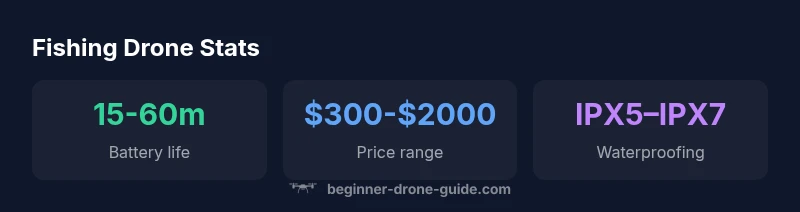
| Model Type | Estimated Battery Life | Price Range | Key Feature |
|---|---|---|---|
| Entry-level fishing drone | 15-25 minutes | $300-$600 | Waterproof chassis, basic camera |
| Mid-range fishing drone | 20-35 minutes | $600-$1200 | GPS + return-to-home, flotation foam |
| Pro fishing drone | 40-60 minutes | $1200-$2000 | High-end camera, payload options |
Frequently Asked Questions
Do I need a license to fly a fishing drone?
regulations vary by country. In many places recreational flying does not require a license, but commercial use typically does. Check your local rules and consider training if you plan to monetize fishing operations.
Rules vary by country. For recreational use, a license is often not required, but commercial use may require certification.
What features matter most for fishing drones?
Waterproofing, buoyant flotation, GPS, reliable stabilization, and adequate payload capacity are essential. A good camera helps identify structure and fish but prioritize proven performance in your typical weather.
Prioritize waterproofing, flotation, GPS, and battery life.
Can I use a consumer drone for fishing?
Consumer drones can work for basic scouting, but specialized features such as flotation and saltwater resilience are often worth the investment for frequent fishing use.
You can, but expect trade-offs on durability and water exposure.
How should I maintain a fishing drone?
Rinse salt or debris after water use, dry thoroughly, and inspect seals and floats. Keep firmware updated and store in a dry place to extend life.
Rinse after water use and keep it dry; update firmware.
What is a good budget starter for beginners?
A mid-range starter around the low four figures can offer reliable safety features and support. Avoid very cheap options that lack after-sales service.
Start with a mid-range option that has good support.
“A thoughtful, safety-first approach to buying a fishing drone improves both success on the water and enjoyment.”
Quick Summary
- Define fishing goals before buying.
- Prioritize waterproofing and buoyancy.
- Look for GPS and return-to-home features.
- Balance battery life and payload capacity.
- Know local regulations and practice safety.