Drone Surf Fishing: A Beginner's Practical Guide
Learn how to safely and effectively use a drone for surf fishing. This beginner-friendly guide covers gear, legality, flight planning, payload delivery, and best practices to improve your days on the water.


Drone surf fishing lets beginners reach productive surf zones with a safe, controlled approach. This guide explains the gear you need, how to plan a mission, and the core steps to deploy a line or bait payload from a drone. Always check local regulations and practice in a controlled area before attempting real fishing.
Why drone surf fishing fits beginners
Drone surf fishing offers a practical in-road for new anglers and pilots alike. By using a drone to extend your reach beyond the crashing shorebreak, you can position lines and bait with precision while staying out of the water. For beginners, the technique emphasizes safety, planning, and controlled flights over raw skill with heavy waves. The right setup lets you focus on timing, wind conditions, and your target species rather than fighting the water. As you gain confidence, you’ll notice more consistent access to productive banks, calmer drops, and a better sense of how tides influence bite windows. This approach aligns with the friendly, step-by-step ethos of Beginner Drone Guide.
The core idea is simple: keep your operations legal, safe, and repeatable, and use the drone to deliver a payload where traditional casting would be risky or inefficient. With patience and practice, drone surf fishing can become a reliable tool in your beginner angler toolkit, enabling you to learn both piloting and fishing skills in parallel. For newcomers, the emphasis should be on gradual advancement and safety-first decision-making, not on pushing your limits too quickly.
Legal and safety considerations
Before you fly, you must know the rules. Local regulations vary, but most jurisdictions require line-of-sight operation, altitude limits, and restrictions around watercraft use near beaches. Always check airspace restrictions, temporary flight bans, and any city ordinances related to drones on the coast. Safety is the top priority: fly in calm weather, avoid crowded beaches, and never drop payloads from heights that could injure beachgoers or wildlife. Wear a personal flotation device when operating near water, have a planned bailout route, and keep a dedicated observer if possible. These steps minimize risk and keep you compliant while you learn. This section mirrors the safety-first stance emphasized by Beginner Drone Guide.
Additionally, understand wildlife interactions—keep clear of birds and nesting areas, and avoid sudden maneuvers that could startle wildlife or beachgoers. Practicing in a controlled, open area inland first helps you build muscle memory for the flight controls and payload release without the pressure of sea spray or crowds. By prioritizing legality and safety, you’ll set a strong foundation for successful, responsible drone surf fishing.
Essential gear and payload options
Your gear should be purpose-built for accuracy, control, and saltwater resilience. Start with a reliable quadcopter featuring GPS hold, stable flight, and enough payload capacity for your line and bait. A dedicated payload-release mechanism or winch system compatible with your drone is essential, as is a waterproof payload container to protect bait or lures. For line delivery, choose a strong fishing line or braided line with adequate breaking strength for your target species, plus hooks or lures that are appropriate for surf conditions. Saltwater-specific maintenance supplies (cleaning towels, corrosion protection spray) keep your drone’s electronics in good shape.
Other helpful items include spare batteries, a remote with robust connectivity, a launch mat or towel for sandy beaches, a small first aid kit, and a dry bag to keep essentials secure. This section aligns with the gear-first mindset of Beginner Drone Guide, ensuring newcomers have a clear shopping and setup path.
Finally, consider safety gear for you and bystanders: life jackets when near waves, and reflective gear if you’ll be operating at dawn or dusk. With the right gear, you can practice drops, calibrations, and slow, controlled flights before taking any action on the water.
Flight planning and environmental factors
Successful drone surf fishing hinges on careful planning. Start with a weather check: clear skies, light to moderate wind, and tides that bring productive feeding zones close to shore. Wind direction matters a lot: a tailwind can increase drift speed and affect payload drop accuracy, while gusts can destabilize the drone. Respect sea state and waves; rough surf increases the risk of water ingress and unstable landings. Map out a target zone using landmarks or GPS coordinates, and designate a clear drop point away from pedestrians. Always maintain visual contact and have a bailout plan if wind or equipment performance deteriorates.
Plan battery management around the flight time and payload weight. Heavier payloads drain batteries faster, so factor extra time for takeoff, hover, payload release, and return. If you’re new, practice short hops close to shore to dial in drop accuracy before attempting longer flights. This planning phase mirrors the beginner-friendly, methodical approach championed by Beginner Drone Guide, combining practical piloting with fishing objectives.
Setting up the payload drop for surf fishing
Payload setup should be deliberate and repeatable. Attach the line or bait payload securely to the release mechanism, then perform a dry-fire test to verify releasing action without actually dropping anything. Weigh the payload to ensure it stays within the drone’s safe payload limit. Use a waterproof bag or container to protect bait and lures from salt spray. Confirm that the release mechanism engages smoothly at the intended altitude and that the line length does not snag on the drone or its landing gear.
Always test in a controlled environment away from beachgoers. Validate that the drone can return to home or a designated landing zone after payload release. This step reduces the risk of accidental drops and helps you understand how altitude, wind, and payload weight interact with release timing. Following this process keeps your missions repeatable and safe, a core principle in Beginner Drone Guide’s safety-first training.
On-water deployment: execution best practices
When it’s time to deploy near the water, fly conservative routes: maintain line-of-sight, avoid hulls of boats, and give ample space for people in water to avoid entanglement. Hover over the drop zone to stabilize the platform, then execute the payload release slowly to minimize line spool issues. Monitor battery level closely; saltwater spray can impact sensors and connectors, so pause if you notice any abnormal behavior. Retrieve the payload promptly and prepare for a quick return to shore in case of changing conditions.
During the drop, communicate with any companions or observers to keep everyone aware of the drone’s position and planned action. If the wind picks up or waves increase, abort and land safely rather than chasing a target. Adopting these best practices keeps you safe and sets the stage for repeatable success, which is how beginners build confidence in drone-assisted fishing.
Retrieval, maintenance, and after-action review
After landing, thoroughly rinse salt spray from the drone and payload area with fresh water, then dry completely before storage. Inspect propellers, gimbals, and the payload release mechanism for any signs of wear or corrosion. Charge all batteries fully and store them at recommended temperatures. Record what worked well and what needs adjustment—this feedback loop accelerates learning and helps you refine future missions. The habit of post-flight checks is a hallmark of responsible drone practice, as emphasized by the Beginner Drone Guide team.
Review the mission data if your drone records telemetry: altitude, wind, battery usage, and drop timing. This information informs future planning and can reveal patterns in wind shifts or shorebird activity that might affect drop placement. Consistent maintenance ensures longevity and reliability for many surf-fishing sessions to come.
Real-world tips and common pitfalls
- Start with short, low-risk drops in calm conditions to build confidence.
- Always coordinate with local authorities and beach users; respect posted rules.
- Use a bright, easily visible payload to aid line tracking in bright sun or waves.
- Practice wind and drift estimation by observing how flags or trees move from a fixed launch point.
- Keep an emergency fallback plan: if you lose control or battery yields, land immediately and reassess.
- Maintain your equipment: rinse salt off, lubricate moving parts, and replace worn components regularly.
- Document every session: notes on wind, tide, and drop outcomes help you improve over time.
Following these practical tips supports steady progress and reduces risk, which is precisely what Beginner Drone Guide advocates for aspiring drone anglers.
Tools & Materials
- quadcopter drone with camera(GPS hold and basic obstacle avoidance recommended for stability)
- payload-release mechanism or winch(Ensure compatibility with your drone model and test weight limits)
- waterproof payload bag or lure delivery system(Protect bait from salt spray during transport and drop)
- fishing line with appropriate weight and hooks(Braided line preferred; choose breaking strain for target fish and payload weight)
- spare batteries and charger(Multiple flights; keep batteries cool and charged)
- remote control with GPS hold(Reliable connection and calm weather operation)
- launch/landing mat or towel(Keeps gear clean and provides stable sandy surface)
- first aid kit(General coastal safety gear for emergencies)
Steps
Estimated time: 60-90 minutes
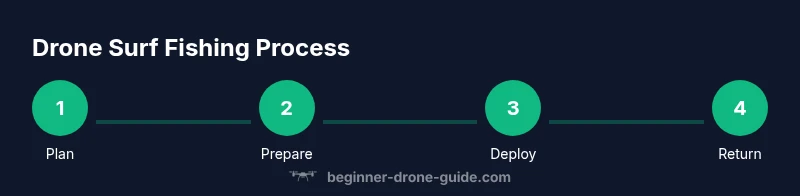
- 1
Plan the mission and check regulations
Before any flight, define the drop location, target species, and weather constraints. Review local rules for coastal drone operation, altitude limits, and payload drops. Create a simple mission checklist and share it with a spotter if possible.
Tip: Use a pre-mission checklist and verify airspace status before departing. - 2
Prepare gear and payload
Secure the payload mechanism, attach the line or bait container, and verify weight limits. Ensure waterproof protection for bait and a secure release path that won’t snag on the drone. Double-check that all connections are tight and dry before lifts-off.
Tip: Test the release mechanism on land with inert payload to prevent accidental drops. - 3
Calibrate the drone and test flight
Power up, perform compass calibration away from metal structures, and test hover at low altitude. Run a short, gentle hover to confirm stability and control responsiveness. Confirm GPS lock and return-to-home functions are working.
Tip: Do a small‑scale test flight without payload first to confirm handling. - 4
Choose a safe launch/landing zone
Select a wide, open, dry area near the shore but away from people. Establish a clear approach path that avoids rocks, surfers, and wildlife. If conditions shift, be ready to abort and land safely.
Tip: Position yourself upwind to reduce drift during landing. - 5
Attach payload and verify weight limits
Secure the payload to the release mechanism and recheck total weight versus drone capability. Confirm the drop point is clear, and rehearse the release sequence from a low altitude in a controlled indoor space if possible.
Tip: Always have an observer watch the drop and alert you to any issues. - 6
Execute the flight and deliver payload
Fly to the target site with steady, conservative maneuvers. Hover at the pre-determined altitude, then initiate payload release once the zone is clear. Monitor battery and wind; abort if conditions worsen.
Tip: Keep hands off sticks during the release to avoid unintended movements. - 7
Retrieve payload and return to shore
After the drop, safely retract the line, head back to shore, and land with a controlled descent. Inspect the drone and payload area for salt residue and wear. Begin maintenance and charging for the next session.
Tip: Wipe down salt exposure to minimize corrosion. - 8
Review results and refine setup
Document what worked and what didn’t: wind, tide, drop accuracy, and any equipment issues. Use this data to adjust drop timing, altitude, and route planning for future missions.
Tip: Update your pre-mission checklist with lessons learned.
Frequently Asked Questions
Is drone surf fishing legal where I live?
Legality depends on local regulations, airspace restrictions, and coastal ordinances. Always check with local aviation authorities and beach management before attempting a drop. If allowed, operate within designated zones and follow safety guidelines.
Check your local rules and airspace, then follow designated zones and safety guidelines before you fly.
What gear do I need to start drone surf fishing?
You’ll need a drone with payload capability, a compatible release mechanism, a waterproof payload container, fishing line and hooks, spare batteries, and basic safety gear. Start with gentler conditions to learn handling and accuracy.
A drone with a payload release, waterproof container, and fishing gear is enough to begin in calm conditions.
Can I use any drone for payload delivery?
Not all drones handle payload drops well. Choose models with stable GPS, wind resistance, and a reliable release mechanism. Always confirm payload weight limits and test thoroughly before real fishing drops.
Not every drone is suitable—stick to models with reliable GPS and a tested payload release.
How far from shore should I fly for a drop?
Fly within your line-of-sight and within your drone’s certified range. Start at short distances to build accuracy, then gradually extend as you gain confidence and ensure safe return routes.
Keep drops within line-of-sight and within the drone’s tested range.
What safety precautions are essential?
Maintain line-of-sight, avoid crowds, respect wildlife, and have an emergency abort plan. Use protective gear, and never operate in stormy or high-wind conditions.
Always see and avoid people, have a clear abort plan, and fly in safe conditions.
How do I maintain my drone after a surf fishing session?
Rinse salt spray, dry thoroughly, inspect propellers and release mechanism, and recharge batteries. Store components properly to minimize corrosion and wear.
Rinse, dry, inspect, and recharge after each session to keep equipment reliable.
Watch Video
Quick Summary
- Plan and follow local laws before flying
- Use purpose-built payload gear and waterproof containers
- Maintain line-of-sight and beach-safety discipline
- Practice in calm conditions, then progressively introduce complexity
- Review every session to improve future drops