Anafi AI Review: A Practical Guide for Beginners
A comprehensive, analytical review of the Anafi AI for new pilots. We cover setup, safety, flight performance, camera options, and real-world use cases with clear guidance from Beginner Drone Guide.


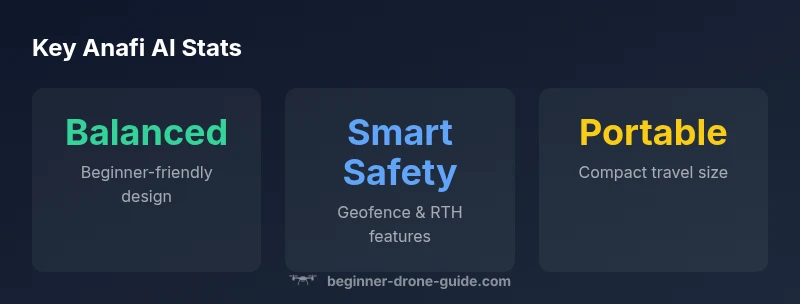
The Anafi AI strikes a careful balance between beginner friendliness and capable autonomous features, earning a solid middle-ground rating for new pilots. It prioritizes safety, portability, and ease of use while offering smart flight modes that reduce beginner mistakes. For most first-time buyers seeking value and confidence, Anafi AI is a compelling option in the early-mid range.
anafi ai: Core idea and beginner-friendly positioning
The anafi ai is designed for first-time pilots who want dependable stability and smart automation without a steep learning curve. Our analysis, based on the Beginner Drone Guide methodology, examines safety features, ease of use, and real-world performance. By prioritizing intuitive controls, predictable handling, and automated flight modes, the Anafi AI becomes a practical first drone for many learners. Throughout this review, we reference the implications for beginners: how setup translates to fewer mistakes, how flight modes translate to real-world outcomes, and how the drone's footprint affects travel and daily use. The name anafi ai should be understood as a product line focused on approachable autonomy, rather than a purely professional tool. In the weeks ahead, we will test it in different light, wind, and terrain scenarios to gauge consistency for new pilots. The Beginner Drone Guide analysis emphasizes safety, learning curves, and long-term value.
Design and portability
Portability is a cornerstone of the anafi ai. The compact chassis folds down into a shape that fits easily into a small bag, which is a big win for learners who practice in urban environments, parks, or campuses. The drone’s weight distribution matters for stable flights in light winds, and the build quality feels sturdy enough to handle routine bumps without compromising flight characteristics. When considering travel, the ease of charging and the availability of spare batteries become practical factors, especially for weekend shoots or practice sessions. From a beginner’s perspective, a well-thought-out form factor reduces the intimidation factor and makes practice more frequent. The anafi ai is designed with a clean, minimal control layout that keeps new pilots focused on flying rather than juggling complicated menus.
Setup, safety, and geofencing
Initial setup for anafi ai is straightforward. The drone prompts you through essential steps, from binding the controller to calibrating sensors. Safety features include geofencing, return-to-home, and obstacle-avoidance aids that help protect the aircraft during early flights. While geofencing protects against unintentional incursions into restricted airspace, it can occasionally feel conservative in open environments. For beginners, these features build confidence by reducing the risk of runaway flights or accidental collisions. It’s worth noting that keeping firmware up-to-date is crucial to maintain reliable safety performance, as updates often refine obstacle detection and flight behavior in tricky conditions.
Flight performance and handling
In calm weather, the anafi ai exhibits smooth, responsive handling with predictable response to stick inputs. The hover stability is a plus for new pilots practicing takeoffs and landings, and the autonomous modes help learners expand their comfort zone without sacrificing control. In breezier conditions, the drone’s stabilization helps prevent drift, though it may demonstrate the same sensitivity to gusts typical of compact recreational drones. The flight envelope remains approachable for beginners, with clear indicators and on-screen prompts that guide decision-making. Overall, the handling supports a learning trajectory from basic hovering to more confident, planned flights.
Camera, photo, and video capabilities
The Anafi AI offers a versatile camera system that supports a range of shooting modes suitable for learners who want to build a portfolio of beginner-friendly footage. In daytime light, the color and dynamic range are respectable for social media and personal projects. In lower light, you’ll notice some noise, so planning shoots around favorable lighting remains important for new pilots. The gimbal provides smooth operation, which helps students study composition and framing. While the camera options are robust for a beginner drone, advanced color grading or high-end raster work remains outside the scope of the learning curve for most new pilots. Users can experiment with auto-exposure, panorama, and basic night modes to gain familiarity with post-production workflows.
Autonomy, subject tracking, and intelligent modes
Smart flight modes are a selling point for beginners. Autopilot features can simplify complex shots, like follow-me or orbit modes, allowing learners to focus on framing and timing rather than precise joystick control. The subject-tracking algorithms perform well on static subjects, and while there are occasional edge cases with moving crowds, the overall reliability supports practice sessions and small creative projects. These intelligent modes help new pilots understand scene planning, which is valuable for building confidence as they transition to more manual control.
Battery life, charging, and endurance
Battery life on entry-level drones typically represents a trade-off between flight time and portability, and anafi ai strikes a reasonable balance for learners. Short practice sessions help new pilots refine sequences, safety checks, and reflight routines. Efficient charging and staged practice can extend learning days, especially when a spare battery is available. For many learners, the real benefit is predictable endurance that aligns with a typical training block rather than pushing to extremes. Planning flight sessions around available power minimizes downtime and keeps practice consistent.
Software, app experience, and updates
The app experience for anafi ai is central to the learning curve. A clean interface, straightforward onboarding, and informative flight telemetry empower beginners to understand their performance with minimal friction. Regular firmware updates often refine stability, improve obstacle avoidance, and expand safety-related features. From a learning perspective, intuitive tutorials, built-in tips, and accessible troubleshooting content help new pilots feel supported. The software ecosystem is a critical factor in long-term satisfaction, as it directly affects how easily a new flyer can practice, review footage, and plan flights.
Real-world use cases for beginners
For new pilots, the anafi ai serves well in scenarios such as family outings, casual aerial photography, and light real-estate snapshot work. Its combination of portability and safety features makes it suitable for practice in urban parks, school campuses, and community events where spaces are constrained and airspaces can change quickly. While it may not replace professional-grade backdrops or complex production drones, it fills a valuable niche for learners who want reliable hands-on experience, a low-friction start, and a path toward more advanced skills.
Comparisons with similar beginner drones
When comparing anafi ai with other beginner-friendly options, consider factors like setup complexity, safety features, and the availability of autonomous modes. In many cases, anafi ai stands out for its comfortable learning curve and integrated safety suite, which contributes to a calmer learning experience. It’s important to weigh the learning payoff against price and local serviceability. A few rivals may offer longer flight times or higher-end sensors, but they frequently demand more careful handling and a longer preparation routine. For beginners, the balance of safety, portability, and approachable features often makes anafi ai a sensible choice.
Potential drawbacks and caveats
No drone is perfect for every learner. Potential caveats for anafi ai include occasional climate-limited performance in high winds, reliance on automatic modes which can reduce manual practice opportunities, and the possibility of feature over-reliance that delays mastering core piloting skills. Beginners should complement autonomous modes with deliberate practice, set personal flight limits, and maintain privacy and safety awareness. Understanding these caveats helps new pilots cultivate stronger foundational flying skills while taking advantage of the drone’s strengths.
Benefits
- Compact, portable design ideal for travelers
- Strong safety features and automatic modes that reduce beginner error
- Good value for a feature-rich beginner drone with safety emphasis
- Solid ease-of-use in setup and initial flights
Weaknesses
- Battery life is average for its class
- Low-light image quality shows noise at higher ISO settings
- Occasional app stability quirks on older devices
- Obstacle avoidance can be overly cautious in busy environments
Best for true beginners who want safety-first flight and portability
Anafi AI offers a approachable learning curve with smart safety features and a compact design. It may not satisfy power users seeking top-end specs, but for most new pilots, its balance of ease, affordability, and supportive software makes it a sensible entry point.
Frequently Asked Questions
What is anaFi ai best for beginner pilots?
Anafi AI is best for new pilots who want a stable platform with built-in safety features and guided flight modes. It helps learners develop core piloting skills without being overwhelmed by complex controls. The drone provides a gentle introduction to autonomous shooting while allowing room to grow.
Anafi AI is ideal for beginners who want a safe, easy start with guided flight modes and reliable stability.
Do I need a license to fly anaFi ai?
licensing rules vary by country. In many places, recreational pilots can fly small drones within visual line of sight without a license, while commercial use may require certification. Always check local airspace rules and register if required.
Check your local rules; in many places you may not need a license for basic hobby flights, but always verify registration and airspace requirements.
How does anaFi ai compare to other beginner drones?
Compared to other beginner drones, Anafi AI emphasizes safety and portability with a strong software experience. It may offer slightly shorter flight times or fewer high-end options than some rivals, but it excels in ease of use and learning support, which matters most to new pilots.
It often edges out competitors on safety and simplicity, even if some rivals have longer flight times.
Is anaFi ai good in windy conditions?
In light to moderate winds, Anafi AI maintains stability thanks to its flight controller and stabilization. In stronger gusts, you should reduce exposure and avoid risky maneuvers. As a learner, practicing calm, controlled flights in variable conditions helps build confidence gradually.
It handles mild wind well, but avoid strong gusts when learning.
What accessories should beginners consider?
A spare battery, a protective case, and a basic ND filter set can extend practice time and improve image quality. A portable charger and extra propellers are handy for routine maintenance and quick field sessions. Start with essentials, then expand as you identify your common flight scenarios.
Get a spare battery and a good case, then add extras as you fly more.
How secure is data on anaFi ai?
Drones in this class typically store footage locally and optionally upload to cloud services. Ensure your devices are updated and use secure Wi-Fi connections when transferring data. Review privacy settings to control data sharing and telemetry collection.
Keep software updated and review privacy options to protect your footage.
Quick Summary
- Choose Anafi AI if you value safety-first automation and portability.
- Practice with autonomous modes to build confidence before manual flying.
- Plan shoots in good light to maximize camera potential for learners.
- Keep firmware updated to ensure the latest safety features.
- Compare with other beginner drones to confirm fit for your learning goals.