How to Bring a Drone on a Plane: A Complete Beginner's Guide
Learn how to bring a drone on a plane with a practical, beginner-friendly checklist covering packing, batteries, security, and regulations. Step-by-step guidance for safe travel.


You will learn how to bring a drone on a plane safely and legally. This quick answer outlines the key steps: choose a travel-friendly case, remove and store batteries properly, know airline and country policies, and declare your drone when needed. With these steps, you can minimize delays and keep your drone protected during travel.
Understanding travel rules for drones
Traveling with a drone means dealing with rules, not guesswork. If you're asking how to bring drone on plane, the core idea is simple: plan ahead, know the policies, and pack for safety. The Beginner Drone Guide team emphasizes that the first step is to check both the airline's carry-on guidelines and the country’s aviation rules because these govern whether you can bring the drone, how you pack the batteries, and what you must declare. In practice, this means using a travel-ready case, removing lithium batteries from the drone, and keeping the drone accessible but protected during security checks. While many carriers allow small drones in carry-on if batteries are properly prepared, some airlines and jurisdictions still impose exceptions, especially for spare batteries or high-capacity packs. The purpose of this section is to give you a clear mental model for the decision points you’ll face at the checkpoint and at the gate, and to prevent delays caused by uncertainty. Begin with the official sources: airline pages, airport security guidance, and national regulations. Use a simple, printable checklist to move from planning to packing with confidence.
Transport options and case selection
Choosing how to transport your drone starts with a solid case. For many travelers, a rigid, compact case with foam padding provides the best protection against knocks and pressure changes during flight. When you’re asking how to bring drone on plane, think about accessibility: you want the drone to be easy to inspect at security without sacrificing safety. A case with clearly labeled compartments helps you keep wires, propellers, and accessories organized. Avoid soft bags or overstuffed backpacks that can shift inside during turbulence. Consider a case that allows you to store spare batteries separately and has space for a compact charger. If you’re traveling internationally, a TSA-friendly case can speed up security screening by keeping items orderly. Finally, confirm with the airline whether you can store the case in the overhead bin or under the seat, and tailor your packing plan accordingly.
Battery safety and handling
Battery handling is the core safety topic when you’re planning how to bring a drone on plane. Lithium batteries are energy-dense and must be managed carefully to prevent short circuits and thermal events. The standard practice for most travelers is to carry spare batteries in the carry-on bag, with terminals protected to avoid contact with metal objects. When you pack batteries, keep them intact and protected from physical damage; never place loose batteries in the main luggage compartment. Tape exposed terminals or use protective battery covers if available. For the drone itself, ensure the battery is removed and stored according to the manufacturer’s instructions. Never attempt to operate a damaged battery or attempt to bypass safety features. This section emphasizes that battery management is not optional; it’s a safety requirement that affects both security screening and overall travel experience.
Packing the drone and accessories securely
A secure packing strategy makes the difference between a smooth journey and a stressed checkpoint. Start with the drone body placed in the center of the case, with propellers detached or securely fastened per manufacturer guidance. Include the charging cable, extra microSD cards, spare screws, and a small tool kit in clearly labeled compartments. Use foam inserts or protective sleeves to cushion each component and protect sensitive sensors. A damp-free environment is important; include a few silica gel packets if permitted. When organizing accessories, keep the batteries separate from the drone itself and ensure there’s no risk of bending or crushing delicate parts during handling. Proper packing reduces the chance of damage during transit and simplifies inspection at security.
Security screening: what to expect and how to declare
Security screening is a common hurdle when bringing a drone on plane. Expect to present your case, explain that you’re transporting a drone, and be prepared to remove the drone and batteries if requested. Have your battery information handy, such as capacity and quantity, and show the original packaging or user manual if asked. Security officers may request additional documentation for batteries or accessories; having a printed receipt or a model number can speed things up. Declaring your drone when needed helps avoid suspicion and delays. If you follow the airline’s guidelines and carry batteries in approved containers, you’ll likely face a straightforward screening process. Remember, a calm, cooperative attitude often makes the experience smoother for you and the officers.
Domestic and international travel considerations
Different countries enforce different drone travel rules, and airline policies can vary as well. Before you travel, check the destination country’s drone regulations and any import requirements or permits that may apply. Some airlines publish special restrictions for lithium batteries and drone gear, especially on international legs. If you’re visiting a country with stricter rules, plan to adapt packing methods or potentially ship the drone separately if required. The goal is to minimize last-minute surprises by reviewing both airline policies and destination regulations well in advance. When in doubt, consult official sources and seek confirmation from the airline before you buy tickets.
A practical packing checklist you can trust
Here is a practical, ready-to-use checklist for how to bring drone on plane. Use it as a printable reference before you pack:
- Drone and accessories in a rigid case with foam padding
- Remove batteries from the drone and store them in carry-on with terminal protection
- Spare batteries in approved battery cases or storage pouches
- Protective covers for exposed terminals; Kapton tape if available
- Chargers and cables organized in a separate pouch
- Flight manuals or receipts for the drone and batteries
- Destination-specific permits or documentation (if required)
- Travel-sized silica gel or desiccant in the case
- A quick-access manual for security screening steps
By following this checklist, you’ll create a predictable, safe packing routine that translates across most airlines and destinations.
Troubleshooting and on-the-road tips
Even with careful preparation, issues can arise at the airport. If a security officer requests extra information, stay calm and provide your packing list, battery details, and any supporting documentation. If your case is opened for inspection, keep your hands visible and avoid abrupt movements. If a battery is damaged or showing swelling, do not attempt to power it; isolate it in a separate, clearly marked container and seek assistance. For international trips, allow extra time for possible language barriers and different screening practices. A proactive, organized approach minimizes stress and helps you protect your drone from damage or loss during transit.
Tools & Materials
- Drone with protective case(A rigid, padded case that fits your drone and accessories)
- Spare lithium batteries(Carry in carry-on; terminals protected; follow airline limits)
- Battery storage/insulation(Terminal covers or Kapton tape to prevent shorting)
- Charger and adapters(Includes portable charger or outlet adapters where needed)
- Small toolkit and spare parts(Screwdriver, extra screws, propeller guards)
- Documentation (manual/receipt)(Helpful for screening and destination checks)
Steps
Estimated time: 60-90 minutes
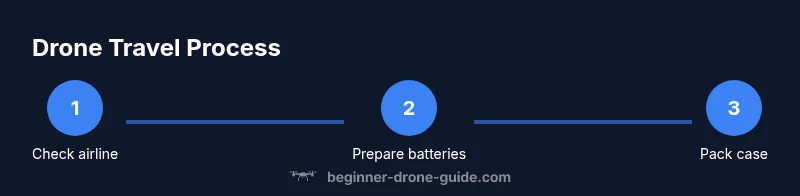
- 1
Check airline policy
Before packing, verify the airline’s carry-on rules and battery limits for your flight. This reduces surprises at check-in and helps you plan the case setup.
Tip: Call the airline or check their official site for the most current guidance. - 2
Prepare batteries
Remove drone batteries from the device and ensure terminals are protected. Do not pack loose batteries in the main luggage; use dedicated battery cases in carry-on.
Tip: Keep spare batteries in a separate, clearly labeled pouch. - 3
Choose a travel-friendly case
Use a rigid, padded case with compartments for drone, batteries, and accessories. A professional case reduces the risk of damage and makes security checks smoother.
Tip: Label each compartment to help security officers quickly inspect your gear. - 4
Pack safely
Place the drone in the center of the case, attach or detach propellers as per manufacturer guidance, and secure all items to prevent movement.
Tip: Disassemble propellers if needed and store them in protective sleeves. - 5
Protect terminals
Cover battery terminals and use protective caps or Kapton tape to prevent short circuits during handling.
Tip: Avoid metal objects near battery terminals during packing. - 6
Bring documentation
Have the drone’s manual and purchase receipts or model numbers on hand in case inspectors request information.
Tip: A short printed page with battery details speeds up screening. - 7
At security
Be ready to present your case for inspection and explain that you’re traveling with a drone and spare batteries. Follow officer directions calmly.
Tip: Keep your hands visible and respond to questions clearly. - 8
Consider destination rules
Check the destination country’s drone regulations to avoid confiscation or import restrictions on arrival.
Tip: Carry any required permits or licenses if applicable. - 9
Arrive early
Give yourself extra time for screening when traveling with special gear. Early arrival reduces stress and helps you handle any unexpected questions.
Tip: Plan for potential delays related to battery checks. - 10
Review post-flight checks
After landing, inspect the drone and case for any signs of damage or loose parts. Repack carefully for return legs or next trips.
Tip: Keep a quick inspection checklist in your bag for each trip.
Frequently Asked Questions
Can I bring spare drone batteries on a plane?
Yes, in most cases spare batteries can be carried in carry-on luggage, with terminals protected and according to airline limits. Do not place loose batteries in checked baggage. Always check your airline's current policy before you travel.
Yes, you can usually take spare drone batteries in carry-on, with terminals protected. Check airline limits and keep batteries in a safe case.
Do I need to declare my drone at security?
In many cases you should inform security you’re traveling with a drone and batteries. Have your packing list and battery info ready. Following officer directions will help speed up the process.
Usually yes—tell security you have a drone and batteries, and follow their instructions.
Can I pack a drone in checked luggage?
Packing a drone in checked baggage is sometimes allowed but generally discouraged due to risk of damage. If you must, ensure the drone is secured and batteries comply with rules for checked bags as defined by the airline.
It's possible but not recommended. If you do, ensure extra protection and follow airline battery rules.
Are there destination-specific rules for drones?
Yes. Different countries have different drone regulations and import requirements. Always research ahead of time to avoid fines or confiscation upon arrival and to ensure you can operate legally.
Yes. Check the destination's drone rules before you travel.
What should I do if my bag is inspected?
Remain calm, follow directions, and cooperate. Have your packing list, model numbers, and battery details ready to share with officers. A clear, patient approach speeds up inspection.
Stay calm and cooperate; present your documents if asked.
Is it okay to fly a drone shortly after landing at a new location?
Check local airspace rules and registration requirements before flying. If in doubt, start with safe, legal practice in controlled areas and avoid restricted zones.
Only fly after you verify local laws and safe zones.
Watch Video
Quick Summary
- Check airline and destination rules before packing.
- Pack batteries safely in carry-on with terminal protection.
- Use a rigid, organized case to speed security checks.
- Declare your drone when required to avoid delays.
- Allow extra time at the airport for screening gear.