Drone 107 Test Prep: A Practical FAA Part 107 Guide for Beginners
Master drone 107 test prep with a practical FAA Part 107 guide for beginners, covering study plans, core domains, practice questions, and confident test-taking strategies.


What is the FAA Part 107 Exam and Why It Matters
The FAA Part 107 knowledge exam serves as the licensing requirement for anyone who intends to fly a drone commercially in the United States. It tests your understanding of safety-focused rules, airspace regulations, weather considerations, and operational procedures that govern everyday drone work—such as inspections, surveys, or site monitoring. For many newcomers, the exam can feel abstract until you connect the topics to real-world flight decisions. According to Beginner Drone Guide, understanding the exam’s structure helps reduce anxiety and makes study time more efficient. The goal isn’t to memorize every line but to grasp how rules apply during typical tasks you’ll perform as a certified remote pilot. This guide helps you map topics to practical tasks, linking study material directly to on-field decisions. In addition, you’ll learn how the exam is administered, scored in a standard format, and how to approach questions under time pressure so you can stay focused throughout the session.
Core Knowledge Areas You Need to Master
The Part 107 exam covers several broad domains. While you don’t need to become a walking encyclopedia of drone law, you should be comfortable with how the rules apply to real flights. Key areas include regulations and compliance, airspace classifications and sectional reading, weather theory and wind effects on flight, loading and performance considerations, emergency procedures, and operational best practices. Build a mental map that links each domain to day-to-day tasks you might perform as a remote pilot. This creates context for why the rules exist, not just what they say. A practical way to study is to frame questions around concrete scenarios—e.g., choosing a safe altitude when operating near a public event, or determining whether a certain weather condition impacts flight feasibility. The goal is to connect theory with practice so when you see a question, you recognize the underlying principle quickly and accurately.
Quick-start Study Plan for Drone 107 Prep
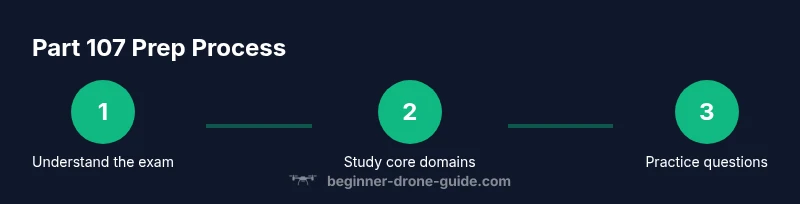
Start with a foundation in regulations and airspace, then layer in weather and operational procedures. Move into practice questions and explanations, focusing on why each answer is correct or incorrect. Use full-length practice exams to simulate test conditions, track your weak spots, and adjust your study plan accordingly. Remember to review every explanation, even for correct answers, to reinforce your reasoning. Schedule weekly study blocks and progressively increase your exposure to timed questions so you can manage test-day pacing without sacrificing accuracy. This approach aligns with best practices recommended by the Beginner Drone Guide and helps ensure you’re ready for a real testing environment.