Can a Drone Go in Carry-On? A Practical Travel Guide
Learn whether you can bring a drone in carry-on luggage, battery limits, packing tips, and airline regulations for safe, compliant travel in 2026.


Yes, drones are usually allowed in carry-on, but only if you meet battery limits and packing rules. Most airlines require spare lithium batteries to stay in carry-on luggage with terminals protected, and the drone itself should be in the cabin with you. Always check your airline's limits and the country’s regulations before flying.
Can a drone go in carry on? Core policy and what to check
You may wonder can drone go in carry on. According to Beginner Drone Guide, the short answer is: yes, but you must abide by battery and airline rules. Drones themselves are commonly allowed in carry-on luggage by many airlines, as long as the device fits in the cabin, and you can access it if needed. The main constraint is the lithium batteries that power the drone. These batteries are considered hazardous materials and are highly regulated. In practice, you should carry spare batteries in carry-on with terminals protected, and keep the drone's battery inside the drone during the flight. The exact policy varies by airline, country, and aircraft type, so checking before you fly is essential. Always verify watt-hours, packaging requirements, and security screening rules. While the can drone go in carry on question often has a positive answer, you’ll have a smoother trip if you prepare, confirm the airline’s policy, and pack with care. The upshot: most travelers can bring a drone, but compliance matters more than the destination.
- Brand note: According to Beginner Drone Guide, the basic framework is to treat the drone and its batteries like other lithium-powered devices when moving through security and on the plane.
Battery basics: watt-hours, flight time, and safety
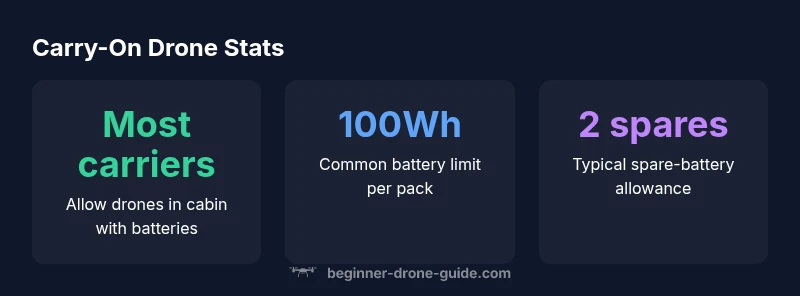
Understanding the battery rules is central to answering can drone go in carry on. Most Li-ion or LiPo drone batteries are evaluated by watt-hours (Wh). A common guideline is that batteries up to 100 Wh are generally allowed in carry-on by many airlines, while batteries in the 100–160 Wh range may require airline approval. This matters because higher-capacity packs carry more risk and often demand special handling or documentation. To stay compliant, calculate Wh for each battery (Volts x Amp-hours) and confirm the exact limit with your carrier before travel. If you have multiple batteries, keep them in a battery-transport-safe case with terminals protected and loose connections insulated. Planning ahead with these figures makes the can drone go in carry on decision straightforward and reduces the chance of delays at security.
Packing your drone for travel: step-by-step
Packing a drone for air travel requires careful preparation to align with can drone go in carry on guidelines. Start by checking your drone’s dimensions and weight to ensure it fits within airline cabin limits. Remove propellers and store them in a protective case or attach blade guards to prevent damage; this also reduces risk during boarding. Use a rigid, padded case that secures the drone and batteries. Place the drone in the center with foam supports and pack spare batteries in a dedicated battery pouch or case, ensuring terminals don’t touch. Label battery caps, note Wh on the battery, and carry-on only. Finally, bring any required documentation or flight permits and keep charging cables organized in an accessible pocket. This careful setup supports a smooth can drone go in carry on experience and protects the equipment during transit.
Spare batteries and labeling: safety and compliance
Spare batteries are a frequent sticking point for can drone go in carry on. Most airlines permit spare batteries in carry-on if they are contained in a battery case and the terminals are insulated. Label each battery with its watt-hour rating and ensure terminals are protected from short circuits. Do not pack loose batteries in checked luggage. If you have a large quantity of batteries or unusually high capacity packs, you may need advance approval from the airline. Carry a copy of your drone’s manual and any FAA-style or national registration documents if traveling internationally. Clear labeling and proper containment reduce the risk of accidental discharge and keep you aligned with global can drone go in carry on guidelines.
Airline and regional considerations
Airline policies and regional regulations influence can drone go in carry on. In some jurisdictions, drones and lithium batteries are subject to additional screening or restrictions beyond standard carry-on rules. Always verify the destination country’s import and aviation rules for drones, as some regions require permits, even for travelers with legitimate drone use. The Beginner Drone Guide team highlights that preparation is key: check airline-specific guidance, confirm battery limits, and understand local drone regulations for the countries you’ll visit. When traveling internationally, you may face stricter battery testing, higher documentation requirements, or even limitations on drone size. A proactive approach reduces travel friction and helps you fly smarter, safer, and with confidence.
Security screening: what to expect at the airport
Security is often the most nerve-wracking part of can drone go in carry on. At security checkpoints, you’ll typically be asked to remove batteries or the drone from your bag for separate screening. Ensure spare batteries are in a protective case and terminals are insulated. Have your device’s battery Wh rating readily visible, and carry any required documentation. If the screener asks for a separate battery test or demonstration, remain calm and comply with the procedure. Airlines commonly allow the drone in carry-on, but the battery handling rules can vary; being prepared streamlines the process and minimizes the risk of your equipment being deselected at the checkpoint. Knowing what to expect helps you travel with confidence.
International travel tips: crossing borders with a drone
Cross-border travel adds another layer to can drone go in carry on. When traveling internationally, you may need to show country-specific drone licensing or registration when entering or departing a country. Some destinations have strict import controls or require permits for drones regardless of carry-on status. To navigate this, verify each country’s drone regulations well in advance, and carry copies of registration, insurance, and any permits. If possible, arrange documentation in digital form for quick accessibility. The right preparation helps you avoid delays at customs, ensures you stay compliant with local rules, and makes your travel smoother for 2026 and beyond.
Troubleshooting common day-of issues
If you encounter questions about can drone go in carry on at the airport, stay organized. Double-check that each battery is within the approved Wh range and properly contained. If a security officer requests a documentation review, present your copies calmly and politely. If your drone is too large for cabin storage, you may be asked to switch to checked baggage—though this is uncommon for most consumer drones. In any case, having a clear, concise explanation of your drone’s power setup and a ready set of supporting documents helps resolve issues quickly. Preparation reduces the chance of last-minute cancellations or re-packing during travel.
Practical checklist before you fly
- Confirm the battery Wh rating for each pack and ensure they meet airline limits
- Pack spare batteries in a protective case with terminals insulated
- Use a rigid, purpose-built drone case with foam inserts for protection
- Detach and store propellers safely or use blade guards
- Carry all required documentation and copies of permits or registrations
- Verify airline and destination country regulations for drones
- Keep the drone and batteries in carry-on luggage where possible for better control
Carry-On vs Checked Bag: Drone and Battery Policies
| Aspect | Carry-On Policy | Checked Bag Policy | Notes |
|---|---|---|---|
| Drone device | Typically allowed in carry-on | Not recommended in checked bag | Keep device accessible at security |
| Lithium batteries | Carry-on only; terminals protected | Not allowed in most cases | Adhere to Wh limits per airline |
| Spare batteries | Usually allowed in carry-on (up to limits) | Often not permitted | Use battery case and label Wh |
| Documentation | May need permits on international trips | Usually not required in checked bag | Carry copies of permits/registration |
Frequently Asked Questions
Can I bring a drone in carry-on on all airlines?
Airline policies vary. Most allow drones in carry-on if the device fits the cabin and batteries meet safety limits. Always check the specific airline’s rules before flying and be prepared to adapt to local security procedures.
Most airlines allow drones in carry-on if the rules are followed; always check your airline's policy before travel.
Do I need to declare my drone or batteries at security?
Yes, you should declare lithium batteries if asked and follow security screening instructions. Keep batteries in protective cases with terminals insulated and bring any required documentation.
Yes—declare lithium batteries and be ready to show documents at security.
What are the typical watt-hour limits for carry-on batteries?
Common guidance is up to about 100Wh per battery; batteries between 100-160Wh may require airline approval. Always confirm the exact limit with the airline before travel.
Most batteries are allowed up to 100 Wh; higher capacities may need approval.
Can I check my drone in luggage?
Checking a drone is generally discouraged due to risk to the drone and batteries, and many carriers prohibit loose batteries in checked bags. Carry-on with proper containment is usually safer and simpler.
Avoid checking your drone if possible; carry-on is safer for the drone and batteries.
What steps improve packing safety for drones while traveling?
Disassemble or protect propellers, use a rigid case, protect battery terminals, mark Wh on batteries, and keep cables organized. Having a simple packing checklist helps ensure nothing is forgotten.
Disassemble blades, use a sturdy case, and protect batteries.
“Battery safety is the gatekeeper for flying with drones on planes. Always verify watt-hours, pack batteries properly, and follow airline guidance.”
Quick Summary
- Check airline battery limits before packing
- Carry drone in cabin with batteries protected
- Protect terminals and use proper cases for spares
- Verify international regulations before travel