FPV Dron for Beginners: A Practical How-To Guide
Learn safe, practical FPV dron flying for beginners with gear selection, setup, and a hands-on practice plan. This guide covers buying basics, flight concepts, and step-by-step training to fly smarter and safer in 2026.


Discover how to start with an FPV dron safely and confidently. This guide outlines the essential gear, basic flight concepts, and a simple first-flight plan tailored for beginners. According to Beginner Drone Guide, choosing a beginner-friendly quad, pairing with basic goggles, and practicing in a safe area are the core steps to build skills quickly.
What is FPV dron and why beginners care
FPV dron describes a small quadcopter piloted from a first-person view via FPV goggles or a screen. The pilot experiences real-time video from the drone’s camera, giving a cockpit-like sensation as you fly. For beginners, FPV flying blends manual control with live video feedback, which can accelerate learning when done safely. The journey starts with a clear safety plan, a beginner-friendly frame, and a modest battery to minimize crashes. According to Beginner Drone Guide, the most important starting point is to set realistic expectations and begin with a low-risk, lightweight setup before advancing to higher speeds or heavier builds. Grounding curiosity in solid basics keeps motivation steady and progress measurable.
FPV drone anatomy: parts you’ll use
An FPV dron is built from a few core components that you’ll interact with every session. The frame provides the chassis; motors and propellers create lift and control; electronic speed controllers (ESCs) manage motor power; the flight controller (FC) interprets your stick inputs and stabilizes flight. The video transmitter (VTX) sends a live feed to your goggles or monitor, while the camera frames your forward view. A radio transmitter (controller) lets you issue commands, and the battery supplies power. Goggles or a screen deliver the FPV view. Properly choosing and assembling these parts reduces crashes and makes practice more enjoyable.
Start with a safe setup: choosing the right goggles, radio, and airframe
Safety starts with sensible gear: choose beginner-friendly goggles or a monitor with a comfortable fit and reliable signal reception. A simple radio transmitter with intuitive controls helps you build confidence fast. For the airframe, start with a lightweight, durable frame and a frame size that matches your space. Opt for a kit that includes spare props and a basic charger. As you build, verify all fasteners are secure and balance the propellers to minimize vibrations. A cautious approach here sets the stage for smooth hover and controlled climbs during early flights.
Flight modes explained: angle, horizon, and acro for FPV
Most FPV systems offer flight modes that affect how the drone responds. Angle mode limits roll and pitch, making the drone auto-level and ideal for beginners. Horizon mode is a middle ground that centers stick input around level flight while allowing gentle aerobatic moves. Acro (manual) mode provides full control and is best learned after solid basics; it requires instinctive stick work and deliberate practice. Start in angle to learn basic movements, then gradually introduce horizon, and finally explore safe, controlled acro maneuvers as your confidence grows.
Finding your first drone: buying guide for beginners
When shopping as a first-timer, look for a complete, beginner-friendly kit that includes a ready-to-fly or bind-and-fly drone, a simple set of goggles, and a basic radio. Favor durability, ease of repair, and plentiful spare parts. Avoid overly expensive or complex systems until you’ve proven you’ll stick with FPV flying. A beginner-friendly setup minimizes crashes, saves time, and keeps motivation high as you practice core skills like hover, forward flight, and basic turns.
Safety and legality basics for FPV flying
Prioritize safety in every flight. Conduct a quick preflight check: battery connections, prop guards if used, and a clean landing area free of people and obstacles. Fly in designated areas where permitted, and always have a spotter when you fly FPV to maintain situational awareness. Laws and rules vary by country and region, so familiarize yourself with local regulations, registration requirements, and any geofencing restrictions before your first flight. Respecting airspace and others helps foster a positive FPV community.
Building and maintaining an FPV kit: essential maintenance checklist
Keep your kit in good condition with regular checks. Inspect propellers for nicks and cracks, tighten all screws after flights, and balance spinning parts to reduce vibrations. Check battery health and store LiPo packs safely. Clean the camera lens and verify the VTX antenna is secure. Schedule a weekly or after-session inspection routine to catch wear early, replace worn components, and document maintenance for future troubleshooting.
Practice plan: training steps to gain confidence safely
Begin with a simple hover in a calm area to establish a baseline. Then practice stationary figure-eights at a safe distance, gradually increasing complexity. Move to gentle straight flights, turning and descending with deliberate throttle control. Add small circuits around a structured course and use a training video as a reference. End sessions with a cooldown hover and a post-flight check. Consistent, short practice beats long, sporadic sessions for real skill growth.
Real-world FPV applications: fun, education, and career paths
FPV flying opens doors to creative photography from unique angles, racing leagues, and educational demonstrations. Enthusiasts use FPV to explore landscapes, document construction projects, or perform scouting in challenging environments. For learners, these use cases build practical skills beyond hobby flying, including video editing, flight planning, and problem-solving under time pressure. The hands-on experience translates well to related fields such as aerial videography or robotics.
Common mistakes beginners make (and how to avoid them)
Common missteps include overestimating initial flight capabilities, skipping preflight checks, and flying in unsuitable weather or crowded areas. Avoid tail-end crashes by practicing in open spaces before testing boundaries and always use a spotter. Rushing upgrades can lead to compatibility issues; instead, upgrade gradually as your skills grow. Lastly, neglecting spare parts and maintenance leads to avoidable downtime. A disciplined approach keeps progress steady and enjoyable.
Resources and communities for FPV dron learners
Tap into online communities, tutorials, and local clubs to accelerate learning. Look for beginner-friendly forums, safety-focused channels, and step-by-step build guides that emphasize solid fundamentals. Engaging with mentors and peers provides practical feedback, flight reviews, and moral support. Remember, consistent participation in communities helps you stay motivated and learn from a wider range of experiences.
Troubleshooting quick fixes when things go wrong
If a crash happens, inspect for loose connections, bent props, or dirty motors. Power-cycle the system to reinitialize components and verify the video link is stable before the next flight. If the drone drifts, recalibrate the sensors and recheck the center of gravity. For persistent issues, consult the manufacturer’s documentation or a local FPV group for diagnosis and safe repair recommendations.
Tools & Materials
- Quadcopter frame (beginner-friendly)(Lightweight; durable; wide tolerance for crashes; compatible with common FC and ESCs)
- Flight controller (FC)(Choose a beginner-friendly board with proper documentation and bootloader options)
- Electronic speed controllers (ESCs)(If integrated on an all-in-one board, treat as included)
- Motors(Brushless motors with compatible kv rating for beginners)
- Video Transmitter (VTX) and camera(Stable video link; ensure legal channel usage)
- Goggles or screen(Comfortable fit and good field of view for learning)
- Radio transmitter (controller)(Simple, intuitive layout; ensure bind process is straightforward)
- Battery (LiPo) and charger(Use appropriate voltage; follow charging safety instructions)
- Propellers and spare parts(Keep spare props; balance issues can cause instability)
- Tools (screwdrivers, hex wrenches, tape)(Anti-static tools recommended; carry spare screws and zip ties)
- Prop guards (optional but recommended for beginners)(Reduce tip-overs during learning; not needed for small indoor spaces)
- Lens cloth and cleaning kit(Keep camera lens clear for better video feed)
Steps
Estimated time: 60-90 minutes
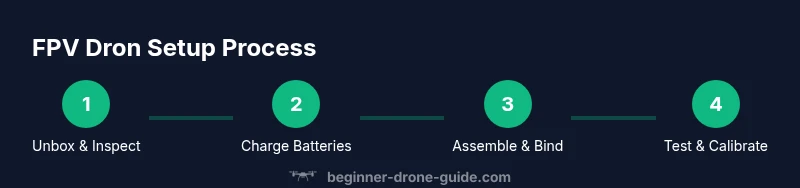
- 1
Unbox and inspect gear
Unpack each component and verify there are no obvious damages. Check that the frame, FC, ESCs, motors, VTX, camera, goggles, and radio arrive with basic hardware. Confirm you have spare props and the charger. A quick visual check prevents surprises during assembly.
Tip: Lay out parts on a clean surface and take inventory before assembly. - 2
Charge and prepare batteries
Charge your batteries to a safe storage or operation level using the recommended charger. Inspect battery connectors and balance leads for any signs of wear. Do not use damaged packs or overcharge; proper handling improves safety and performance.
Tip: Label batteries with date and cycle count to track wear. - 3
Assemble frame and mount components
Mount the flight controller, secure ESCs, and attach motors to the frame. Route wires neatly to prevent snags, and ensure the center of gravity is close to the geometric center of the frame. Double-check propeller clearance and motor direction before wiring the power system.
Tip: Use thread locker on screws and avoid over-tightening. - 4
Install VTX and camera setup
Mount the camera so it has a clear forward view, and attach the VTX with proper antenna placement for optimal signal. Connect power and data lines according to the FC's wiring diagram. Verify video feed is active on the goggles or screen.
Tip: Position the camera for minimal vibration and adjust for a stable horizon line. - 5
Bind controller and goggles
Power up the transmitter and goggles, then bind them to the flight controller or DJ unit as per your hardware. Confirm throttle is disarmed in the binding process, and test basic stick inputs in a safe zone. This step ensures your controls map correctly.
Tip: Keep a spare battery nearby during binding for a quick test. - 6
Calibrate sensors and radio
Calibrate the accelerometer and compass if your FC supports it. Set up stick dead zones and expo to fit your sensitivity level. Validate radio range and ensure fail-safes are configured before first flight.
Tip: Document calibration values for future reference. - 7
Perform a low-hover test
In an open area, do a slow hover at knee height. Observe yaw, pitch, and roll behavior and adjust gains if necessary. Confirm no interference from nearby electronics and keep propellers clear of people.
Tip: Always have a spotter during the first hover tests. - 8
Move to basic directional practice
Gently move forward, back, left, and right while maintaining a stable hover. Practice small loops to understand coil dynamics and thrust response. Increase distance gradually as confidence grows.
Tip: Keep throttle steady and avoid sudden throttle drops.
Frequently Asked Questions
Is FPV flying legal for beginners, and do I need a license?
Regulations vary by country. Many regions require drone registration or licenses for flyers and devices above certain weights. Always check local laws and practice in permitted areas.
Regulations vary by country; check local rules and use a safe area.
What is the easiest FPV drone for a beginner?
Look for a small, durable quad designed for beginners with stable flight characteristics and plenty of spare parts. Avoid high-speed racers until you’re comfortable with basic control.
Choose a small, durable beginner kit with plenty of spare parts.
What gear is essential for safe FPV flight?
Goggles or a screen for the FPV feed, a reliable radio controller, a basic drone kit, and protective steps like prop guards or a safe training area. Preflight checks and a spotter improve safety.
Goggles, a controller, a basic kit, and a safe area are essential.
How long does it take to learn FPV flying?
Learning speed depends on practice frequency and safety focus. Regular, short sessions over weeks yield steadier progress than long, sporadic sessions.
With consistent practice, you’ll steadily improve over weeks.
Where can I find FPV communities and tutorials?
Look for beginner-friendly forums, local clubs, and official FPV tutorials. Engaging with experienced pilots accelerates learning through feedback and shared experience.
Join online communities and local groups for tips and feedback.
What should I do if my drone twists or drifts unexpectedly?
Check for binding issues, recalibrate sensors, and verify prop direction and motor health. If the problem persists, consult a guide or local club for troubleshooting.
Recalibrate, check directions, and seek help if needed.
Watch Video
Quick Summary
- Choose a beginner-friendly FPV kit to reduce crashes.
- Master hover and basic directional control before fast maneuvers.
- Prioritize safety, checks, and legal compliance in every flight.
- Practice consistently to build muscle memory and confidence.
- Join communities to accelerate learning and get feedback.