Why Is DroneShield Down Today? A Beginner's Troubleshooting Guide
Urgent troubleshooting guide for beginners on why DroneShield is down today, how to verify outages, and step-by-step fixes to stay safe and connected.


Most outages are due to server maintenance or regional connectivity issues. The quickest fix is to confirm it isn’t a local problem, refresh dashboards, and check your internet connection. If DroneShield still appears down today, move to the diagnostic flow below for step-by-step troubleshooting and safe alternatives until service returns.
Why outages affect DroneShield today
According to Beginner Drone Guide, outages can occur due to scheduled maintenance, regional connectivity issues, or back-end updates that temporarily affect the service. The Beginner Drone Guide team found that many beginners ask, 'why is droneshield down today?' during these events. In this section, we’ll unpack the common patterns behind a sudden service pause, explain how these events ripple through your flight planning, and set expectations for recovery times. You’ll learn how to distinguish a true outage from a local hiccup, and why rapid changes in your area can create the impression that the shield is down even when it isn’t. By the end, you’ll have a clear mental model for interpreting status pages, error messages, and alternative workflows during downtime. Downtime can last minutes or hours depending on root cause, including emergency firmware updates or API throttling. Stay calm and follow the diagnostic flow below; having a plan reduces flight risk and keeps you productive.
Common Causes When a DroneShield Service Appears Down
Here are the most common causes for why DroneShield is down today, ordered by likelihood. If you’re asking why is droneshield down today, this list covers the probable culprits. 1) Scheduled maintenance or deploy updates that require temporary downtime. 2) Regional outages affecting multiple users in a geographic area. 3) DNS resolution or ISP routing problems that block access to DroneShield services. 4) Misconfigurations or expired credentials on your account that halt API access. 5) Rare device-side issues with the app or integration. Based on Beginner Drone Guide analysis, these patterns repeat across many beginner pilots who rely on the platform for flight planning and safety alerts. In most cases, service interruptions are resolved quickly once the outage is confirmed by the provider.
How to Verify if It’s an Outage or Local Issue
To determine whether the problem is an outage or a local issue, start with the official status page and social channels for DroneShield. If you see reported outages affecting your region, the problem is likely provider-side. Next, test on a different device or network (mobile data vs. home Wi-Fi) to rule out local connectivity. Clear your browser or app cache and retry after a few minutes. If the status page shows green but you still cannot access the service, the fault is likely on your end, and you should troubleshoot locally as described in the steps below. Finally, check for any recent account changes or API key suspensions that could block access.
Step-by-Step Troubleshooting Guide
This section provides a practical, easy-to-follow flow. Start with the easiest fixes and move to more involved steps as needed.
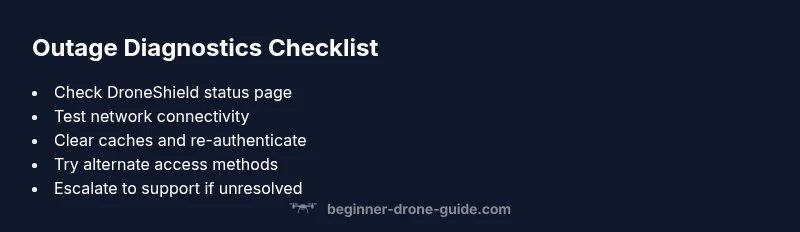
- Step 1: Check the DroneShield status page and official announcements. If outages are reported, note the estimated restoration window. Pro tip: bookmark the status page for quick checks during future downtime.
- Step 2: Verify your local network. Restart your router, try a wired connection if possible, and test with a different device on the same network. Pro tip: switch to mobile data briefly to determine if the issue is network-related.
- Step 3: Clear caches and refresh credentials. Log out and back in, clear app cache or browser data, and re-authenticate your session. Pro tip: avoid saving passwords on shared devices.
- Step 4: Try alternate access methods. Use the DroneShield web dashboard if you were using an app, or vice versa. Pro tip: test in a clean browser profile to prevent saved session conflicts.
- Step 5: If the problem persists, contact DroneShield support with your account email, region, and timestamps of when the issue started. Pro tip: document error messages and screenshots to speed up resolution.
- Step 6: Plan a safe fallback workflow. Do not rely on real-time alerts during outages—use pre-downloaded safety guidelines and local checklists.
- Step 7: Consider temporary alternatives for critical operations. If a mission is urgent, evaluate approved offline procedures or postpone flights until service is restored. Pro tip: always follow local regulations and your drone insurance requirements.
If this doesn’t work, consider escalating to professional support immediately, especially if you rely on DroneShield for safety-critical tasks. Prevention and careful logging can help prevent recovered outages from turning into recurring problems.
Safety and Compliance Considerations During Outages
During any downtime, prioritize flight safety and regulatory compliance. Do not fly if your decision-making tools rely on DroneShield data that is unavailable. Without real-time safety alerts, rely on your pre-flight checks, local airspace rules, and mandatory maintenance routines. If you must fly during an outage for an essential task, document the flight, brief your team, and ensure that you are not violating any local or national rules. Always adhere to manufacturer guidance and your drone registration requirements to avoid penalties and ensure accountability.
Long-Term Prevention and Preparedness
Proactive outage preparedness reduces downtime impact. Maintain offline backups of critical safety data, download geofencing maps before flights, and keep standard operating procedures updated for offline use. Set up an outage notification routine and review it weekly. Regularly test your fallback workflows to validate readiness. Finally, consider monitoring multiple information channels (status pages, vendor social feeds, and service status dashboards) to catch updates early and act decisively to protect people and property.
Summary of Actionable Steps During Downtime
When DroneShield is down today, begin with the official status page, verify your network, and proceed through the step-by-step fixes. Keep a log of outage times and use offline procedures if necessary. The key is to stay informed, stay safe, and be ready to resume normal operations as soon as the service returns. Remember: preparation and clear documentation are your best tools during any outage.
Steps
Estimated time: 15-25 minutes
- 1
Verify official outage status
Open the DroneShield status page and social channels to confirm if an outage is acknowledged and any estimated restoration times. If outage is confirmed, plan around the posted window and communicate with your team.
Tip: Bookmark the status page for quick access during outages. - 2
Check local network connectivity
Restart your router, switch to a wired setup if possible, and test on another device to rule out home-network issues as the cause.
Tip: If using cellular data, disable VPNs that could interfere with connection. - 3
Clear caches and refresh credentials
Log out of DroneShield, clear cache or app data, and log back in to refresh your session. This can resolve stale authentication tokens.
Tip: Avoid saving passwords on shared devices. - 4
Test alternative access methods
If you were using the mobile app, try the web dashboard, or vice versa, to determine if the issue is platform-specific.
Tip: Use a clean browser profile to avoid extension conflicts. - 5
Gather details and escalate if needed
Collect error messages, timestamps, and regional info to provide context when contacting support.
Tip: The more precise you are, the faster the resolution.
Diagnosis: DroneShield service down or API not responding
Possible Causes
- highServer outage or scheduled maintenance
- mediumDNS/ISP routing issues blocking access
- lowAccount or API credential problem
Fixes
- easyCheck the official DroneShield status page and announcements
- easyRestart your router and test on a different network
- easyClear app/browser cache and re-authenticate
- mediumIf unresolved, contact DroneShield support with details
Frequently Asked Questions
What should I do first if DroneShield is down today?
Start by checking the official outage status page and any regional alerts. Then verify your network and try basic troubleshooting steps before escalating.
First check the status page, confirm it’s an outage, and then run basic network checks before contacting support.
How can I tell if the outage is on DroneShield's side or my network?
If outages are reported regionally or by DroneShield, it’s likely provider-side. If you can access other sites but not DroneShield, it’s more likely a local issue.
Check the status page and try another device or network to see where the problem lies.
Where can I find real-time outage information for DroneShield?
Real-time outage information is typically shown on the official status page and the vendor’s social channels. You can also check community forums for cross-checks.
Look at the status page and social updates for the latest outage notes.
Will outages affect my flight safety or regulatory compliance?
Outages mainly affect safety alerts and decision-support tools. Fly safely by performing independent pre-flight checks and complying with local rules.
Outages can limit some safety tools, so rely on your own checks and regulations during downtime.
Should I contact support immediately if the outage persists?
Yes, if the outage continues beyond the typical restoration window or affects critical operations, contact DroneShield support with your account details.
If it stays down past the usual window, reach out to support with your info.
How long do outages typically last?
Outage duration varies by cause; during maintenance it’s often a defined window, while unexpected outages can last longer. Monitor the status page for updates.
Durations vary; watch the status page for each incident update.
Watch Video
Quick Summary
- Verify status first before troubleshooting
- Differentiate outage vs local network issues
- Follow the step-by-step fixes in order
- Document outages for future reference
- Prioritize safety and compliance during downtime