Parrot 2.0 AR Drone: A Practical Beginner Guide
Learn how to safely set up, calibrate, and fly the parrot 2.0 ar drone with clear step-by-step instructions, safety tips, and licensing considerations for new pilots.


You will learn how to set up and safely fly the parrot 2.0 ar drone, including preflight checks, basic controls, and safety guidelines. This quick guide covers initial calibration, flight modes for beginners, and licensing considerations where applicable. By following these steps, you’ll gain confidence while minimizing risk for you and others.
What is the parrot 2.0 ar drone and why beginners should learn with it
The parrot 2.0 ar drone represents a modern entry point for new pilots who want a reliable, user-friendly platform to practice core flying skills. Designed with beginner-friendly stabilization, simple flight modes, and an approachable camera setup, this drone helps you build confidence before moving to more advanced models. According to Beginner Drone Guide, starting with a basic, low-altitude hover in open spaces builds vital muscle memory, reduces risk of collisions, and reinforces safety habits. This guide centers on practical, real-world steps you can take to master the basics without assuming prior experience. Throughout this article you’ll see actionable checklists, clear step-by-step instructions, and tips that emphasize safety, legality, and responsible flying. The focus remains on how to get the most out of the parrot 2.0 ar drone while keeping learning fun and safe for beginners. If you’re researching this model, you’re in the right place to learn with confidence.
Safety foundations and regulations for new pilots
Flying a drone starts with safety and awareness of local rules. For beginners, establishing a safety-first mindset reduces the risk of accidents and protects bystanders. Key principles include maintaining visual line of sight, avoiding restricted zones, and flying below crowded areas. This section also reviews the general expectations for hobbyist pilots, typical good practices for early flights, and how to check for any region-specific licensing or registration requirements. The goal is to keep flights predictable, enjoyable, and compliant with local drone-safety norms. Practicing in wide, unobstructed spaces and gradually increasing complexity is recommended as you gain experience. Knowledge of your airspace, weather considerations, and safe landing zones are essential parts of a responsible flying plan.
Preflight setup and calibration steps
A reliable preflight routine minimizes surprises during takeoff. Before you power up the parrot 2.0 ar drone, perform a quick check of battery levels, propeller condition, and sensor calibration status. Ensure the controller connects smoothly to the aircraft and that firmware is up to date. Calibrating the gyroscope and compass in a calm, level indoor space helps you avoid drift during initial hover tests. A simple checklist to follow before every flight reduces friction and builds routine, which is especially important for beginners learning to anticipate flight dynamics. Keep a small log of dates and firmware versions so you can monitor changes over time. This routine also serves to remind you to respect airspace rules and avoid risky conditions.
Basic flight controls and beginner modes
Understanding the control scheme is critical for stable flight. The parrot 2.0 ar drone typically offers a standard stick layout for throttle, yaw, pitch, and roll, plus a beginner mode that limits speed and altitude to reduce the chance of overcorrection. Start with gentle stick movements and practice steady hover, then advance to simple forward and backward motions. As you gain confidence, test coordinated turns and soft landings. Safety note: always be ready to cut power and return to a safe hover if the drone behaves unexpectedly. This section also covers camera control basics so you can frame smooth shots while keeping control responsive.
Battery care, maintenance, and troubleshooting
Battery health is a core contributor to flight safety and performance. For the parrot 2.0 ar drone, use the recommended charger and avoid charging batteries in extreme temperatures. Store batteries partially charged if you won’t fly for several days and check for swelling or puffing before use. Regularly inspect propellers for chips or cracks and replace them promptly to prevent in-flight failures. If you encounter drift or inconsistent response, verify the battery voltage, recalibrate sensors, and perform a quick motor test with the drone restrained to reduce risk. Proper maintenance helps you extend flight time and preserve overall safety.
Practical flight drills for beginners
Structured practice builds competence faster than random flights. Start with a small indoor or outdoor area with clear boundaries. Drills include hover in place, then slow cornering, then straight-line flight with a gentle square pattern. Each drill should be repeated until you can consistently replicate the motion with minimal corrective input. After you’re comfortable with basic maneuvers, introduce short, controlled rises and gentle descents to smooth altitude control. Keeping sessions short and focused helps with retention and reduces fatigue, which is important for safety and learning progression.
Licensing, registration, and responsible flying
Understanding licensing and registration requirements is part of being a responsible pilot. Depending on your country or region, you may need to register your drone or complete a short safety course before flights in public spaces. Even if licensing isn’t mandatory for hobby flights, adhering to recommended safety practices and respecting privacy will help you remain compliant and focused on safe flying. Always verify local regulations before you fly, and consider adding basic insurance or joining a local drone club to learn from others and stay updated on best practices.
Verdict and next steps (Beginner Drone Guide guidance)
The journey from curious beginner to capable pilot with the parrot 2.0 ar drone starts with consistent practice, a solid safety routine, and a clear learning plan. The Beginner Drone Guide team recommends starting with the basics described above, gradually increasing complexity, and keeping a safety-first mindset. As you gain experience, you can expand to more advanced flight techniques, camera operations, and data collection in appropriate environments. Remember: steady progress and patient practice lead to long-term success in drone piloting.
Tools & Materials
- parrot 2.0 ar drone(Main aircraft for beginner practice)
- controller/transmitter(Essential for manual input)
- spare batteries(Backup power for practice sessions)
- battery charger(Keep batteries ready for flights)
- propeller guards(Optional for indoor training)
- microSD card or onboard storage(For capturing footage)
- calibration tool or smartphone app(Used to run orientation calibrations)
- notebook for log(Record flights and settings)
Steps
Estimated time: 60-90 minutes
- 1
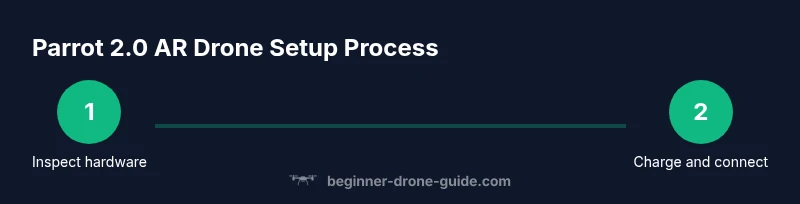
Unbox and inspect
Carefully remove the parrot 2.0 ar drone from its packaging and inspect for any visible damage. Check propellers for chips or cracks and ensure the body is clean and free of debris. This step reduces the risk of mid-flight failures and helps you identify issues before powered flight.
Tip: Take a photo of the drone before first power-up to document its condition. - 2
Charge batteries and connect the controller
Connect batteries to the charger and allow full charges. Power on the controller first, then the drone to establish a stable link. Uninterrupted power during setup prevents calibration glitches and communication dropouts.
Tip: Always perform a quick range check with the controller before your first hover. - 3
Power up and perform a basic calibration
Turn on the drone and controller in a calm, open space. Run the calibration routine for sensors (gyroscope and compass) as prompted by the app or device. Calibrations help ensure stable hover and predictable responses to input.
Tip: Calibrate away from bright reflections or metal surfaces that could affect sensors. - 4
Test hover in a safe area
Place the drone on a flat surface, gently lift into a hover at a low altitude, and observe stability. Use small stick inputs to keep the drone centered. If drift occurs, pause, relevel, and recalibrate if necessary.
Tip: Keep a clear radius around you; avoid people and obstacles during hover tests. - 5
Practice basic maneuvers
Move forward, backward, and side-to-side with light, controlled inputs. Practice gentle turns and smooth landings to build muscle memory. Limit your practice to short sessions to prevent fatigue and maintain precision.
Tip: Use slow, deliberate movements; rapid inputs are harder to correct mid-flight. - 6
Return-to-home and landing check
Familiarize yourself with the drone’s automatic return-to-home feature if available. Practice a controlled landing, ensuring the landing zone is clear and dry. After landing, power down systems safely and inspect for any wear.
Tip: Never rely solely on auto-landing; be ready to take manual control if needed.
Frequently Asked Questions
Is the parrot 2.0 ar drone suitable for absolute beginners?
Yes. It is designed with stability features and beginner modes that help new pilots learn without overwhelming throttle input. Start with the basics and gradually increase complexity as you gain confidence.
Yes, it's beginner-friendly with stability features and beginner modes to help you build skills gradually.
Do I need a license to fly the parrot 2.0 ar drone?
License requirements vary by country. In many places, hobby pilots are not required to obtain a license, but you may need to register your drone or complete a safety course. Always check local regulations before flying.
License needs vary by location; check local rules and registration requirements before flying.
Where is the best place to practice?
Choose wide, open spaces away from people, buildings, and traffic. Indoor practice is possible with propeller guards, but ensure the space is clear of obstacles and has good lighting.
Practice in open spaces away from people and obstacles, or indoors with guards in place.
What maintenance is essential after flights?
Inspect propellers for wear, check battery connections, and store batteries in a cool, partial charge. Regular calibration keeps sensors accurate and helps avoid drift.
Check propellers and batteries after every flight and calibrate sensors regularly.
What safety features should I look for?
Look for stable hover, propeller guards, return-to-home, and emergency cut-off. These features reduce risk during early flights and provide fail-safes if you lose control.
Seek stability features, guards, and an emergency cut-off for safer early flights.
How can I progress after mastering basics?
Gradually introduce more challenging drills, experiment with camera control, and practice in varied environments as you gain confidence. Consider joining a local drone club for feedback and safety-minded tips.
After basics, practice more advanced drills and join a local drone club for insights.
Watch Video
Quick Summary
- Build a consistent preflight routine.
- Practice gentle, controlled maneuvers before complex flights.
- Respect local regulations and maintain line of sight.
- Regularly inspect batteries and propellers for safety.