Drone Show at Navy Pier: A Practical Beginner's Guide
A comprehensive, beginner-friendly guide to drone shows at Navy Pier, covering permits, safety practices, gear choices, viewing tips, and what to expect from a choreographed aerial display.


A drone show navy pier is a synchronized aerial display using LED-lit drones over Chicago’s waterfront, usually run under FAA waivers and city permits. These shows blend choreographed formations with music and lighting, and require careful safety planning, airspace coordination, and venue-specific permissions. The Beginner Drone Guide overview explains how to watch or plan such events safely.
What makes a drone show navy pier special
A drone show navy pier combines aerial artistry with water and cityscape reflections, creating a distinctive visual experience over Chicago's lakefront. For beginners, understanding the context helps set realistic expectations for what a well-executed display entails. According to Beginner Drone Guide, urban venues like Navy Pier demand careful interaction with airspace authorities, venue management, and crowd safety planning. A typical show choreographs a fleet of drones to form letters, shapes, or scenes in time with music, producing a narrative that resonates with spectators on the pier and from across the lake. The spectacle benefits from the iconic skyline and water reflections, which amplify color, speed, and formation precision. When a drone show navy pier is announced, spectators should anticipate a staged sequence of formations, from simple geometric shapes to intricate storytelling arcs. In planning terms, the event is a logistics puzzle: synchronization, rehearsals, weather contingency, and crowd management all interplay to meet creative goals while maintaining safety. The result is a memorable experience for families, photographers, and casual visitors alike, especially as twilight glow gives way to evening light shows.
How urban spectators experience the drone show navy pier
Watching a drone show navy pier offers a multi-sensory experience. Viewers near the water get reflections that double the perceived motion, while lake breezes can influence drone behavior and audiovisual timing. For beginners, the most important takeaway is to follow official viewing guidelines and stay within designated zones. The experience is designed for broad accessibility: seating areas, standing points, and promenades are curated to maximize visibility while preserving safety. Because the Navy Pier site often features pedestrian traffic and boat activity, organizers coordinate with harbor authorities to permit safe airspace usage. Expect a carefully choreographed cadence—drones aligning to music cues, then peeling into individual shapes—so you can time your snapshots for the best lighting and depth of field. The overall effect is a fusion of technology and public space that invites social sharing and awe, which is why many first-time attendees describe the show as a shared, memory-making moment.
Core tech and choreography for the drone show navy pier
A drone show navy pier relies on a fleet of multi-rotor, LED-equipped drones controlled by a centralized flight computer and swarming software. The choreography uses pre-programmed waypoints, speed constraints, and inter-drone separation to form dynamic patterns while maintaining safety buffers. For beginners, it helps to know that most shows run through multiple rehearsal rounds to refine timing with the musical score and minimize drift caused by wind or gusts near the lake. Lighting palettes are synchronized with the beat, and color transitions are used to dramatize narrative beats. The gear stack typically includes ground-based control stations, redundant communication links, and a robust fail-safe system to handle GPS loss or signal interference. The outcome is a harmonious blend of motion, color, and sound that highlights Navy Pier’s waterfront ambiance and the surrounding skyline while keeping spectators at a safe distance from flight operations. In short, a successful drone show navy pier is as much about precise software choreography as it is about reliable hardware and human coordination.
Regulatory and safety framework for drone show navy pier
Regulatory compliance is central to any drone show navy pier. Organizers typically obtain FAA waivers under Part 107 for commercial operations and coordinate with local authorities for airspace usage, times, and venue access. The venue must be integrated into the plan, including crowd barriers, emergency procedures, and clear zones where drones cannot breach. Weather considerations—wind, precipitation, and visibility—are factored into the schedule, with contingency plans to pause or adjust sequences if safety thresholds are crossed. From a beginner-friendly perspective, the regulatory environment is designed to protect spectators while enabling creative display. The Beginner Drone Guide emphasizes documenting flight plans, conducting risk assessments, and communicating with venue security to ensure a smooth experience. For audiences or participants, this framework translates into predictable show timing, well-marked viewing areas, and visible safety cues. As a rule, always verify current rules with the FAA and the Navy Pier organizers before attending or attempting a show.
Planning, rehearsals, and logistics for navy pier shows
Planning a drone show navy pier is a multi-week to multi-month endeavor, balancing creative ambition with operational realities. Key milestones include concept development, payload selection (LED brightness and color palettes), fleet readiness, insurance review, venue coordination, and permitting. Rehearsals typically occur in controlled airspace with progressively complex formations, gradually integrating lighting, music, and audience flow. For beginners and planners alike, a practical approach is to break the process into phases: concept and risk assessment, technical setup, rehearsal, final checks, and live performance. The logistics around Navy Pier require precise timing with ferry and boat traffic, pedestrian crowds, and weather windows. Effective communication with security, city authorities, and performers ensures everyone understands roles, safety boundaries, and contingency procedures. The result is a coherent, safe, and spectacular drone show navy pier that respects local norms while pushing the boundaries of aerial storytelling.
Watching tips and best practices for beginners during a drone show navy pier
If you’re new to drone shows and you’ve chosen to watch a drone show navy pier, arrive early to secure a good viewing position and to understand the designated zones and ingress/egress routes. Keep a respectful distance from crowd barriers and flight corridors, and listen for official announcements about weather pauses or show re-sequencing. For photography or videography enthusiasts, a tripod or monopod helps stabilize shots from shore, while telephoto lenses can capture distant formations without crowding. Wearing weather-appropriate clothing and eye protection for long exposure shots is advisable. Remember that a drone show navy pier is a regulated event; following posted guidelines supports safety and enhances the experience for everyone. If you plan to fly a drone nearby outside of the show itself, always check airspace restrictions and obtain any necessary waivers in advance.
Real-world considerations and lessons from past shows
Real-world experiences with drone show navy pier highlight the importance of weather resilience, crowd management, and responsive operations. In practice, organizers learn to adapt to wind shifts off the lake, adjust lighting schemes to maintain visibility in different lighting conditions, and coordinate with harbor traffic to minimize disruption. For beginners, these lessons translate into two practical takeaways: never undervalue pre-show rehearsals and always plan for uncertainty, including backup power and alternate flight paths. The overall success of a drone show navy pier hinges on clear communication between pilots, technicians, and venue staff, as well as a well-structured spectator plan that keeps viewers safe while preserving the dramatic effect of the display. By approaching shows with patience, rigor, and curiosity, newcomers can appreciate the artistry and technical craft involved in each performance.
Drone show navy pier: quick reference
| Aspect | Typical range | Notes |
|---|---|---|
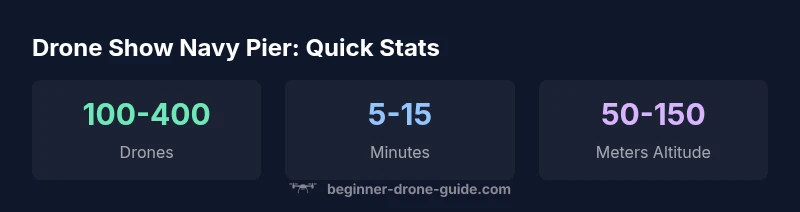
| Drones deployed | 100-400 | Fleet size varies by show scale |
| Duration | 5-15 minutes | Includes build-up, display, and wrap |
| Altitude | 50-150 meters | Subject to airspace and safety constraints |
Frequently Asked Questions
What permits are needed to stage a drone show at Navy Pier?
A drone show typically requires FAA waivers (Part 107) and local city permits; coordination with the venue is essential to ensure safety and compliance.
A drone show usually needs FAA waivers and city permits; you should work with the venue and authorities.
Can beginners participate in or observe a drone show near Navy Pier?
Novice pilots should not fly during public shows. Observers can watch from designated viewing areas. Practice in a safe, open space before attempting anything near an event.
If you're new, observe from safe zones and practice in a closed area before attempting anything near a show.
What gear is typically used in a drone show?
Shows rely on multi-rotor drones with LED payloads, ground control systems, and coordination software; fleet size varies with budget and venue.
Drones with LED lights and a control system are the norm.
How long does it take to plan a Navy Pier drone show?
Planning often spans weeks to months, including permitting, rehearsals, weather contingencies, and coordination with the venue.
It usually takes weeks to months to plan.
Where is the best place to watch a Navy Pier drone show?
Watch from designated viewing areas around Navy Pier with a clear lake view; follow official instructions and keep safe distances.
Watch from designated viewing zones for safety and best visuals.
“Urban drone shows demand meticulous planning and teamwork; when done right, they transform public spaces into immersive storytelling.”
Quick Summary
- Secure permits and coordinate with authorities early
- Prioritize spectator and pilot safety throughout
- Choose appropriate gear and allocate rehearsal time
- Watch from designated areas for optimal visuals