Drone Show for Events: A Practical Guide for Beginners
Learn how to plan, license, and execute a captivating drone show for events with practical steps, safety checks, and budgeting guidance.


By the end of this guide, you’ll be able to plan and execute a safe, memorable drone show for events, from concept through permits and on-site setup. You will learn how to choose drones and software, map flight paths, coordinate with venue staff, and meet local regulations. This quick answer previews the practical steps below and sets you on the path to success.
What is a drone show for events?
A drone show for events combines synchronized unmanned aerial vehicles with LED lights and software-driven choreography to create a visual spectacle above a venue. It is a form of entertainment that pairs technology with storytelling, timed to music, lighting, and stage cues. For beginners planning their first drone show, the key is to start small: a few drones, a simple pattern, and a clear objective for the audience. When executed well, a drone show can replace or augment traditional fireworks, offering a quieter, more controllable, and reusable performance option. The phrase drone show for events emphasizes both the creative aspect and the practical considerations—regulatory compliance, crew coordination, and on-site safety. In this guide, we’ll explore how to translate a concept into a safe, scalable show that fits your venue and budget, while keeping the audience experience at the center. According to Beginner Drone Guide, even small shows can leave a lasting impression when planning starts with a clear concept and measurable safety goals.
Why a drone show for events resonates with modern audiences
Tech-enabled performances capture attention in a way traditional formats cannot. The precision of synchronized flight, the ability to choreograph lights to a soundtrack, and the potential to customize content for a specific brand or location all contribute to a stronger emotional connection with attendees. For first-time planners, the appeal is twofold: scalability for different venues and a lower risk profile compared with loud, pyrotechnic displays. A well-designed drone show can become a signature moment that attendees remember long after the event ends. As you design, consider the venue geometry, audience sightlines, and how the flight paths will read from different vantage points to maximize impact.
Core components you’ll manage: drones, choreography, and safety
At the heart of any drone show are three pillars: the hardware (drones equipped for light shows), the software that maps paths and timing, and a strict safety plan. Drones provide the evolving light, while choreography aligns movements with music and brand storytelling. Safety plans cover airspace clearances, crowd management, weather awareness, and contingency procedures. For beginners, it helps to keep the initial show simple—short sequences, stable formations, and clear safety margins—before expanding to larger formations or longer runtimes. The coordination between operators, visual designers, and on-site staff is essential for a smooth performance. The Beginner Drone Guide team emphasizes rehearsals and documented procedures as the backbone of reliable shows.
Planning your first drone show: concept to rehearsal
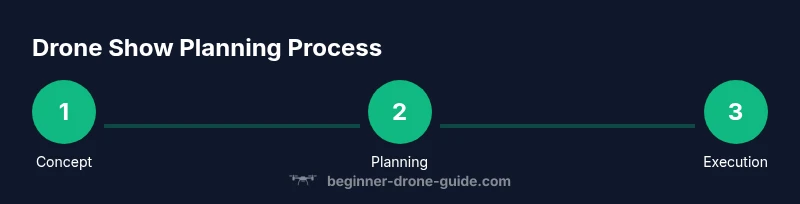
Start with a clear concept: what emotion or narrative do you want to convey? Translate that into a rough storyboard of drone formations, color palettes, and motion patterns. Create a music cue sheet and map each beat to a flight cue. Build a rehearsal calendar that includes preflight checks, dry runs, and full choreography runs with simulated wind scenarios. Document all flight paths, safety zones, and ground crew responsibilities. Regular rehearsals reduce surprises on event day and increase audience impact. According to industry practices, mapping the plan to practical constraints—venue size, drone count, and local regulations—ensures a feasible concept. The Beginner Drone Guide analysis shows that early planning with a simple proof of concept dramatically improves reliability.
Regulatory and safety considerations you must address
Before you fly in public, verify airspace rules, drone operation licensing, and event-specific permissions. Draft a safety plan that includes a no-fly buffer around the audience, emergency stop procedures, and a robust weather monitoring routine. Ensure your crew understands radio communications, hand signals, and lost-link protocols. On-site safety checks should cover battery management, propeller guards, and clear demarcation of flight zones. Regulations vary by jurisdiction, so partner with a licensed operator or consult your local aviation authority. A thoughtful compliance approach protects participants and your project’s reputation.
Technical setup: drones, software, and ground crew
Select drones with reliable stability, precise GPS, and bright LEDs for visibility. The software you use should support choreographies, timing cues, and synchronization with the event music. Ground crew roles include a flight director, a safety officer, and a ground crew lead who handles setup, tethering, and contingency actions. Establish backup communication channels and a clear on-site signal protocol for wind or visibility changes. Planning for redundancy—extra batteries, spare props, and backup drones—minimizes downtime and keeps the show on track.
Budgeting and scheduling a drone show with confidence
Budgeting starts with a clear concept and a realistic venue assessment. Consider drone hardware, software licensing, permits, insurance, crew costs, and contingency funds. Schedule planning hinges on rehearsal time, rigging or outdoor setup, and the on-site coordination window. Build a phased timeline that includes concept validation, hardware acclimation, full choreography run-throughs, and final rehearsals. While costs vary, aiming for a compact, high-impact show can deliver dramatic results without overextending resources. The focus should be on achieving a polished performance with dependable safety checks.
Real-world applications and inspiration for your event
From product launches to stadium ceremonies, drone shows can elevate moments with scalable aesthetics. Use a storytelling arc, not just impressive moves, to connect with audiences. Involve sponsors by integrating brand colors, logos, and messages into the formations. Analyze successful case studies for rhythms, pacing, and how venue acoustics interact with visual lighting. Remember that effective shows blend artistry with strict adherence to safety and regulatory guidelines.
Common myths and misconceptions
Some believe drone shows are prohibitively expensive or technically risky for small events. In reality, you can start with a modest setup and a tight concept, then scale up as you gain experience. Others assume you need a large production team; with careful planning, a compact crew can manage most components. The most persistent myth is that drone light shows require complex post-production; much of the effect is captured in pre-show choreography and precise cues. Focus on practical planning, rehearsal discipline, and transparent communication with your venue.
Tools & Materials
- Drones suitable for light shows (LED-equipped)(Quantities depend on show size; plan a few spare units for reliability.)
- Drone show control software or ground control tablet(Software should support choreography, timing, and live monitoring.)
- Multiple radio controllers or swappable control devices(Ensure synchronized control and clear channel usage.)
- Venue permits and aviation authorization documents(Check local regulations and secure permissions well in advance.)
- Safety barriers, signage, and ground risk assessments(Define flight zones and protect spectators.)
- Spare batteries and an organized battery management plan(Plan charging logistics and charging safety.)
- Headsets or clear comms equipment for crew(Maintain real-time coordination during rehearsals and show day.)
- Weather monitoring tools or apps(Have a ready plan for wind, rain, or lightning quickly.)
Steps
Estimated time: 4-6 weeks
- 1
Define your show concept
Clarify the emotional arc or narrative you want the audience to experience. Translate ideas into a rough storyboard of drone formations, color schemes, and motion patterns. Ensure the concept aligns with the venue and audience expectations.
Tip: Start with a one-sentence concept statement you can reuse in communications. - 2
Check regulatory requirements
Review airspace rules, permits, and licensing requirements for your event location. Confirm insurance coverage and any venue-specific restrictions before proceeding.
Tip: Contact the local aviation authority early to understand any reporting or approval timelines. - 3
Select hardware and software
Choose LED-equipped drones and ensure the control software can map timing to music. Prepare backup options in case of hardware issues.
Tip: Prioritize stability, GPS accuracy, and battery performance to reduce risk. - 4
Create a safe flight plan
Draft flight paths, altitude bands, and hold points with clear ground safety zones. Assign crew roles and implement emergency stop procedures.
Tip: Use simulations to validate paths before live rehearsal. - 5
Run a rehearsal with audio
Do a full run-through with the music track and cues. Test wind and audience interactions, timing accuracy, and contingency actions.
Tip: Document any deviations and refine the choreography accordingly. - 6
Secure permits and insurance
Finalize permits and ensure insurance coverage is active for the event date. Keep copies available on-site.
Tip: Carry digital and physical copies in case of last-minute checks. - 7
On-site setup and safety briefing
Arrive early, set up flight zones, and brief the crew on roles and emergency procedures. Verify comms and power sources before warming up.
Tip: Have a weather contingency plan and a clear decision tree for flight suspension. - 8
Execute the show and debrief
Conduct a controlled flight, monitor for issues, and follow post-show safety checks. Debrief with the team to capture learnings for next time.
Tip: Record insights and update the plan for continuous improvement.
Frequently Asked Questions
Do I need a license or permit to run a drone show for events?
Licensing and permits are often required for public drone flights. Check with your local aviation authority and venue; some events can qualify for special permissions or exemptions depending on location and scope.
Yes, you typically need permission from the aviation authority and the venue. Check early to confirm requirements.
What drones are best suited for light shows for beginners?
For beginners, start with reliable, beginner-friendly LEDs and stable GPS drones. Prioritize models with good battery life, simple flight modes, and proven safety records.
Choose drones with reliable stability and bright LEDs, and practice in a controlled area.
How far in advance should I start planning a drone show?
Begin planning several weeks in advance to map concept, secure permits, and schedule rehearsals. Early planning helps coordinate with venues and vendors and reduces last-minute stress.
A good rule is to start planning early and lock major permissions a few weeks ahead.
What safety measures are essential on event day?
Establish a clear flight zone, use barriers, brief crew on emergency procedures, and perform preflight checks. Have a plan for weather changes and crowd management.
Safety comes first: set zones, brief the team, and check weather before flying.
Can a drone show be combined with fireworks or other effects?
Drones can complement other effects, but ensure joint safety planning and regulatory compatibility. Some venues require separation of aerial displays from other effects.
Yes, but coordinate tightly with safety teams and check regulations.
How should I work with the venue to support the show?
Engage venue staff early to align power, Wi-Fi, timing cues, and emergency procedures. Provide a detailed plan and point of contact for event day coordination.
Work closely with the venue and have a single point of contact for smooth operations.
Watch Video
Quick Summary
- Plan a small, concept-driven show before scaling
- Secure permits and rehearse with music for timing
- Prioritize safety zones and clear crew roles
- Choose reliable drones and robust choreography software
- Coordinate with venue staff early to align logistics