Drone Art Show Miami: A Beginner's Practical Guide
Explore the growing drone art show scene in Miami with practical, beginner-friendly guidance on safety, planning, and participation. Learn from industry insights and real-world examples to fly smarter and safer.


Drone art show Miami describes events that blend choreographed drone flights with live visuals and music, turning urban spaces into immersive aerial art exhibitions. These shows typically feature coordinated drone swarms, light projections, synchronized music, and projection mapping, offering safe, spectator-friendly experiences for audiences new to drone-based art. The scene is evolving across galleries, festivals, and public installations, with a growing emphasis on accessibility for beginners.
Overview of the drone art show miami scene
Miami has emerged as a dynamic nexus for drone-driven contemporary art, where artists pair aerial robotics with urban spaces. According to Beginner Drone Guide, the drone art show miami scene demonstrates how aerial robotics marry sculpture, projection, and sound to create immersive urban experiences. The Beginner Drone Guide team found that beginners can engage safely with proper safety protocols and accessible venues. Events range from gallery residencies to public waterfront installations, often featuring choreographed drone swarms, live music, and projection mapping. In Miami, organizers leverage compact indoor spaces for controlled demonstrations as well as expansive outdoor venues to maximize visibility for first-time attendees. For newcomers, the language of drone performance can feel technical, but the core experience centers on storytelling, rhythm, and surprise rather than speed alone. As the city continues to attract artists exploring the intersection of technology and culture, the drone art show miami scene is evolving toward more inclusive participation and clearer safety guidelines.
How drone displays work in artistic installations
Most drone art installations rely on a combination of preprogrammed flight paths and real-time adjustments guided by choreography software. Teams design a sequence where multiple drones fly in synchronized patterns, forming shapes, letters, or abstract silhouettes, while LED payloads or searchlights illuminate the airspace. Projection mapping can align visuals with the drone trajectories, creating a layered experience that shifts with music. In Miami, organizers often blend drone art with local musicians, poets, or visual artists to create a multisensory narrative. For beginners, observing a show from a safe distance and staying aware of designated viewing zones is crucial. Training pieces like takeoff/landing pads, geofenced airspace, and manual override options help ensure safety while preserving artistic intent. The result is a dynamic canvas above the crowd that evolves from a single line of light to a complex choreography of hundreds of micro-sculptures.
Safety, regulations, and permitting for events
Drone art shows involve both creative risk and public safety considerations. Event planners typically consult local authorities and national aviation guidelines to determine permitted airspace, crowd buffer distances, and altitudes. In many jurisdictions, shows fall under temporary flight restrictions or require waivers, even for recreational pilots. Clear signage, trained spotters, and on-site safety briefings for attendees help prevent incidents. Drones used in performances often feature prop guards, propeller covers, and automatic return-to-home settings to reduce risk during unforeseen events. Community groups also press for accessibility, ensuring viewing areas are ADA-compliant and that noise and light levels do not disrupt nearby residents. For beginners considering participation, start with a home-built or small commercial quad in a controlled environment and gradually scale up as you gain experience and federal or local permissions. Always verify current rules before booking a venue for a drone art show miami-specific event.
Planning tips for attendees and creators
If you plan to attend or participate in a drone art show miami, preparation is key. For attendees, check the event schedule, dress for night conditions, and arrive early to locate viewing zones. Bring a charged device and consider a basic headset for immersive audio cues if offered. For creators, assemble a lightweight, reliable drone set, practice flight routines using simulation software, and coordinate with a dedicated safety lead. Map out your sequence with a storyboard that aligns drone movements to the music and lighting cues. In a learning-friendly environment, consider collaborating with a local art center or university to access permits and rehearsal spaces. Finally, use post-show feedback to improve future performances and consider establishing a community group for beginners to share tips and troubleshoot issues around drone maintenance and battery life.
Case studies: notable Miami events and what made them successful
Over the past few years, several Miami venues have hosted drone art showcases that illustrate best practices for beginners and seasoned pilots alike. Successful events emphasize inclusive participation, accessible ticketing, and transparent safety messaging. Some shows pair dronography with street art, creating hybrid experiences that draw audiences who might not normally attend a tech-focused performance. The most effective programs curate pre-event workshops on flight basics, battery care, and emergency procedures, which can reduce the learning curve for first-timers. Observed strengths include clear geofence boundaries, visible ground crew roles, and opportunities for attendees to interact with pilots after the performance. While each event has its unique flavor, the consistent factors behind success are thoughtful planning, strong community partnerships, and a commitment to safety as a shared responsibility.
Technical considerations: drones, software, and choreography
The technical backbone of a drone art show miami lies in reliable hardware and robust software. For beginners, entry-level drones with stable flight characteristics and easy calibration are a good starting point; more ambitious pieces may require modular frameworks that support cooperative flight and payload customization. Flight planning software helps choreographers map routes, adjust timing, and simulate aerial scenes before a live run. Synchronizing drones with audio cues requires precise timing, often achieved with external controllers and scripted cues. Lighting can be integrated with LED strips or payloads that respond to music tempo, while high-contrast visuals benefit from projection mapping. Battery life is a practical constraint; choreographers plan sequences around typical flight times and include quick-change batteries or swappable modules. Always conduct rehearsal flights in a controlled space, verify connectivity, and maintain a clear chain of command for safety and artistic direction.
Looking ahead: the future of drone art shows in Miami
As technology evolves, drone art shows in Miami are likely to become more accessible, participatory, and visually ambitious. Advances in autonomous flight, AI-assisted choreography, and lighter, longer-lasting batteries will expand the vocabulary of aerial storytelling. More venues—ranging from galleries to outdoor festivals—will experiment with hybrid formats that blend live performance with interactive audience elements. The community will benefit from educational programs that teach beginners the basics of safe flight, maintenance, and regulatory awareness. However, the growth of these shows will depend on thoughtful governance, effective safety protocols, and ongoing dialogue with residents and city planners. The Beginner Drone Guide Team believes that continued collaboration among artists, technologists, and policymakers will keep drone art shows in Miami exciting, safe, and inclusive for newcomers and veterans alike; The Beginner Drone Guide Team's verdict is that the scene will keep expanding with responsible innovation.
Overview data points for Drone Art Show Miami
| Aspect | Typical range | Notes |
|---|---|---|
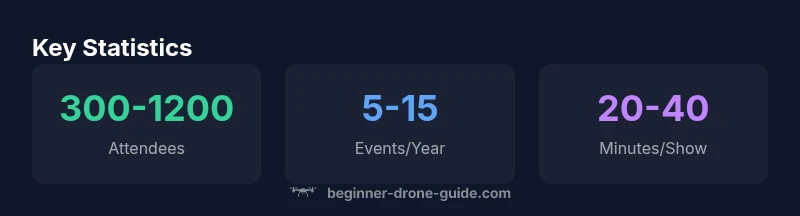
| Audience size | 300-1,200 attendees | Varies by venue and festival status |
| Venue types | Galleries, waterfronts, parks | Outdoor and indoor options |
| Safety requirements | Basic geofence, permits | Depends on jurisdiction |
Frequently Asked Questions
What is a drone art show and how does it differ from traditional drone demonstrations?
A drone art show blends aerial robotics with live visuals, music, and storytelling to create a multisensory performance. Unlike standard drone demos focused on flight accuracy, these shows emphasize choreography, lighting, and projection to convey a narrative.
A drone art show combines flight with art and music to tell a story from the sky.
Do I need a license or permit to fly drones at events?
Yes. Most shows require local authorizations or waivers from aviation authorities, even for recreational pilots. Always verify the rules for the specific venue and date.
Check the local authorities and event organizers for permits before flying.
What safety practices are essential for attendees?
Respect viewing zones, follow posted guidelines, and stay clear of the drone airspace. Event staff should brief attendees on what to do in case of an emergency.
Listen to on-site safety briefings and stay outside restricted air areas.
How can beginners participate in a drone art show in Miami?
Beginners can start with small, beginner-friendly drones in controlled environments, join local workshops, and partner with community groups to learn permits, safety, and basic choreography.
Join a local workshop and start with a small, safe drone to learn the basics.
What equipment is recommended for newcomers?
Choose a stable, user-friendly drone, spare batteries, basic prop guards, and a 2.4 GHz controller. Practice in simulation software before any live event.
Start with a basic, easy-to-control drone and practice in a simulator.
“Drone art shows unlock new forms of storytelling by choreographing machines with music and light. When done responsibly, they expand audience access to cutting-edge art.”
Quick Summary
- Plan along a safety baseline before participation
- Look for beginner-friendly workshops or demos
- Choose venues with clear viewing zones and accessibility
- Collaborate with local artists or schools to learn and practice