Drone and Queen Bee Mating: A Beginner Beekeeping Guide
Explore the basics of drone and queen bee mating, including nuptial flights, sperm storage, and colony genetics, with practical guidance for beginner beekeepers.


Drone and queen bee mating is the natural process by which a queen honey bee mates with multiple drones during nuptial flights, storing sperm for future eggs. Understanding this event helps beekeepers, researchers, and curious beginners explain colony genetics and hive health. This comparison highlights natural mating versus controlled breeding and what each path means for beginners.
What is drone and queen bee mating?
In honey bee biology, drone and queen bee mating describes a natural reproductive event that drives colony genetics. A drone is a male bee produced by worker and queen colonies. The queen leaves the hive on a brief nuptial flight, often with several drones from different colonies waiting in drone congregation areas. During these aerial encounters, sperm is transferred from the drone to the queen’s spermatheca, a storage organ inside the queen. After mating, most drones die or are unable to return to the hive, while the fertilized queen returns to the home colony to begin laying fertilized eggs. The stored sperm can fertilize eggs for years, supporting seasonal brood cycles. For beginners, understanding this process is essential to grasp how queen quality, genetic diversity, and colony resilience are built over time. In practice, beekeepers observe the outcomes by brood patterns and colony vigor rather than intruding on the mating flights, which occur outside the hive.
According to Beginner Drone Guide, the term drone and queen bee mating describes a natural reproductive event in honey bees, not a drone operator’s flight. The focus here is biology, not aviation, so keep safety and hive ethics at the forefront when studying these dynamics. This knowledge lays the groundwork for advanced bee breeding strategies and sustainable apiary management.
Why this mating matters for the hive
The mating success of a queen directly shapes the genetic makeup and future performance of the hive. Because a queen mates with multiple drones during nuptial flights, the resulting worker population benefits from diverse paternal genes. This genetic diversity enhances disease resistance, hygienic behavior, foraging efficiency, and overall colony resilience to environmental stressors. For beekeepers, the implications are practical: a queen with a robust mating history tends to lay a balanced brood, reducing the risk of brood disease outbreaks and improving winter survival. Conversely, restricted or biased mating can limit genetic variation, making colonies more vulnerable to pests or changing climates. The drone and queen bee mating dynamic also explains why queen age and mating success matter; if a queen fails to mate adequately, her ability to lay fertilized eggs declines, leading to weaker populations. From a beekeeping perspective, observing brood patterns, queen introduces, and colony strength over successive seasons provides tangible indicators of mating success, even when direct observation of flights is impractical. This is where careful hive management, including mating-yard planning and nucleus colonies, contributes to favorable outcomes over time. Beginner Drone Guide analysis shows that maintaining healthy drone populations and favorable mating conditions improves queen performance and colony resilience.
Natural mating vs controlled breeding: implications for beginners
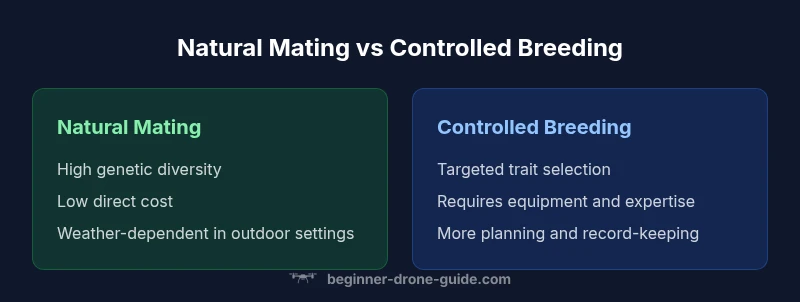
Most hobbyists and commercial beekeepers rely on natural mating to produce colonies that reflect local environments. In natural mating, a queen flies to drone congregation areas and mates with a swarm of drones; this creates broad genetic diversity without specialized equipment. Controlled breeding, by contrast, uses queen rearing techniques and sometimes instrumental insemination to select traits such as calm temperament, honey production, or hygienic behavior. For beginners, natural mating offers a simpler entry point and lower upfront costs, as long as mating is successful and weather cooperates. Controlled breeding provides a path to trait targeting but demands more knowledge, planning, and resources, including queen banks, insemination tools, and careful documentation of lineage. Across both approaches, the goal is to build resilient colonies that can thrive in local climates and resist common pests like Varroa mites. Beekeeping education, peer networks, and careful record keeping help beginners evaluate which approach aligns with their apiary goals. The balance between natural mating and controlled breeding is a core decision that shapes your breeding program over several seasons.
The nuptial flight: timing, location, and risks
Queen mating flights typically occur during warm, calm weather in spring and early summer, when drones from surrounding apiaries gather in drone congregation areas. The exact timing varies by region and season; waiting for optimal conditions increases mating success. Drones congregate in specific locations, exposed to sunlight and steady air currents, awaiting queens. The risks during nuptial flights include predation, adverse weather, and exposure to pesticides. For beginners, the key is to avoid interfering with this natural process and to focus on creating healthy conditions for the queen and drones back in the hive. Adequate nectar flow, strong forage, and proper hive health support the colony before and after mating. Observing the brood and queen health during post-mating weeks is a practical proxy for assessing mating success without direct flight observation.
Practical strategies for beginners: observing and supporting mating
While you cannot watch every nuptial flight, you can prepare a supportive environment and monitor outcomes. Start with a healthy, well-queened colony and ensure strong nurse bees, adequate forage, and good winter stores. If you aim to rear queens, establish a clean, instrument-friendly process: create mating nuclei, harvest breeder queens, and track lineage. In regions with reliable mating opportunities, maintain mating yards away from heavy pesticide use and with access to pure forage. Record each queen’s lineage and observe brood patterns in the weeks following mating; a consistent, even brood pattern indicates successful fertilization and colony health. For hobbyists, natural mating often suffices, while those pursuing specific traits may experiment with controlled sampling and careful documentation of donor drones.
Common myths and misunderstandings about bee mating
Many beginners assume bees mate inside the hive, with a single drone depositing sperm. In reality, mating occurs in the air, across multiple drones, and the queen stores sperm to fertilize eggs for years. Some myths claim queen mating is a one-time event; in practice, a queen may mate multiple times during several flights. Others think drones are expendable; while drones do not contribute to the hive’s roles, their genetic contribution is essential for colony health. Finally, some interpret mating as coercive; it is a natural, species-typical behavior shaped by evolution and ecology, not human control.
Safety, ethics, and ecological considerations
Humane beekeeping emphasizes protecting pollinators and their ecosystems. When examining mating, avoid unnecessary disruption of mating flights, and follow local regulations on queen breeding and hive management. Ethical considerations include preserving local genetic diversity and preventing the introduction of non-native strains in your mating yard. While the honey bee reproductive process is natural, responsible beekeeping requires safe handling of equipment, proper protective gear, and consideration of pesticide exposure for both bees and beekeepers. Finally, support pollinator health by maintaining flowering forage and minimizing antagonistic practices in your apiary.
Next steps and resources
To deepen your understanding of drone and queen bee mating, consult reputable sources on honey bee biology, queen rearing, and hive management. Practical actions include joining a local beekeeping association, visiting apiaries to observe mating behaviors, and experimenting with educational queen rearing kits. Beginner Drone Guide recommends starting with fundamental beekeeping courses and region-specific guidelines to adapt the general concepts to your apiary's climate and flora. The combination of theoretical knowledge and hands-on practice will strengthen your ability to interpret brood patterns, queen status, and overall colony vigor.
Comparison
| Feature | Natural Mating | Controlled Breeding |
|---|---|---|
| Mating Context | Queen mates in nuptial flights with multiple drones; outdoors | Queen mating via instrumental insemination or selective breeding in controlled environments |
| Genetic Diversity | High diversity due to multiple drone sires | Targeted diversity based on chosen donor stock |
| Resources Required | Lower direct cost; weather-dependent | Specialized equipment and skilled technicians |
| Control & Predictability | Less control over specific traits | High control over trait selection |
| Best For | General colony health and resilience in local environments | Breeding programs focusing on specific traits (calm, honey yield, hygienic behavior) |
| Best For Beginners | Natural mating is typically easier for beginners | Controlled breeding is for experienced breeders |
Benefits
- Supports genetic diversity through multiple drone sires
- Low direct cost and minimal equipment for most operations
- Aligns with natural colony dynamics and ecological conditions
- Generally easier to implement for beginners with basic hive management
Weaknesses
- Less predictability for desired traits
- Weather and drone congregation area availability can limit success
- Requires regionally suitable mating opportunities and timing
Natural mating is generally best for most beekeeping goals; controlled breeding is valuable for trait-specific programs
Natural mating promotes biodiversity and colony resilience. Controlled breeding offers trait targeting but demands more resources and planning. The Beginner Drone Guide team recommends starting with natural mating and expanding to selective breeding as your apiary grows.
Frequently Asked Questions
What is the typical duration of queen mating flights?
Queen mating flights typically occur over a period of hours to a few days, with individual flights lasting minutes. The queen may mate with multiple drones during these flights, and the stored sperm fertilizes eggs for years. Weather and forage quality strongly influence success.
Queen mating flights last hours to days, with short individual flights where the queen fertilizes eggs with sperm from multiple drones.
Do drones mate with queens from other colonies?
Yes. Drones from nearby colonies participate in mating by gathering at drone congregation areas, where the queen mates with several of them. This genetic mixing contributes to colony resilience.
Yes, drones from other colonies mate with the queen during nuptial flights.
Can beekeepers influence the mating process?
Beekeepers can't force natural mating in the field, but they can influence outcomes by selecting breeder queens, establishing mating yards, and using instrumental insemination for precise genetics.
Beekeepers influence mating by selecting queen lines and, if desired, using insemination in controlled settings.
What happens to drones after mating?
Most drones die after mating, or fail to return to the hive. Surviving drones do not participate in colony work, but their genetic contribution matters for the next generation.
Drones usually die after mating; some survive but do not perform tasks in the hive.
How does mating affect honey production?
Mating affects queen fertility and brood health, which influence colony strength and honey yields indirectly. A well-mated queen supports steady brood production and nectar gathering.
Mating quality impacts brood and colony health, which in turn affects honey yields.
Is queen mating a yearly event?
Queen mating occurs mainly in her early life, after which she can lay fertilized eggs for years. Queen replacements or replacements due to poor mating happen over months to years.
Queens mate in their early life; then they lay fertilized eggs for years.
Quick Summary
- Observe mating timing to align hive management
- Queens' mating history shapes colony genetics and productivity
- Natural mating favors diversity; controlled breeding enables trait selection
- Prepare safe mating yards and avoid pesticide exposure
- Document lineage to track genetic outcomes