Can You Fly a DJI Drone in the Rain? A Beginner's Guide
Discover if you can fly a DJI drone in the rain, the risks involved, and safer alternatives. This beginner guide covers weather limits, preflight checks, and practical tips.


Yes, with caution, but most DJI consumer models are not designed to fly in rain. Rain can seep into motors, sensors, and the gimbal, causing malfunctions or permanent damage. If rain starts unexpectedly, safely land and dry the drone. For rain-prone activities, consider weatherproof options or protective housing, and always check the latest DJI guidance.
Can you fly a DJI drone in the rain? Official stance and why it matters
According to Beginner Drone Guide, DJI's official stance is clear: do not fly in rain. Most consumer models lack rainproofing and rely on sensors that can malfunction when moisture enters the electronics. The Beginner Drone Guide team found that even light drizzle can affect motor performance, GPS reliability, and the gimbal stabilization. Weather conditions matter for battery performance and visibility, and water exposure can void warranty or cause expensive repairs. In practice, pilots should plan around weather windows, use sheltered locations when possible, and carry a quick abort plan if rain begins. This is especially important for beginners learning to fly in real-world conditions, where a sudden shower can lead to crashes or damage. Finally, respect local rules and avoid flying near people or sensitive areas when visibility is reduced by rain.
Risks of rain exposure for DJI drones
Moisture can seep into motors, sensors, the IMU, and the camera gimbal. Even tiny amounts of water can cause corrosion, short circuits, or unreliable GPS data. Humidity can affect battery performance and reduce flight time. Condensation on critical enclosures can create unpredictable behavior during takeoff or landing. To help beginners, remember that rain also reduces visibility, increases wind chill on batteries, and makes propellers harder to see in the frame. The key takeaway: avoid flight in rain whenever possible and set hard offline abort criteria before you take off.
Weather and model expectations: what to know before you fly
DJI's consumer line is designed for dry and light-wind conditions; official guidance discourages rain flights on most models. While some newer drones may handle humid conditions slightly better, moisture remains a leading cause of sensor faults and motor issues. For beginners, it's essential to understand that rain can invalidate warranties and may violate local aviation rules during wet weather. Always consult the latest manufacturer guidance for your exact model and remember that weather is a moving variable—if it looks uncertain, postpone. Beginner Drone Guide also emphasizes maintaining conservative exposure to moisture and planning flights only in clearly dry conditions.
Safe practices if you encounter rain during a flight
If rain begins during a flight, follow strict abort procedures: descend to a safe height, return to a sheltered landing zone, and land as soon as practical. Do not chase a shot when visibility is compromised. After landing, power down quickly, remove the battery, and dry exterior surfaces with a microfiber cloth. Inspect for moisture on the camera, gimbal, and air intakes before recharging or storing. When in doubt, land and reschedule; your drone is not a weatherproof tool. Beginner Drone Guide team notes that safety comes first in every outdoor session.
Alternatives for wet-weather shooting
For beginners, rainy days are prime time to practice indoors or in a controlled environment. Use a drone simulator on your computer or a dedicated indoor space with a hover area to practice precise control. If you need aerial footage during rain, consider using a weatherproof camera on a static rig or schedule shoots for drier days. Indoor photography and real estate shots can be valuable to home buyers without risking your equipment.
Preflight, in-flight, and post-flight moisture checks
Before flight, inspect all enclosures for condensation and wipe surfaces dry. After flight, check the battery and connectors for moisture, and dry thoroughly before removing batteries, and storage. Store the drone in a dry bag and avoid charging until every part is completely dry. Document any signs of moisture in your flight log and review weather in your next session to improve decision-making. Moisture mishaps are often avoidable with careful preflight and timely post-flight care.
Real-world scenarios and decision-making during rain
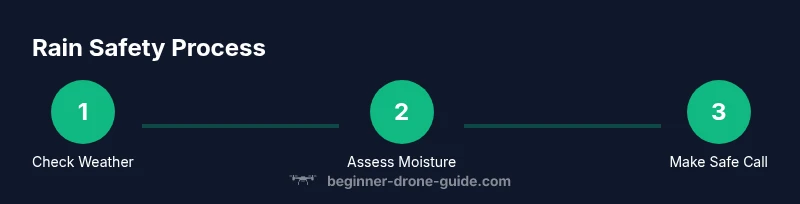
In practical terms, beginners should ask: is rain forecast credible, is there shelter nearby, and can I finish the mission safely if it starts raining? If the answer is uncertain, cancel or switch to indoor practice. A typical rain decision for a beginner is: postpone to a clear day, or opt for simulation. Making the right call protects your drone and your learning progress, and it keeps you practicing safe flight habits.
Practical tips for beginners to stay safe in wet weather
- Always have a weather abort plan and a clear end condition.
- Use only manufacturer-approved accessories and avoid relying on untested rain shields.
- Dry surfaces and hands before handling the drone; moisture can transfer to electronics.
- Practice in stable, sheltered environments whenever possible to build confidence without rain exposure.
Tools & Materials
- DJI drone (current model)(Any primary flight model you own)
- Controller(Keep it dry and ready)
- Microfiber cloth(Dry exterior and lenses)
- Charged spare batteries(Have backups ready)
- Dry storage bag or silica gel(Help keep moisture away when not in use)
Steps
Estimated time: 60-90 minutes
- 1
Check weather and set abort criteria
Review the forecast and observe local conditions. Decide in advance at what rain threshold you will cancel or land immediately if drizzle begins.
Tip: If in doubt, choose indoor practice. - 2
Inspect drone for moisture before takeoff
Look for condensation on the body, camera, gimbal, and motor housings. Wipe dry with a microfiber cloth and ensure ports are closed.
Tip: Do not fly if you detect any moisture on critical components. - 3
Prepare dry-area takeoff and landing zone
Set up a dry, sheltered space for takeoff and landing. Keep spectators and people clear to reduce risk if moisture affects control.
Tip: Choose a location with stable surface and wind shelter. - 4
Conduct a cautious flight test in light conditions
Begin with a short hover and observe sensors, GPS, and video feed. If you notice drift or instability, abort and land.
Tip: Limit hover time and monitor telemetry closely. - 5
Post-flight moisture check and dry storage
Inspect for any condensation after landing. Dry the drone completely before removing batteries, and store in a dry environment.
Tip: Charge only when parts are fully dry to prevent shorts. - 6
Review and decide on next steps
Log weather details and the flight experience to improve future planning. Schedule dry-weather sessions or switch to indoor practice when rain is forecast.
Tip: Use a flight log to track weather patterns.
Frequently Asked Questions
Is it safe to fly a DJI drone in light rain?
DJI's guidance typically advises against rain flights on consumer drones because moisture can affect sensors and electronics. If it starts raining, land promptly and avoid continuing the mission.
Generally, rain is a no-go for consumer DJI drones. If you feel a drizzle, land safely and rethink the mission.
Will rain damage void my warranty?
Water exposure can complicate warranty coverage; check your model's manual and DJI's warranty terms. Treat moisture as a risk and document any incidents.
Moisture exposure can affect warranty terms, so protect against rain and review your policy.
Can I use a rain cover for my drone?
Some aftermarket covers exist, but they do not make a drone waterproof. Use only manufacturer-approved accessories and avoid relying on covers for rain protection.
A rain cover may help a little, but it won't make the drone waterproof.
What should I do if my drone gets wet?
Power off immediately, remove the battery, and dry exterior surfaces. Do not charge or fly until every part is completely dry and inspected.
If it gets wet, turn it off, remove batteries, and dry everything before using again.
Are there DJI models that tolerate rain better?
Consumer DJI models are not designed for rain; seek weatherproof or industrial options only if you require wet-weather capability, and always follow manufacturer guidance.
Consumer DJI drones aren’t rainproof; consult official specs for any weather-related features.
What are good indoor alternatives on rainy days?
Use a drone simulator or fly indoors in a safe space with prop guards. Indoor practice builds control skills without weather risks.
Practice indoors with a simulator or a safe indoor space when it's raining.
Watch Video
Quick Summary
- Avoid flying DJI drones in the rain whenever possible.
- If rain appears, land safely and dry all surfaces before storage.
- Preflight moisture checks reduce the risk of short circuits.
- Indoor practice or simulators are valuable alternatives.
- Keep a weather abort plan for every outdoor session.