Drone Photography for Beginners: A Practical Guide
Learn drone photography from the ground up with practical gear tips, camera settings, composition, safety, and post processing. A beginner-friendly, step-by-step guide from Beginner Drone Guide.


You will learn to capture compelling aerial images by mastering a simple preflight routine, camera basics, frame composition, and safe flight practices. This guide outlines practical steps, gear essentials, and entry level techniques so beginners can confidently start drone photography and steadily improve with hands-on practice. From choosing the right beginner drone to planning shots and post processing, you will gain a solid foundation.
Getting Started with Drone Photography
Embarking on drone photography starts with clarity about what you want to capture and where you are legally allowed to fly. As a beginner you will benefit from a simple preflight routine, a basic understanding of camera controls, and a few safe flight drills in open space. According to Beginner Drone Guide, beginners who establish a predictable practice rhythm tend to progress faster, building confidence before attempting complex shots. Start with daylight, a calm area free of people, and a modest altitude. This foundation helps translate ground level composition ideas into aerial perspectives and reduces the risk of incidents. Focus on one objective per session, such as safe takeoff and landing, steady hover, framing your subject, and reviewing results. By pairing quick progress with patience, you create a reliable path from curiosity to capability. As you gain experience, you can add more advanced techniques and longer flight sequences.
Getting Started with Drone Photography
Embarking on drone photography starts with clarity about what you want to capture and where you are legally allowed to fly. As a beginner you will benefit from a simple preflight routine, a basic understanding of camera controls, and a few safe flight drills in open space. According to Beginner Drone Guide, beginners who establish a predictable practice rhythm tend to progress faster, building confidence before attempting complex shots. Start with daylight, a calm area free of people, and a modest altitude. This foundation helps translate ground level composition ideas into aerial perspectives and reduces the risk of incidents. Focus on one objective per session, such as safe takeoff and landing, steady hover, framing your subject, and reviewing results. By pairing quick progress with patience, you create a reliable path from curiosity to capability. As you gain experience, you can add more advanced techniques and longer flight sequences.
Tools & Materials
- Drone with camera(Ensure camera is stabilized and functioning; check firmware before first flight)
- Controller/remote(Keep a charged controller and have a backup device if available)
- Extra batteries(Carry at least two spares for longer practice sessions)
- MicroSD card(At least 16GB, Class 10 or higher for reliable storage)
- Propeller guards(Helpful for indoor practice or beginners around obstacles)
- ND filters(Useful in bright light to control shutter speed)
- Spare propellers(Have on hand in case of minor tip or impact damage)
- Flight app or mobile device(Required for live feed, flight telemetry, and plan features)
Steps
Estimated time: 2-4 hours
- 1
Unbox and inspect
Carefully unbox your drone and controller, check for any visible damage, and ensure components are present. Confirm that propellers are securely attached and that the battery is properly seated before powering on.
Tip: Look for any loose screws or gaps and replace damaged parts before first flight. - 2
Perform preflight checks
Power up the controller and drone, verify GPS lock, compass orientation, and home point. Confirm that firmware is up to date and that memory card is inserted correctly.
Tip: Enable beginner flight safety features if available and test stick sensitivity in a safe area. - 3
Calibrate sensors
Calibrate compass and IMU as recommended by the manufacturer. Do this away from metallic structures and large metal objects to avoid interference.
Tip: Run calibration in an open space with a stable surface and follow on-screen prompts precisely. - 4
Power on and hover test
Take off to a few feet in a clear area and hover steadily to verify stability. Make small yaw, pitch, and roll movements to feel the controls.
Tip: Practice returns to hover and stabilize with gentle, deliberate movements. - 5
Plan your shot
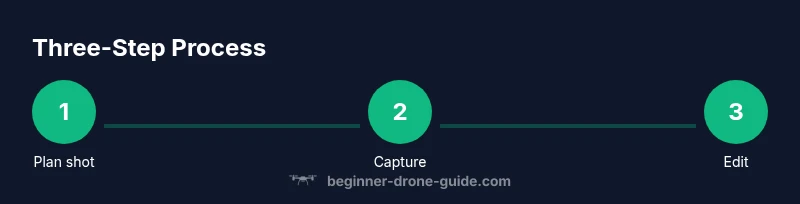
Create a simple shot list that includes an establishing wide view, a mid shot, and a detail detail shot. Decide on altitude and framing before you start moving.
Tip: Visualize your final image and set waypoints or route to minimize unnecessary maneuvering. - 6
Capture aerial photos
Fly to your chosen vantage point, maintain line of sight, and capture raw stills. Use a steady pace and avoid rapid, abrupt changes in direction.
Tip: Shoot in RAW if possible to preserve dynamic range for post-processing. - 7
Return and land safely
Return to a clear landing zone, slowly descend, and cut power when landed. Review the flight log and note any issues.
Tip: If signal weakens or battery runs low, initiate a controlled Return to Home rather than improvising a landing. - 8
Initial post-processing
Import your images into your editor, apply baseline corrections, check exposure and color, and export a version optimized for sharing.
Tip: Organize files with clear naming and keep a simple workflow to build consistency.
Frequently Asked Questions
What is the best drone for beginners?
There isn’t one universal best drone; look for beginner-friendly models with stable flight, easy controls, and solid safety features. Prioritize reliable firmware updates and good customer support. Start with a device that offers guidance modes and RAW photo capture.
For beginners, pick a stable, approachable drone that offers guidance modes and RAW photos. Check for updates and support.
Do I need a license to fly a drone for photography?
Licensing requirements vary by country and region. In many places hobbyist pilots must follow basic registration rules and airspace restrictions. Check local aviation authority guidelines and ensure you comply before your first flight.
Licensing depends on your location. Check your local aviation authority and register if required.
How can I avoid crashing on my first flights?
Practice in open, obstacle-free spaces, start with gentle hops, and ascend only as you gain control. Use beginner modes and gradually increase complexity as you become comfortable.
Fly in open spaces and take it slow. Use beginner modes and build up gradually.
Can entry-level drones shoot RAW photos?
Many entry-level drones offer RAW photo capture, which gives you more flexibility in post-processing. If RAW isn’t available, shoot in the highest quality JPEG plus RAW when possible.
Entry-level drones often support RAW. If not, shoot the best JPEG and RAW when possible.
How should I plan aerial shots effectively?
Start with a shot list covering wide, mid, and detail perspectives. Consider lighting, wind, and location context. Rehearse the route in your mind and memorize panning movements to save time during flight.
Create a simple shot list and rehearse the route for smooth execution.
What common mistakes do beginners make with drone photography?
Overloading on settings, neglecting preflight checks, and chasing dramatic moves without safe grounding. Build a routine: preflight, basic controls, shot planning, and review.
Many beginners skip checks, rush maneuvers, and over-edit. Build a simple routine and practice.
Watch Video
Quick Summary
- Start with safety, legality, and a simple preflight routine
- Master core camera settings before chasing complex shots
- Plan shots and practice with a clear progression
- Post-process with intention to preserve natural look