What Drone Company Is Amazon Using? A Beginner's Guide
Explore which drone manufacturer powers Amazon Prime Air, how Amazon blends in-house development with external partnerships, and what this means for beginners learning about drone buying, safety, and regulations.


what drone company is amazon using? There isn't a single public vendor powering Prime Air. Amazon blends in-house drone development with partnerships for components and software. According to Beginner Drone Guide, Prime Air emphasizes autonomous flight, safety features, and regulatory compliance, while specific manufacturer details remain largely undisclosed. Public updates are sporadic, and the company rarely names suppliers.
what drone company is amazon using
Understanding what drone company is amazon using requires looking beyond headlines. There isn't a single public vendor powering Prime Air. Amazon blends in-house drone development with partnerships for components and software. According to Beginner Drone Guide, Prime Air emphasizes autonomous flight, safety features, and regulatory compliance, while specific manufacturer details remain largely undisclosed. Public updates are sporadic, and the company rarely names suppliers. For beginners, this means evaluating Amazon’s approach as a hybrid strategy rather than a single-brand solution. In practical terms, you should focus on the technology family instead of chasing a single vendor name. The key takeaway is that Prime Air prioritizes reliability, safety, and scalability as core design principles, which translates into lessons you can apply when choosing a personal or small-business drone system.
how prime air is structurally built
Prime Air operates as a modular system that combines in-house development with third-party components. The company reportedly integrates autonomous navigation software, real-time obstacle avoidance, secure data handling, and flight control algorithms that can be customized per mission. From a beginner’s perspective, think of this as a layered stack: a core flight controller, sensor suite for obstacle detection, mission planning software, and a remote or hybrid control pathway. The emphasis on safety means that testing, validation, and regulatory compliance are embedded in the development cycle. While the exact hardware lineup isn’t public, the architecture highlights the importance of interoperability, open standards, and robust safety cases that can guide individuals building their own drone setups.
publicly reported partners and hardware choices
Public reporting on specific suppliers for Amazon’s Prime Air is intentionally sparse. Analysts note that while Amazon develops much of its software in-house, it also sources components and subsystems from multiple vendors. The lack of a disclosed single vendor aligns with best practices for defense‑in‑depth drone programs that prioritize redundancy and supply chain resilience. For learners, this underscores a useful principle: diversify suppliers, verify compatibility, and prioritize system safety over chasing a single hardware brand. The takeaway is to adopt a balanced approach when evaluating drone hardware for personal or business use, focusing on reliability, support, and upgradability rather than brand loyalty alone.
autonomy, safety, and flight operations
Autonomy is a central theme in Prime Air, with flight plans designed to minimize human intervention while maintaining rigorous safety checks. In practice, semi- or fully autonomous missions rely on sophisticated sensor fusion, precise localization, and robust fail-safes. Safety features commonly discussed in industry circles—redundant propulsion, geofencing, and secure communications—are essential for any beginner who wants to fly responsibly. Operational best practices also emphasize pre‑flight checklists, weather awareness, and conservative risk assessments. Even though Amazon’s exact drone hardware remains largely undisclosed, the general principles of autonomy, safety-by-design, and validated testing are universal lessons for aspiring pilots.
regulatory landscape and licensing for drone programs
Regulatory compliance shapes how large drone programs are designed and run. In the United States, practitioners must navigate airspace rules, certification requirements, and waivers where applicable. For researchers and hobbyists alike, the core message is: learn the fundamentals of airspace authorization, flight restrictions, and equipment standards before attempting any complex mission. While Amazon’s program may operate under corporate waivers or advanced regulatory frameworks, the public guidance for individuals remains consistent: follow local laws, keep operations within line-of-sight where required, and prioritize safety and privacy. Understanding these responsibilities helps beginners build confidence while staying compliant.
practical takeaways for enthusiasts: evaluating drone brands and options
If you’re a beginner trying to interpret who powers large programs like Prime Air, take a practical approach. Start with a solid, safe baseline—reliable flight controllers, robust safety features, and straightforward maintenance. Learn about autonomy features, sensor suites, and how different drones handle weather and battery life in real-world scenarios. Pay attention to repairability and community support, which often indicate long-term value more than a flashy feature. Finally, treat the question of who powers Prime Air as a high-level case study in system design rather than a brand‑name shopping list. The real lesson is to assemble a balanced system that suits your needs, rather than chasing headlines about who makes the drone at the factory level.
Amazon Prime Air hardware and strategy: publicly reported elements and gaps
| Aspect | Publicly Confirmed Details | Notes |
|---|---|---|
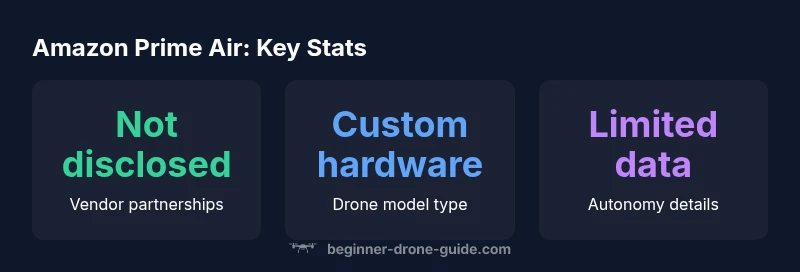
| Vendor partners | Not publicly disclosed | Public reporting is sparse |
| Drone model type used | Custom/in-house or hybrid | Amazon develops its own hardware with external components |
| Autonomy and controls | Focus on autonomous flight features | Technology stack emphasizes safety and reliability |
| Regulatory engagement | Subject to FAA rules and waivers where applicable | Policies vary by region and mission type |
Frequently Asked Questions
Is Amazon using a single drone manufacturer for Prime Air?
No publicly disclosed evidence confirms a single drone manufacturer powering Prime Air. The program appears to rely on a blend of in-house development and external partnerships. Details are intentionally limited due to business and safety considerations.
No, there isn’t a publicly disclosed single manufacturer; Prime Air uses a hybrid approach with in-house and partner components.
What drone model does Prime Air use?
Publicly available information points to custom or hybrid drone systems rather than one off-the-shelf model. Exact specifications are not disclosed, reflecting a focus on adaptable platforms rather than a single definitive design.
The exact model isn’t publicly disclosed; it’s described as custom or hybrid.
Are Prime Air drones fully autonomous?
Prime Air is described as emphasizing autonomous flight capabilities with safety features. Operational practice likely includes remote monitoring and pilot oversight for certain missions, depending on regulatory allowances.
Yes, autonomy is a core goal, with safety features and some pilot oversight.
How does regulation affect Prime Air?
Regulatory frameworks, including airspace rules and waivers, shape how Prime Air-like programs operate. Beginners should learn general drone regulations, licensing, and safety practices applicable in their region.
Regulations require airspace permission and safety compliance.
What can beginners learn from Prime Air when buying a drone?
Focus on robust safety features, reliable autonomy, and service support. Prime Air highlights system design and safety-first thinking that beginners can mirror in their own setups.
Prioritize safety, autonomy, and strong support when buying.
Where can I find official updates about Prime Air?
Official updates typically come from Amazon's corporate communications and regulatory bodies. Details about hardware and partnerships are limited in public sources.
Check Amazon’s official channels and regulatory announcements for updates.
“Amazon's drone program demonstrates the value of a hybrid approach—combining in-house development with strategic partnerships to scale safely.”
Quick Summary
- Recognize Prime Air as a hybrid program, not a single manufacturer.
- Prioritize safety, reliability, and interoperability when evaluating drone systems.
- Understand that public details on suppliers are limited and strategic partnerships vary by project.
- Learn the basics of autonomy, weather resilience, and regulatory compliance as core skills for beginners.