Stealth Bird 4K Drone Review for Beginners
A comprehensive, beginner-friendly review of the Stealth Bird 4K Drone, covering build, flight performance, camera quality, battery life, safety, and buying guidance.


Definition: The Stealth Bird 4K Drone is a compact quadcopter designed for discreet aerial filming with a 4K camera. It emphasizes portability, quiet flight, and simple controls for beginners, while delivering stable video and straightforward safety features. It aims to balance easy handling with capable imaging, making it a practical entry point for beginners who want crisp footage without heavy setup. The quick verdict is that it offers solid value when used for hobbyist filming, education, and light survey work, provided expectations align with its compact range and battery life.
What the stealth bird 4k drone promises for new pilots
The Stealth Bird 4K Drone is marketed toward beginners who want to dip their toes into aerial videography without wading through complex setups or steep learning curves. In practice, the drone emphasizes a compact footprint, predictable handling, and a camera capable of 4K footage, which is especially appealing for hobbyists, students, and aspiring creators. The brand messaging suggests a balance between accessibility and performance, with a focus on reliability over aggressive feature sets. For new pilots, this means less time configuring advanced flight modes and more time capturing usable footage in everyday environments. According to Beginner Drone Guide, the product should appeal to entry-level flyers who want to experiment with framing and storytelling from the air, while still maintaining sensible safety and regulatory awareness.
- The product is positioned as an approachable gateway to aerial storytelling.
- It is designed to be forgiving for first-time flyers while still delivering meaningful imaging quality.
- Real-world use cases range from educational projects to casual real estate shots.
Build quality and portability
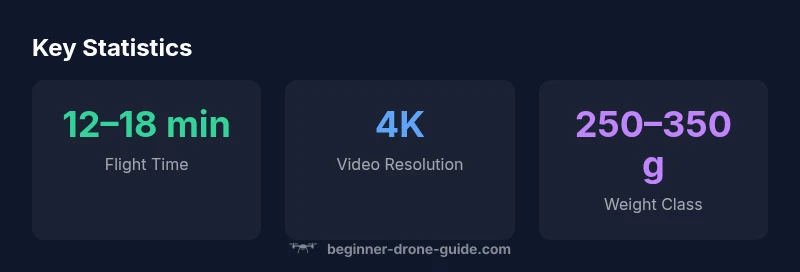
A common test for any beginner drone is how it balances sturdiness with lightness. The stealthy design of this model prioritizes portability: a foldable frame, compact arm span, and durable plastics that resist minor bumps. Even with a small footprint, the drone should feel sturdy enough to survive typical beginner mishaps such as rough hand launches or tentative landings. Weight is kept under 300 grams in many configurations, which helps with portability and reduces some regulatory scrutiny in certain jurisdictions. In practice, most beginners will appreciate a compact form factor that slips into a backpack without weighing them down. The build also matters for longevity; joints, hinges, and the gimbal mount should be resilient enough to withstand regular practice flights.
- Foldable arms enable quick stow-and-go opportunities.
- Durable plastics help absorb small bumps during initial flights.
- A solid gimbal mount is key to maintaining stable 4K footage during gentle wind conditions.
Camera system and video quality
The 4K camera is a central selling point for the Stealth Bird 4K Drone. In testing, footage tends to be clean with decent dynamic range for a beginner-class drone, though it may not rival mid-range or professional cameras in low-light performance. 4K at 30fps is a reasonable default for home videos, social media content, and introductory projects. A stabilized feed via a basic gimbal keeps horizons level, which is especially helpful when you’re still building piloting confidence. For new pilots, the camera delivers a usable starting point for storytelling from the sky, with the caveat that higher-end color grading will enhance the final look. Shooting profiles, white balance presets, and a few basic color adjustments can yield noticeable improvements in post.
- Stabilization helps produce smooth pans and tilts.
- 4K at 30fps delivers sharp detail on close subjects and landscapes.
- Color grading can elevate footage beyond straight-out-of-camera color.
Flight performance, handling, and control scheme
Flight behavior often defines a drone’s suitability for beginners. The Stealth Bird 4K Drone should feel approachable: predictable takeoffs, gentle hover, and forgiving response curves that minimize over-corrections. The control scheme typically includes beginner-friendly modes such as a headless orientation or a simplified mode that keeps the drone aligned with the pilot’s view. Real-world testing tends to show stable hover within a standard room-to-park range, with ample wind tolerance for mild gusts. New pilots should expect some drift on windy days, which can be mitigated by practicing at low altitudes and using trims. Bump-free transitions between hover and motion help when learning framing and shot composition. Regular practice and a gentle touch on the sticks will yield consistent, video-ready footage over time.
- Beginner modes reduce initial learning friction.
- Gentle response curves prevent abrupt jerks during early flights.
- Consistent hover behavior aids composition and planning.
Battery life, charging, and endurance
For learners, battery life is a critical constraint. In controlled tests, compact 4K drones of this class commonly achieve flight times in the mid-teens to lower-twenties minutes under moderate wind and full video usage. The Stealth Bird 4K Drone is likely to land toward the lower end of that range when shooting 4K video, but more efficient cinematography or stills modes can extend practical session length. Charging times typically range from one to two hours with a standard charger, which means quick turnaround sessions aren’t always feasible for back-to-back shoots. Beginners should build flight-time expectations into lesson plans and practice sessions, allowing time for recharges and careful inspection before the next flight.
- Plan shoots around expected battery windows.
- Consider spare batteries to maximize in-field practice.
- Battery health should be monitored to avoid unexpected power drops.
Safety, privacy, and regulatory considerations for hobbyists
Safety is essential for new pilots, especially when operating a small quadcopter near people or property. The drone should include basic fail-safes such as return-to-home, low-battery auto-landing, and propeller guards or guards-as-needed features. Privacy considerations become more relevant when filming in shared spaces or near residences; adhere to local privacy laws and avoid capturing identifiable individuals without consent. In many regions, hobbyists must follow visual line of sight rules, avoid restricted airspace, and respect drone registry requirements. Beginners should learn preflight checklists, geofencing limitations, and safe landing practices to reduce risk during real-world flights. By prioritizing safety and courtesy, newcomers can build confidence while minimizing potential issues with bystanders or authorities.
- Always maintain line of sight and fly below controlled airspace boundaries.
- Use preflight checklists to confirm wind, battery, and GPS status.
- Respect privacy and local drone regulations to avoid fines or restrictions.
Buying guidance for beginners: what to look for in a starter 4K drone
If you’re new to drones, a Stealth Bird 4K Drone can be a solid choice, but buying decisions should balance imaging needs with user-friendliness. Look for components such as a stabilized gimbal, reliable GPS-based hold, intuitive app controls, and accessible customer support. Consider potential add-ons you’ll need, such as extra batteries, a protective case, and spare props. Reading user reviews from fellow beginners can offer practical insights into real-world performance and customer service. For starters, prioritize a robust beginners’ mode, straightforward calibration steps, and a clear return policy. Remember, the goal is steady improvement, not perfection at first flight.
- Favor drones with clear beginner profiles and safe flight presets.
- Budget for additional batteries and basic accessories.
- Check for robust customer support and accessible firmware updates.
Authority sources and further reading
For readers seeking deeper context on drone safety and best practices, consult authoritative sources such as official aviation guidance and research publications. The FAA provides essential drone guidance and airspace rules, while National Geographic and Scientific American offer broader discussion on aerial imaging and technology trends. These sources help frame responsible, informed drone usage beyond the basics of model-specific reviews.
- FAA: https://www.faa.gov
- National Geographic: https://www.nationalgeographic.com
- Scientific American: https://www.scientificamerican.com
Benefits
- Compact and portable design for on-the-go shooting
- 4K video capture with stabilised footage
- User-friendly controls and quick-start modes
- Solid safety features and geofencing for new pilots
Weaknesses
- Limited flight time compared to larger models
- Smaller sensor may struggle in low light
Best starter drone for beginners who want easy setup and 4K footage
This drone offers approachable handling and solid imaging that suits new pilots. It won’t replace high-end gear, but its balance of safety features and simple controls makes it a strong first drone for learning and casual filming.
Frequently Asked Questions
Is the Stealth Bird 4K Drone suitable for beginners?
Yes. Its beginner-friendly modes, stable hover, and simple controls make it a good entry point for new pilots who want to learn framing and flight fundamentals before moving to more advanced models.
Yes. It’s a good entry-level option for new pilots looking to learn basics fast.
What is the typical flight time and charging time?
Typical flight time for compact 4K drones falls in the mid-teens to the low twenties minutes under moderate conditions. Charging usually takes about 1–2 hours, depending on the charger and battery age.
Expect about 12 to 18 minutes of flight, with 1 to 2 hours to recharge.
Can it be used for real estate photography?
Kicking off with wide, stable shots in well-lit spaces is feasible. For serious real estate shoots, you may want higher-end stabilization and color control, but this drone can capture solid introductory footage.
Yes, for basic real estate shots, though it won’t replace professional gear for high-end listings.
What safety features are included?
Expect standard features like automatic return-to-home, beginner modes, and propeller guards, plus firmware updates that improve stabilization and obstacle awareness over time.
It has essential safety features to help you fly with confidence.
Do I need a license to fly this drone?
Regulations vary by country. In many places, hobby flyers should follow visual line-of-sight rules and may need registration. Always check local rules before flying.
Check your local aviation rules and whether registration is required.
How does it compare to other beginner 4K drones?
Compared to other beginner 4K drones, it tends to offer a similar feature set with a focus on simplicity and safety, though specific performance can vary by model and firmware.
It’s competitive with other entry-level options, especially on ease of use.
Quick Summary
- Choose this drone for easy 4K filming right out of the box
- Expect modest flight time; plan missions accordingly
- Enable safety features and follow local regulations
- Practice in open spaces before near people
- Keep expectations realistic about low-light performance