Is drone good? A Practical Beginner's Guide for 2026
A practical evaluation of whether a drone is good for beginners, covering buying tips, safety, licensing, and real-world uses to help new pilots fly smarter and with confidence in 2026.


According to Beginner Drone Guide, is drone good for beginners? In short, yes—drones offer affordable, hands-on learning, creative aerial shots, and practical tasks. Start with safety basics, licensing basics, and beginner-friendly models with stable flight and predictable costs. The overall verdict: drones are a solid learning tool for 2026 when used responsibly.
is drone good for beginners? A practical introduction
Is drone good for beginners? The short answer is yes, when you start with clear goals, proper safety practices, and a sane budget. Drones provide an approachable way to learn core skills like spatial awareness, timing, and hand–eye coordination while also enabling creative projects such as basic aerial photography and site surveys. The Beginner Drone Guide team emphasizes that the question is not whether drones are fun, but how they fit into structured practice, safety routines, and regulated use. By framing your learning around small, repeatable flights, you’ll build confidence quickly and reduce the risk of accidents or violations. This article examines the factors that influence whether a drone is good for you as a learner and offers a practical path from unboxing to confident piloting.
How drones align with learning goals
Drones are an excellent match for several common learning objectives: developing fine motor skills, understanding flight dynamics, and practicing decision-making under dynamic conditions. For beginners, the most important outcomes are consistency in flight, adherence to safety norms, and the ability to troubleshoot minor issues without panic. Drones simplify visual feedback by showing real-time data like altitude, orientation, and motion, which accelerates comprehension compared with static learning tools. When you ask, is drone good, you’re really asking if it can provide a structured, repeatable practice routine that scales with your growing competence. In this regard, many learners report rapid progress through short, daily practice sessions.
Key factors that determine value: safety, cost, and licensing
The value of a beginner drone is determined by safety features, total cost of ownership, and the regulatory framework you must follow. Prioritize systems that automate stabilization, GPS hold, beginner-friendly return-to-home, and obstacle avoidance to reduce early mishaps. Cost-wise, the entry point for hobbyist models is often affordable, but ongoing expenses include replacement parts, batteries, and potential licensing fees depending on your region. Licensing rules vary by country, but most places require basic registration or a simple knowledge test for hobbyist flights. When determining if a drone is good for you, consider whether the device’s support ecosystem—tutorials, forums, and manufacturer updates—will help you stay compliant while you learn. A well-chosen starter drone should offer durable construction, wide availability of spare parts, and reliable customer support.
Real-world use cases that illustrate benefits
For learners, a drone is a versatile tool for exploring photography, surveying, and creative expression. Beginners often start with harmless, short indoor flights to master throttle control, then progress to outdoor sessions where lighting and wind introduce realistic challenges. Common projects include basic aerial photography of landscapes, documenting a home exterior for improvement work, or mapping a small backyard for fun. These activities help reinforce measurement concepts, timing, and spatial reasoning, while providing tangible outcomes to share with family or a local drone club. Real-world examples demonstrate that guided practice with a safe model can accelerate your journey from curiosity to competence in a matter of weeks rather than months.
Common pitfalls and how to avoid them
Even with great intentions, beginners can stumble. Common errors include overreaching flight plans in windy conditions, ignoring local airspace rules, and neglecting pre-flight checks. To avoid these, adopt a simple checklist: verify battery, calibrate sensors, check propellers for damage, and confirm the flight area is safe and legal. Practice in a forgiving environment, like a park with low wind and open space, before attempting more complex routes. Another frequent issue is relying on the drone’s automatic features without understanding how they work; you should still maintain situational awareness and be ready to take manual control if needed. By building a routine focused on system checks and conservative goals, you’ll gain reliability and confidence faster.
How to choose a starter drone: features and budget ranges
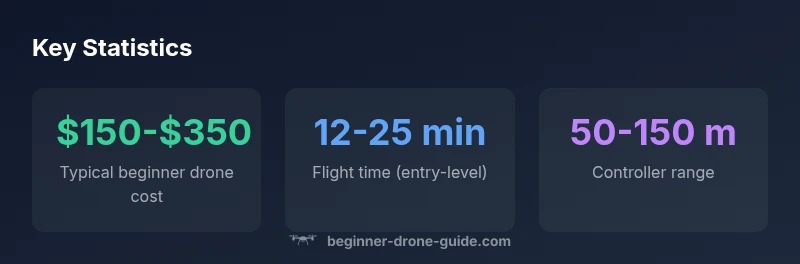
Selecting a starter drone should begin with defining your goals and budget. If you want quick wins in aerial photography or video, prioritize stability features like GPS, attitude control, and a decent camera. For purely recreational learning, you can start with small, robust models that tolerate minor bumps and offer safe auto-landing. Budget ranges typically fall into three tiers: under $200 for basic flyer kits, $200–$400 for improved stabilization and camera options, and $400–$800 for more advanced beginner rigs with better sensors and longer flight times. Look for widely available spare parts, a friendly user community, and firmware updates that keep your model relevant. Remember to factor in batteries and chargers, as those often double the cost of ownership over time.
Testing methodology: how we evaluated drones for beginners
To assess whether a drone is good for beginners, we used a practical, ecoline approach: (1) setup ease and out-of-the-box readiness, (2) initial stability tests in calm conditions, (3) response to basic control inputs, (4) battery life under typical practice scenarios, and (5) repeatability of safe landings and auto-return functions. We also considered customer support, availability of spare parts, and the richness of educational resources. By documenting flight sessions in ordered steps and keeping a log of performance, we created a transparent, repeatable framework so new pilots can compare models with confidence.
Comparisons to other learning tools: why drones fit
Drones offer a unique blend of physical activity, visual feedback, and creative potential compared with other learning tools like RC planes or smartphone cameras. RC planes require broader airspace and more nuanced piloting, which can be frustrating for beginners. A smartphone camera focuses on stills and video without teaching flight fundamentals. Drones provide immediate, actionable feedback through flight data, which helps you develop depth perception, timing, and risk management. For many learners, that combination makes drones a compelling first step toward more advanced aviation or aerial imaging projects.
Practical setup: getting started in 48 hours
A pragmatic plan is essential to reduce overwhelm. Day 1 is about basics: choose a starter model, charge all batteries, install the app, and complete the manufacturer’s basic tutorial. Day 2 focuses on flight fundamentals in a safe, open area: hover, ascend/descend, yaw, and basic maneuvers with emphasis on smooth inputs and steady positioning. Throughout the process, keep a learning log, review video feedback, and gradually introduce light camera practice if your model supports it. With discipline and a structured routine, you can be confidently piloting within 48 hours and ready to extend your exploration into more advanced tasks over the following weeks.
Benefits
- Low-entry cost for basic models
- Hands-on learning accelerates skill development
- Stable flight with beginner-friendly modes
- Strong online communities and tutorials
Weaknesses
- Quality varies in very cheap models
- Ongoing costs for batteries and maintenance
- Regulatory requirements can be confusing for new pilots
- Some beginner drones have shorter lifespans under rough use
Great starting point for learners who want hands-on practice, safety discipline, and accessible experimentation.
Drones offer immediate feedback and a clear path from basic piloting to more advanced tasks. While cost and licensing vary by region, a well-chosen beginner model provides a reliable, engaging way to develop core aviation skills.
Frequently Asked Questions
What is the first thing I should learn when starting with a drone?
Begin with the basics: pre-flight checks, control inputs (throttle, yaw, pitch, roll), and slow, controlled hover. Practice in a safe, open area and gradually introduce simple maneuvers while monitoring wind and surroundings.
Start with your pre-flight checks and gentle hover practice in a safe space, then slowly add maneuvers as you gain confidence.
Do I need a license to fly a beginner drone?
Licensing depends on your country. Many places require registration for hobbyist flights and a basic knowledge test or safety course. Check local aviation authority guidelines to ensure compliance before your first flight.
Most places require some form of registration or knowledge check, so verify your country’s rules before flying.
Which drone should a complete beginner buy?
A good starter drone should offer stable flight, easy controls, reliable customer support, and parts availability. Look for GPS stabilization, beginner modes, and a reasonable price. Avoid models with overly complex features you won’t use at first.
Look for a starter with easy controls, GPS stabilization, and solid support so you can learn without frustration.
Is it legal to fly over private property with a drone?
Flying over private property is governed by local laws and privacy rules. In many places you can fly over your own property, but you should avoid filming neighbors without consent and respect no-fly zones and privacy expectations.
Always check local rules and respect people’s privacy when flying near homes.
How can I improve my drone skills quickly?
Set a structured practice schedule, focus on a few maneuvers at a time, review flight footage, and progressively push into outdoor environments with mild wind. Join a local drone group or online forum to share tips and get feedback.
Practice regularly, review your flights, and learn from others in the community.
What are common safety mistakes beginners make?
Common mistakes include flying in restricted airspace, ignoring battery levels, and failing to perform pre-flight checks. Establish a routine that includes area assessment, equipment check, and awareness of people and obstacles in the vicinity.
Don’t fly in restricted zones and always check your gear before takeoff.
Quick Summary
- Start with safety-first fundamentals
- Choose a beginner-friendly model within your budget
- Prioritize stability features and spare parts access
- Practice regularly to build confidence quickly
- Understand local drone rules before flying