Is a Drone a Good Investment? A Practical Guide for Beginners
Explore whether buying a drone makes financial sense for beginners, with practical cost considerations, revenue potential, licensing, and risk factors.


Yes, a drone can be a good investment—but only if you have a clear plan to generate value. For beginners, the most reliable path is to pair a modest upfront drone with a concrete revenue idea (e.g., real estate photography or inspections) and to account for licensing, insurance, and ongoing maintenance. ROI hinges on market demand, skills, and your ability to monetize.
Market Context for Beginner Drone Investors
Drones have moved from hobby gadgets to practical tools across industries such as real estate, construction, agriculture, and media. For a beginner, understanding this market context is essential before committing capital. The key is to look for recurring demand — not one-off projects — and to assess how your skills align with the needs of local businesses or individuals. According to Beginner Drone Guide, the most resilient niches combine speed, accuracy, and visual data that clients cannot easily replicate with consumer devices. In practice, this means targeting tasks where drones deliver measurable value: faster site surveys, safer inspections, or compelling marketing visuals. The growth story is supported by ongoing technology improvements—better cameras, longer flight times, more reliable flight controllers—while regulatory environments gradually stabilize in many regions. The opportunity is real, but so is the risk of rapid obsolescence if you chase flashy gear without a plan. A deliberate, education-forward approach tends to outperform impulse buying.
How to Evaluate Costs, Returns, and Cash Flow
Before purchasing, model your cash flow with a simple framework:
- List all upfront costs (drone, accessories, training).
- Estimate ongoing costs (maintenance, insurance, licensing).
- Define potential revenue streams (real estate shoots, inspections, mapping, agricultural monitoring).
- Set pricing for typical jobs and estimate job frequency in your market.
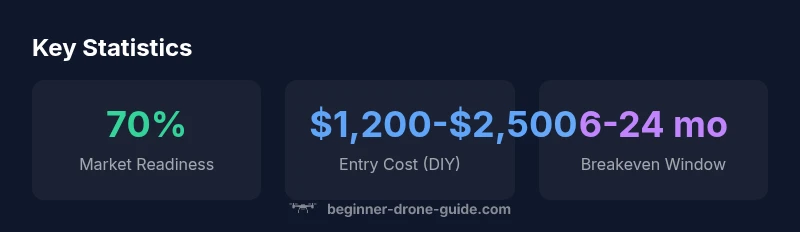
A realistic plan combines a modest upfront kit with a clear service line. Use a spreadsheet to project monthly profit, then track actuals against forecasts. If you can reach a positive cash flow within 6–24 months and sustain demand, the investment becomes more compelling. Remember to factor taxes, depreciation, and possible financing costs into your calculations. The key is validation: prove there is paying work before scaling.
- Start with a single service and expand as you gain experience.
- Build a simple portfolio that demonstrates your value.
- Revisit your pricing every quarter as you gain credibility.
Use Cases with Real Revenue Potential
Drones unlock value in several revenue-generating niches. Here are the most accessible for beginners:
- Real estate and architectural photography: quick, high-impact visuals that help listings stand out.
- Construction and infrastructure inspections: safer, faster site checks that reduce risk and downtime.
- Aerial mapping and surveying: data collection for small plots, farms, or environmental projects.
- Marketing and event coverage: short-form video content for social media and promotions.
- Insurance and claim assessments: rapid damage assessment in post-disaster scenarios.
Each use case requires a different skill set and equipment stack. Start with one area and expand as your client base grows. Build case studies that quantify outcomes (time saved, accuracy improvements, or revenue gains for clients) to drive referrals.
Tip: Choose niches where clients value fast delivery and clear data. Specialization often commands higher rates than generalist photography.
- Real estate photos → high-volume, repeat business
- Inspections → higher ticket items, long-term contracts
- Mapping → project-specific deliverables and dashboards
Licensing, Regulations, and Insurance Realities
Regulatory requirements vary by country and even by region within a country. For commercial drone work, participants typically need a formal certification or license, proof of training, and adherence to flight rules (airspace, altitude limits, overhead restrictions). Insurance is highly advisable and often required, covering liability and equipment damage. Licensing costs, renewal fees, and mandatory training should be included in your budgeting. Stay current on airspace classifications, privacy laws, and local enforcement patterns. Networking with local pilots or associations can provide practical guidance and reduce compliance risk. Planning ahead on compliance helps protect margins and reduces costly interruptions to client work.
- Research your local aviation authority’s licensing process
- Budget for annual or periodic renewals
- Carry liability insurance and equipment coverage
Authorized training and licensing details may differ; always verify with your jurisdiction's official resources.
Depreciation, Tax Benefits, and Lifecycle
Drones, like other office equipment, depreciate over time. In many jurisdictions, you can deduct the cost of equipment used for business over several years, which improves after-tax cash flow. A typical lifecycle includes an initial purchase, several major firmware and hardware upgrades, and eventual replacement when maintenance costs exceed the value of continued use. Tax treatment varies; consult a qualified accountant to optimize deductions, especially if you operate under multiple revenue streams. Keeping thorough records of purchase dates, maintenance costs, and project invoices will simplify depreciation calculations and improve audit readiness. A disciplined asset management approach helps you time upgrades and avoid stranded investments when models and software become outdated.
- Track useful life estimates for each asset class
- Separate personal from business use for tax accuracy
- Plan periodic upgrades aligned with service demand
Risks, Break-Even, and Cash Flow Scenarios
Investing in drones carries notable risks. The market can shift quickly as new models and services emerge. Regulatory changes may restrict certain flight operations, affecting revenue opportunities. Tech upgrades mean ongoing capital expenditure, and maintenance costs can surprise new owners. To navigate these risks, build scenarios: best case, moderate, and conservative. A conservative plan emphasizes cash flow resilience, such as reserving capital for upgrades and maintaining clients to secure recurring work. A strong market may shorten break-even timelines, while a weaker market can stretch them. Diversification across service lines reduces risk—don’t rely on a single client or niche.
- Build a cash reserve for upgrades and repairs
- Keep a diversified service menu
- Revisit pricing and packages in response to demand shifts
Practical Steps to Test the Waters with Minimal Risk
Start small and validate feasibility before heavy investment. Practical steps:
- Rent-or-borrow a drone to practice on real projects and build a tiny portfolio.
- Secure a few pilot clients or pro-bono gigs to prove value and gather testimonials.
- Track time, costs, and revenue meticulously to refine your model.
- Create a minimal marketing plan focused on your target niche (real estate, inspections, etc.).
- Reassess after 90 days and scale only when you have confirmed demand.
A cautious, test-driven approach reduces the risk of sunk costs while building your credibility in the market.
Common Pitfalls and How to Avoid Them
Beginners frequently fall into avoidable traps:
- Over-investing in gear before validating demand.
- Underpricing services to win work or secure portfolio pieces.
- Ignoring regulatory and insurance requirements that can derail projects.
- Underestimating maintenance costs or battery cycles.
- Failing to document client outcomes or keep accurate invoices.
Mitigation tips:
- Start with a lean setup; focus on a single service line first.
- Perform market validation with small, priced projects.
- Invest in insurance and licensing upfront.
- Maintain detailed records for billing and depreciation.
A disciplined approach lowers risk and supports sustainable growth.
A Starter Case Study Framework for Beginners
Framework to model your first six months:
- Niche: Real estate photography for small-to-mid markets
- Setup: Entry-level drone + stabilizer + basic editing software
- Revenue target: 2–4 paid projects per month at a modest rate
- Costs: Hardware, license, insurance, marketing, and misc.
- Metrics: project count, average revenue, gross margin, cash flow, client retention
Compare actual results to your forecasts monthly and adjust your plan. Use this framework to iterate toward a repeatable, scalable model.
Cost breakdown and licensing considerations for beginner investors
| Cost Category | Low-cost setup | Mid-range setup | High-end setup |
|---|---|---|---|
| Drone hardware | $300-$1,000 | $1,000-$2,500 | $2,500-$5,000 |
| Licensing/registration | $0-$150 | $150-$350 | $350-$600 |
| Insurance (annual) | $50-$200 | $200-$600 | $600-$1,000 |
| Extras & accessories | $50-$300 | $300-$800 | $800-$1,500 |
Frequently Asked Questions
Is there a specific license required to fly a commercial drone?
Yes, in many jurisdictions you need a remote pilot certificate or equivalent; requirements vary by country. Check your local aviation authority. You may also need insurance.
Yes—most places require a license or permit for commercial drone work.
What is the typical break-even time for a beginner investor?
Break-even can range from 6 to 24 months depending on market, usage, pricing, and expenses.
Break-even typically takes several months to a couple of years.
Can I recoup costs by renting a drone before buying?
Renting is a good way to validate demand; you don't own, but you can learn and avoid large upfront costs.
Yes, renting helps test demand before you buy.
What are the biggest risks of viewing drones as investments?
Market volatility, regulatory changes, rapid tech upgrades, and uncertain maintenance costs. Diversify offerings to mitigate.
Regulatory changes and tech costs are big risks.
How can a beginner start with low upfront costs?
Choose a basic drone, limit scope to one service line, and build a portfolio with low-cost marketing.
Start small and build a niche.
“Drones can unlock new service models, but profitability hinges on clear demand, disciplined budgeting, and ongoing skill development.”
Quick Summary
- Define a revenue niche before purchasing gear.
- Start with a low-cost setup to test demand.
- Track costs and revenue to determine ROI.
- Understand licensing and insurance early to avoid surprises.
- Market demand varies; scalability depends on skill and services offered.