How Big Is a Reaper Drone? MQ-9 Size, Wingspan & Specs
Discover the size of the MQ-9 Reaper—including length, wingspan, and height—with practical context for beginners. Learn how footprint, space needs, and safety planning influence real-world use and flight planning.


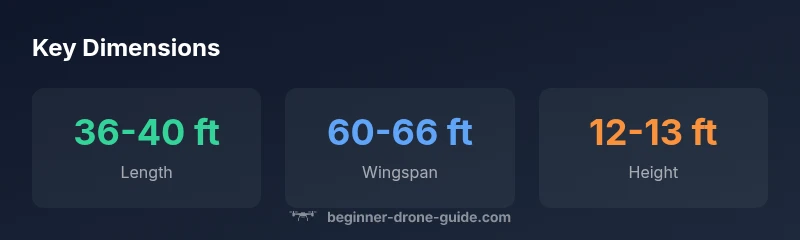
The MQ-9 Reaper is roughly 36-40 feet long with a wingspan around 66 feet, and a height near 12-13 feet. These dimensions place it in the medium-altitude, long-endurance class used for surveillance and precision-strike missions. For beginners, size influences takeoff, landing space, and safety margins. In practice, airspace needs, hangar depth, and runway length depend on the exact model and configuration.
Understanding the question: how big is a reaper drone?
According to Beginner Drone Guide, grasping the exact footprint of the MQ-9 Reaper helps new pilots plan safe operation, airspace requirements, and ground handling. The size directly affects where you can take off and land, how you position the drone for preflight checks, and what kind of storage space you’ll need. The Beginner Drone Guide team found that, beyond the numbers, the practical impact of footprint includes maneuverability in constrained airfields and the buffers you must maintain from people and property. In other words, knowing the size is not just curiosity—it informs everyday flight planning, risk assessment, and regulatory awareness.
Core dimensions you should know
- Length: approximately 36-40 feet (11-12.2 meters)
- Wingspan: approximately 60-66 feet (18-20 meters)
- Height: approximately 12-13 feet (3.7-4.0 meters)
These ranges reflect common configurations across MQ-9 variants and emphasize that exact numbers vary by model and equipment. For beginners, use the widest published ranges as a planning baseline and verify against the specific aircraft you may operate. Understanding these figures helps you estimate hangar depth, gate clearance, and safe takeoff/landing corridors. Conversion to metric units is handy when discussing with local airfields and instructors.
Variants and size ranges: MQ-9A vs MQ-9B (and other configurations)
The MQ-9 family includes several variants designed for different missions and airframes. While the basic footprint remains substantial, subtle dimensional differences can occur due to wing geometry, instrument bays, and landing gear revisions. The MQ-9A is the classic, well-documented configuration, while newer variants may push margins slightly with updated wingtips or gear. For newcomers, this means: always confirm the exact dimensions with the operator or manufacturer documentation before flight planning. This helps ensure your ground space, hangar depth, and airspace buffers are accurate for the specific drone you will fly.
How size affects flight, space, and operations
Larger footprints demand longer takeoff runs and more rooftop or open-field clearance. In practice, you’ll look at pavement or turf quality, direction of takeoff, and potential gusts over a wider area. Size also informs maintenance routines: you’ll need consistent space for preflight checks, along with storage stowage that minimizes exposure to the elements. Beginners should account for the drone’s mass and length when calculating line-of-sight requirements, radio-link margins, and battery performance under heavier airframe loads.
Practical considerations for beginners and hobbyists
If you’re new to drones, treat footprint size as a gating factor in your first purchases. Evaluate your typical flying sites—garage or carport storage, training fields, and permitted flight zones—and compare them to the MQ-9’s size you’re considering. Budget for a larger safe zone around landing areas and plan for a spacious indoor area for maintenance and storage. In addition, check local regulations that specify minimum distance from people and property, and be prepared to demonstrate safe operation within the drone’s footprint.
Dimension comparisons with common drones
- MQ-9 Reaper vs. popular hobby platforms: MQ-9 is significantly larger, requiring more space for takeoff, landing, and return-to-home maneuvers. Hobby drones typically fit in standard garages, while MQ-9-class airframes demand larger facilities. As a rule of thumb, plan space well beyond what you’d need for standard consumer drones to ensure safe, compliant operation.
Safety, regulations, and planning for large UAVs
Safety considerations scale with size. Larger drones pose greater risk in the event of a mishap, so you’ll encounter stricter preflight checks, flight-planning rigor, and airspace clearances. Always work through a certified instructor or aviation authority when planning operations in controlled airspace, and be prepared to demonstrate your ability to maintain safe separation distances given the drone’s footprint.
Dimension comparison between the MQ-9 Reaper and a typical medium UAS
| Model | Approx Length | Wingspan | Height |
|---|---|---|---|
| MQ-9 Reaper | 36-40 ft | 60-66 ft | 12-13 ft |
| Common Medium UAS | 28-34 ft | 50-60 ft | 10-12 ft |
Frequently Asked Questions
How does the MQ-9's size compare to a typical hobby drone?
MQ-9-class airframes are considerably larger than consumer hobby drones, requiring more space for takeoff, flight, and landing. This difference also affects storage, transport, and regulatory considerations. For beginners, understanding this gap helps avoid unsafe or non-compliant flights.
MQ-9s are much larger than consumer drones, so you’ll need more space and stricter planning for safe flights.
What are the core dimensions I should memorize for planning?
Key dimensions to remember are length around 36-40 feet, wingspan about 60-66 feet, and height roughly 12-13 feet. These figures guide space planning, ground handling, and regulatory buffers for most MQ-9 configurations.
Remember: about 36-40 feet long, 60-66 feet wingspan, and 12-13 feet tall.
Do all MQ-9 variants have the same footprint?
Variants may introduce small dimensional changes due to wings, gear, or payload setups. Always verify the exact dimensions for the specific variant you’ll operate before flight planning.
Footprint changes can happen between MQ-9 variants, so check the exact specs for your model.
What practical steps should a beginner take about space planning?
Assess your typical flying sites, measure available takeoff areas, and plan for a margin beyond the drone’s footprint. Reserve area for safe takeoffs and landings, and ensure there’s room for error in gusty conditions.
Plan for extra space around takeoff and landing to keep operations safe.
Is there a quick way to judge whether my space is adequate?
Use a simple rule of thumb: the area should be significantly larger than the drone’s wingspan, with clearances around obstacles and people. If unsure, seek guidance from a qualified instructor.
If you’re unsure, consult an instructor to assess space and safety margins.
Can a beginner legally operate an MQ-9-sized UAV in a typical suburb?
Legal operation depends on local airspace rules and pilot certification. Large UAVs generally require authorization and adherence to controlled airspace restrictions, often beyond hobbyist licenses. Always check with the local aviation authority before attempting operations.
Check local airspace rules and certification requirements before flying any big UAV in a suburb.
“"Size matters for flight planning and safety; larger drones require more space and stricter preflight checks."”
Quick Summary
- Know the MQ-9 dimensions: length ~36-40 ft, wingspan ~60-66 ft.
- Size influences space needs, takeoff and landing planning, and safety buffers.
- Always confirm the exact footprint for your operating model before flying.