Does Drone Mobile Require a Subscription? A Practical Guide for Beginners
Explore whether drone mobile services require a subscription, what features cost extra, and how to evaluate plans for beginner pilots to fly safely and affordably.


Does drone mobile require a subscription? In most cases, basic drone operation does not require a paid plan. You can fly with the standard controller and built-in safety features without paying. However, many manufacturers and third-party services offer optional subscriptions for extended capabilities such as cloud storage, advanced telemetry, premium maps, and remote unlocking. For beginners, you typically don’t need a subscription to start flying.
What subscription means for drone mobile
Subscription in the drone space often refers to services layered on top of the hardware—things like cloud storage, data analytics, or advanced safety features. For beginners, does drone mobile require a subscription? Not for basic flight. According to Beginner Drone Guide, most entry-level flying remains free of ongoing fees, with paid plans offering optional enhancements rather than essential flight capability. This distinction matters: you can get comfortable piloting, learn safety procedures, and build maps or logs offline before committing to any monthly charge. If you’re curious about whether you should pay for extras, start with the free tier and add features only as your needs grow. Understanding this nuance helps you avoid paying for capabilities you won’t use in the early learning phase.
Does drone mobile require a subscription? Core answer for beginners
The short answer is that you can usually fly without a paid plan. A subscription becomes relevant when you want to unlock data-heavy or professional-grade services: cloud backups of flight logs, real-time telemetry streaming, high-resolution maps, or remote unlocking. Some manufacturers offer tiered pricing, while others provide one-time purchases for specific features. For most hobbyists, the free or base tier covers the essentials—manual flight, basic stabilization, and standard camera controls. If you anticipate frequent data access or collaboration needs, a paid plan may be worth evaluating later on.
When subscriptions are actually offered
Subscriptions tend to appear when cloud services, data analysis, professional workflows, or fleet management tools enter the picture. If you plan to keep long-term flight logs in the cloud, continuously access live telemetry on multiple devices, or deploy AI-based safety features, a subscription can unlock those tools. Likewise, partnerships with mapping or inspection platforms often require a paid account to access premium datasets or analytics. Always confirm whether the service is optional or essential for your intended use, since some apps require an account to operate even without a fee.
Free vs paid features on common platforms
Many drones provide a generous free tier for flight control, basic camera operation, and standard geofencing. Paid tiers frequently add cloud storage, higher-quality video uploads, extended flight data retention, premium maps, and advanced AI assistance. For beginners, you can usually rely on the free options while you learn, then upgrade only if you need more data retention, team access, or sophisticated planning tools. Be mindful of auto-renew terms and whether a trial converts to a paid plan.
How to evaluate whether you need a subscription
Start by listing your use cases: learning flight, practicing photogrammetry, or performing routine inspections. Then compare features across the free tier and paid options: what value do cloud backups, telemetry, or premium maps provide for your goals? Check for trial periods, cancellation terms, and device compatibility. If you rarely need cloud access or multi-device telemetry, you’ll likely stay on a free plan. Revisit the decision after a few months as your skill and project needs evolve.
Real-world scenarios: hobbyist vs pro
For a hobbyist, a basic drone with offline logs, local storage, and standard safety features is often sufficient. A professional or semi-professional user may require cloud-backed flight histories, fleet management, and high-fidelity maps, which justify a subscription. A student shooting for portfolio work may benefit from cloud sharing and collaboration features, while an aerial photographer focusing on real estate might lean toward premium maps and larger data allowances. In every case, start small and scale up only when your activities justify the cost.
Data and trends (Beginner Drone Guide analysis)
Beginner Drone Guide Analysis, 2026 indicates that most beginner-friendly drones come with a robust free tier, while paid plans concentrate on data and analytics features. The growth of cloud-based services is slowly expanding access to flight data and remote operations, but the core act of flying remains affordable without a subscription. Our analysis also highlights that many pilots upgrade only after they identify precise value in the paid tools, rather than as a routine purchase decision. This reflects prudent budgeting for newcomers and aligns with best practices for risk-aware drone work.
What to look for in terms of privacy and terms
When evaluating subscriptions, review privacy policies and data-use terms. Do you own your flight data or does the provider retain rights? Are data transfers encrypted, and how long is data stored? Be sure to check whether you can export your data and whether there are limits on device sharing. For beginners, understanding these terms early helps avoid surprises if you stop using a service or switch platforms.
Cost ranges and feature bundles explained
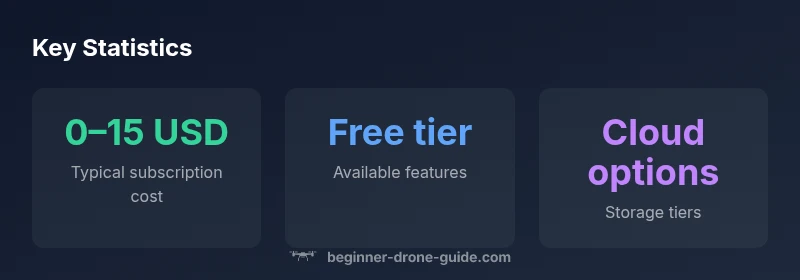
Most vendors structure costs around tiers rather than a single price. For beginners, expect a free baseline with optional paid features ranging broadly in scope and cost. The most common bundles include cloud storage, extended data retention, premium map access, and enhanced telemetry. Always compare features side by side and consider whether the added value aligns with your learning pace and project plan. Realistically, you should expect to pay only for features you will use regularly.
Practical recommendations for beginners
- Start with a no-subscription baseline to learn controls and safety. 2) List required features (cloud storage, maps, telemetry) and only then evaluate paid options. 3) Take advantage of free trials and cancel before renewal if you aren’t using the service. 4) Reassess decisions after 1–3 months as your projects evolve. 5) Keep a simple budget and track feature usage to ensure you aren’t paying for underused tools.
How to compare vendors and plan options
Create a side-by-side checklist: flight basics, device compatibility, storage limits, data-retention, and multi-device access. Include terms such as cancellation windows and auto-renew policies. If you can, test trial periods and measure the impact on your workflow. Don’t neglect privacy and data rights when weighing plans; opt for providers with transparent practices and clear ownership of your flight data.
Get started: plan a budget and trial
Begin with a concrete budget: allocate funds for potential upgrades after you’ve gained flight proficiency. Try at least two platforms during trial periods to see which tools you actually use. By starting with the no-cost tier and growing deliberately, you’ll reduce risk and avoid paying for features that don’t fit your learning path. The Beginner Drone Guide team recommends this cautious approach to subscriptions.
Comparison of subscription needs across common drone usage scenarios
| Scenario | Subscription Required? | Key Features | Notes |
|---|---|---|---|
| Basic Local Flight | No | Onboard controls, basic safety features | No internet required |
| Advanced Telemetry/Cloud Storage | Yes | Real-time telemetry, cloud backups, premium maps | Depends on vendor |
Frequently Asked Questions
Do I always need a subscription to fly a drone?
No. Basic flight is usually possible without a paid plan. Subscriptions unlock extras like cloud backups and advanced telemetry, but aren’t required for initial piloting.
No, you can fly with the free plan; paid options add extras.
What features typically require a subscription?
Commonly cloud storage, real-time telemetry, premium maps, and remote unlocking require a paid tier. These features add data access and analytics capabilities.
Cloud storage and premium maps often come with a subscription.
Are there free alternatives to paid drone services?
Yes. Many platforms offer free tiers with essential flight tools, basic maps, and limited cloud access.
There are free tiers for basic use.
How can I tell if a subscription is worth it?
Assess your use-case, budget, and how often you’ll use the added features. Use trials to test value before committing.
Assess your needs and try trials before buying.
Do licensing or regulations affect whether I need a subscription?
Licensing and regulations are separate from subscriptions. Compliance requirements still apply regardless of plan status.
Licensing is separate from any subscription plan.
Is there a risk with subscriptions if I forget to cancel?
Auto-renewed charges can occur if you don’t cancel. Always check renewal terms and set reminders.
Watch for auto-renewal and set reminders.
“Subscriptions in drone services should be evaluated by the value they unlock, not just the price.”
Quick Summary
- Start with the free tier to learn basics.
- Only pay for features you will actually use.
- Evaluate value before committing to a subscription.
- Know cancellation terms and auto-renew policies.
- Reassess plans after a few months of use.