Are drones worth the money? A practical guide for beginners
Explore whether drones are worth the money for beginners. This analytical review covers cost, use cases, licensing, maintenance, and practical tips to maximize value.


are drones worth the money? For many beginners, the answer is yes when you have a clear use case and plan for the total cost of ownership. A drone's value increases with learning, safe flying practices, and real‑world tasks like photography or inspection. A realistic budget and phased upgrades help maximize long‑term return.
are drones worth the money? A practical framework
According to Beginner Drone Guide, evaluating whether a drone is worth the money starts with aligning your budget to your intended tasks. For many new pilots, the decision hinges on total cost of ownership, not just the sticker price. In 2026, entry‑level models start around a few hundred dollars, but adding extra batteries, propellers, a charger, calibration tools, and a protector case can double that. When you pair a drone with learning resources and safety practices, your probability of getting real value increases. This section introduces a practical framework used by the Beginner Drone Guide team to assess value: identify your use case, estimate ongoing costs, and map potential outcomes to tangible benefits such as time savings, better photos, or safer inspections.
Key question to answer: what do you actually want to do with the drone on a regular basis? If your goals center on learning, photography, or simple inspections, value accrues as your skills improve and your tasks become more ambitious. If you’re unsure of the use case, start with a low‑cost model and a strict budget cap, then reassess after a few weeks of practice.
Brand note: this framework aligns with the Beginner Drone Guide approach to practical, beginner‑friendly evaluation, emphasizing affordability, safety, and clear outcomes.
How to quantify value: use‑cases, budgets, and ROI
Value isn’t a single number; it’s a function of use case, frequency, and the cost of alternatives. The following framework helps beginners translate features into tangible benefits:
- Use-case mapping: list activities you’ll perform most (learning, photography, real estate previews, inspections, or educational demos). Each use case has different ROI drivers, such as time saved, improved image quality, or safer operations.
- Time and cost budgeting: estimate monthly or yearly time saved and a rough dollar value for tasks completed faster or more safely. Don’t forget licensing, insurance, and maintenance in your yearly spend.
- Phase purchase approach: plan a two‑to‑three‑step path—from entry level to midrange—so upgrades align with growing skills and needs rather than chasing feature envy.
In practice, new pilots who start with a clear plan and a finite budget tend to extract value sooner. Beginning pilots should favor models with reliability, ease of use, and strong safety features over purely high specs, because these elements reduce costly mistakes and accelerate learning.
For context, the Beginner Drone Guide team highlights that value compounds as you build routine, record results, and integrate the drone into real tasks rather than occasional play.
Entry-level vs. midrange vs. pro drones: price vs capability
Price bands roughly map to capability, but the best choice for a beginner is rarely the most expensive option. Here’s how to think about the tiers:
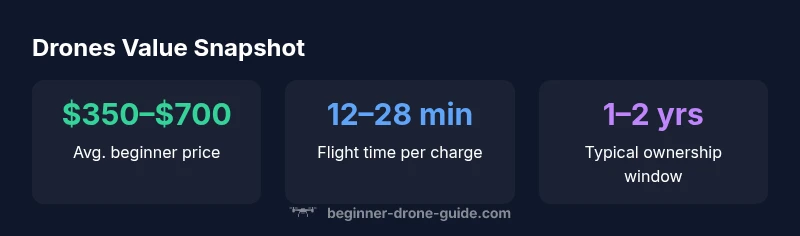
- Entry-level (roughly $300–$700): sufficient for learning basics, indoor practice, basic aerial photos, and small projects. Benefits include lower risk, lighter weight, and forgiving flight characteristics.
- Midrange ($700–$1,500): better cameras, longer flight times, more stable footage, and more advanced sensors. Suitable for enthusiastic hobbyists who want sharper images and more reliable data collection.
- Pro ($1,500+): premium cameras, longer range, robust safety features, and specialized capabilities (e.g., obstacle avoidance at high speed, thermal sensing). Often overkill for beginners unless you have a defined, revenue‑driven use case.
For most beginners, a well‑chosen midrange model offers the best balance between upfront cost and capability growth. It’s important to remember that higher price doesn’t automatically translate to proportionally higher value—it depends on your intended tasks and how you use the drone over time.
Real‑world testing: what pilots actually use and why
In real testing environments, beginner pilots tend to prioritize stability, ease of use, and reliable safety features over sheer megapixels. Common use cases include landscape photography practice, basic mapping of small spaces, and casual videography for social media. Pilots report that modular batteries and a good protective case significantly reduce downtime and transport friction, which improves consistent practice—key to turning a purchase into value.
The most valuable lessons come from hands‑on experience:
- Practice launches and landings in open spaces before narrow or cluttered environments.
- Use beginner flight modes to learn gradually, then graduate to manual controls as confidence builds.
- Maintain a simple log of flights to monitorly your progress and to justify future upgrades when needed.
These patterns align with beginner‑oriented testing protocols that emphasize safety, repeatability, and measurable skill development.
Safety, licensing, and total cost of ownership
Value is heavily influenced by safety and regulatory costs. Depending on your country, costs may include registration fees, training courses, and licensing requirements. Even with license considerations, most beginners recover value through improved efficiency and professional opportunities. A responsible approach also considers equipment upkeep: batteries have a finite lifespan, propellers wear, and sensors can become less accurate without routine calibration. Budgeting for accessories such as filters, cases, chargers, and spare parts is essential to prevent performance dips that could delay progress or increase risk.
From a risk‑management perspective, modern beginner drones often include features that reduce user error, such as return‑to‑home, geofencing, and obstacle detection. These safety tools protect both the pilot and bystanders, thereby reducing the likelihood of costly accidents. As noted by the Beginner Drone Guide team, allocating funds toward training and safety features is a prudent way to protect and maximize your investment.
Alternatives and tips to maximize value
If the budget is tight or you’re unsure about long‑term interest, consider lower‑risk strategies to test value:
- Rent or borrow a drone for a couple of weeks to validate use cases before buying.
- Buy a certified refurbished model with a warranty to reduce depreciation risk.
- Use second‑hand parts sparingly and stick to reputable sellers with return policies.
- Join local drone clubs or online communities to share knowledge and access to group discounts on batteries and accessories.
Practical tips to maximize value include setting goals for each flight, prioritizing equipment that reduces learning friction (e.g., stable gimbals for beginners, easy‑to‑use flight modes), and investing in a compact gear kit that keeps your drone ready for quick shoots or inspections. These steps help you use the drone more often, build skill, and justify ongoing costs.
How to choose the drone for your budget: a step‑by‑step decision guide
Use this decision framework to pick a drone that fits your budget and goals:
- Define your primary use cases: learning, photography, or light inspections.
- Set a fixed upfront budget and a separate line for accessories and licensing.
- Prioritize stability, safety features, and ease of use over the newest camera specs.
- Choose a drone with modular upgrades or a proven upgrade path.
- Evaluate support, firmware updates, and community resources—these reduce long‑term risks.
- Plan a phased purchase: start with a reliable entry level, reassess after 1–2 months, and upgrade only when needed.
By following these steps, beginners can maintain control over cost while building meaningful value from your drone over time.
Common myths about drone value debunked
There are several myths that often mislead new buyers. Myths to challenge include: bigger cameras always equal better value; more flight time guarantees more usefulness; and a premium price equates to better performance in all tasks. In reality, value is task‑driven. A modest camera that fits your use case can outperform a high‑end camera if it makes learning faster and reduces risk. Another common myth is that you must own the latest model to stay current; software updates and accessories can extend the life of older frames, and a well‑maintained drone can serve you well for years with proper care.
Benefits
- Low entry price points for true beginners
- Extensive community support and tutorials
- Clear upgrade paths as skills grow
- Wide availability of beginner‑friendly models with safety features
Weaknesses
- Total cost of ownership can exceed the initial price
- Ongoing maintenance and accessory costs add up
- Higher price models offer diminishing returns for casual users
Drones are worth the money for beginners with a clear use case and disciplined budgeting.
For hobbyists targeting learning, photos, or basic inspections, the upfront cost is often offset by practical tasks and time savings. If your interest is casual, consider rentals or a lower‑cost model to minimize risk. The Beginner Drone Guide team emphasizes planning and safety to maximize value.
Frequently Asked Questions
What is the best budget drone for beginners in 2026?
The best budget option depends on your goals. Prioritize stability, safety features, and ease of use over the latest camera specs. Look for models with reliable firmware updates and strong community support.
For beginners, choose a model known for stability and safety, not just camera quality. Look for good battery life and solid customer support.
Do I need a license to fly a personal drone?
Licensing requirements vary by country. In many places, recreational flyers must follow registration and safety rules; professional use often requires additional certifications. Check local aviation authorities for specifics.
Regulations differ by country, but most places require registration and adherence to safety rules for recreational flying.
How long does it take to learn to fly a drone?
Most beginners reach basic proficiency within 8–20 hours of practice, depending on frequency and environment. Regular, structured practice accelerates progress.
Plan for several weeks of steady practice to build reliable control and situational awareness.
What costs should I budget beyond the drone?
Budget for extra batteries, spare propellers, a charger, case, maintenance, prop guard, and insurance or registration where required. These add-ons support safe and reliable use.
Batteries and case are essential, and don’t forget licensing and insurance if required.
Is buying a used drone a good idea for beginners?
Used drones can save money but come with higher risk. Verify flight history, battery health, and overall condition; buy from reputable sellers with return policies.
Used drones can be fine if you check the battery health and history, but there’s more risk.
How can I maximize value from my drone?
Define concrete tasks, practice regularly, and upgrade only when needed. Invest in safety features and training to minimize accidents and shorten the learning curve.
Set goals, practice often, and upgrade only when your needs grow.
Quick Summary
- Define your use case before buying
- Start with an affordable model to learn basics
- Budget for accessories and licensing from day one
- Consider renting or refurbished options to test value
- Maximize return with real-world tasks