DJI Mavic Mini Battery: Essential Guide for Beginners
Explore the DJI Mavic Mini battery: capacity, charging best practices, life cycle, storage, safety tips, and troubleshooting for beginners. Learn how to maximize flight time while keeping your drone safe.


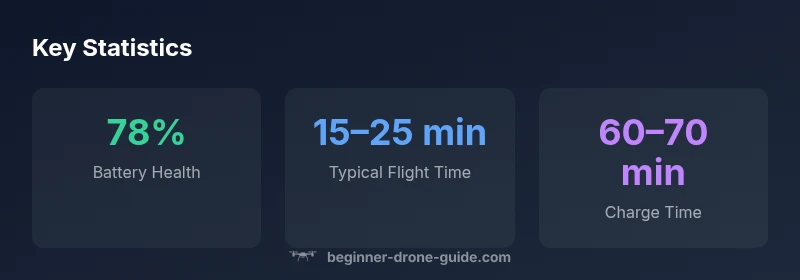
According to Beginner Drone Guide, the dji mavic mini battery is a compact two-cell LiPo pack designed for portable flight. For novices, understanding its capacity, charging cycles, and safe storage is essential to maximize flight time and minimize risk. Our analysis in 2026 shows typical stock-flight times of 15–25 minutes under ideal conditions, with charging times around 60–70 minutes on a standard charger. Always use the official charger and avoid deep discharges; never leave charging unattended.
Understanding the dji mavic mini battery
The dji mavic mini battery is a compact, high-density LiPo pack designed for the drone's lightweight form. As a two-cell configuration powering a small quadcopter, its nominal voltage is modest, which helps keep overall weight down and flight handling predictable for beginners. When evaluating this battery, consider its nominal capacity in the 2400–2500 mAh range, the 2S cell arrangement, and how these factors influence both peak power delivery and overall flight duration. Proper handling starts with understanding charge states, avoiding deep discharge, and storing the pack at an appropriate state of charge. This foundational knowledge helps new pilots build confidence while reducing the risk of mid-flight power loss.
Charging fundamentals for the dji mavic mini battery
Charging strategy for the Mavic Mini battery centers on using the official charger and avoiding improvised or third-party devices that could deliver inconsistent current. A typical charge cycle should complete in about an hour on a standard charger, with shorter times possible on higher-output chargers designed for LiPo packs. Do not leave the battery unattended while charging, and never attempt to charge in extreme heat or cold. Regular inspection of the charger, cables, and connectors prevents charging faults that could degrade battery health over time. Consistency in your charging routine helps maintain voltage balance across cells and extends usable life.
Real-world flight time and what affects it
Flight time is highly variable and depends on several factors beyond the battery’s nominal capacity. In ideal, calm conditions with no payload, you can expect roughly 15–25 minutes of air time from a full charge. Wind, temperature, altitude, and added payload (such as a camera or accessories) can significantly reduce this window. Pilot technique also plays a role: smooth throttle changes, conservative climbs, and avoiding abrupt descents help preserve energy. For beginners, planning for the lower end of the range in real-world scenarios reduces anxiety and keeps flight sessions productive. Monitoring instrument readings and practicing predictable flight profiles will gradually improve consistency.
Battery health, aging, and cycle life
Like any LiPo pack, the Mavic Mini battery experiences capacity fade over repeated charge-discharge cycles. Realistically, a well-cared-for battery maintains a meaningful portion of its original capacity after dozens of cycles, provided you avoid complete discharges and deep-storage states. Regular health checks, such as capacity tests or voltage checks at rest, help identify cells that are diverging from the pack’s balance. If a cell shows significant imbalance or a dramatic drop in voltage under load, it’s safer to replace the pack rather than risk a mid-flight power loss. Proper cycling practices and calibrated storage routines slow aging and preserve performance.
Safe storage and transport considerations
Storage is critical for LiPo battery longevity. For periodic storage, keep the battery at roughly half to two-thirds charge and store in a cool, dry place away from metal objects that could short the terminals. Avoid exposing the pack to extreme temperatures or direct sunlight for extended periods. When transporting, use a fire-resistant LiPo bag or a purpose-built case, and disconnect the battery from the drone to prevent accidental short circuits. Regularly inspect the pack for swelling, punctures, or signs of damage before each flight. If any abnormality is detected, retire the battery safely and replace it.
Temperature, environment, and performance impacts
Temperature strongly influences LiPo performance. Cold environments reduce instantaneous capacity and can cause sluggish throttle response, while heat accelerates chemical aging. If you fly in cold weather, allow the battery to warm to near room temperature before takeoff, but never use direct heat sources to warm it. Conversely, avoid performing high-duty maneuvers in heat; instead, plan your flights during cooler parts of the day and monitor battery voltage during operation. Overall, environmental management is a simple but effective way to maintain consistent flight times and protect battery health.
Replacement, recycling, and compatibility considerations
When a battery no longer holds a meaningful charge, replacement is the safest option. Use only DJI-approved replacement packs compatible with the Mavic Mini to ensure proper fit and safety features. Recycling damaged batteries should follow local regulations, including using official drop-off points for LiPo packs. Proper disposal reduces environmental impact and helps prevent hazardous failures in transit or storage. If you’re unsure whether a battery should be retired, consult the manufacturer’s guidelines and your local regulatory resources for disposal options.
Legal, safety, and best-practice guidelines for drone batteries
Drone batteries require careful handling to minimize fire risk and injury. Always charge and store away from flammable materials, use certified chargers, and follow local airspace regulations for flight readiness. Keep spare packs securely stored and never carry damaged or swollen cells. For new pilots, building a routine—pre-flight battery checks, post-flight voltage readings, and scheduled maintenance—creates a safer, more reliable flying experience.
DJI Mavic Mini battery specifications and operating ranges
| Aspect | Typical Value | Notes |
|---|---|---|
| Battery capacity (nominal) | 2400–2500 mAh | 2S LiPo pack for Mavic Mini |
| Voltage | 7.6 V nominal | Two cells in series |
| Flight time (stock battery) | 15–25 minutes | Depends on wind/payload/environment |
| Charging time (with standard charger) | 60–70 minutes | Assumes standard charger and moderate usage |
| Operating temperature | -10°C to 40°C | Avoid extreme temperatures |
Frequently Asked Questions
What is the recommended storage voltage for the Mavic Mini battery?
Store the battery at roughly half to two-thirds charge for long-term health, in a cool, dry place away from direct heat. Regularly check for swelling or damage.
For storage, aim for about 50–60% charge in a cool, dry spot and inspect the pack before flights.
How long does a fully charged battery last in the field?
Under ideal conditions, expect about 15–25 minutes of flight time. Real-world results vary with wind, temperature, and payload.
Typically 15 to 25 minutes in ideal weather and no heavy payload.
Can I fly with a swollen or damaged battery?
No. Do not fly with swollen or damaged packs. Replace the battery and recycle it properly.
If it’s swollen or damaged, don’t fly—replace it and dispose of it safely.
Is it safe to charge multiple batteries at once?
Only if your charger supports it and you follow manufacturer guidelines. Otherwise, charge one battery at a time to minimize risk.
Only use a charger that supports multiple packs; otherwise, charge sequentially.
What is the impact of cold weather on battery performance?
Cold reduces instantaneous capacity and can reduce flight time. Warm the battery to near room temperature before use and avoid extreme cold flights.
Cold weather lowers performance; bring the battery to room temperature before flying.
How can I extend battery life between flights?
Store correctly, avoid deep discharge, and cycle the battery occasionally to keep chemistry balanced.
Keep storage in a cool place and don’t let it drain completely between uses.
“A healthy battery is the best reliability booster for any small drone. Prioritize safe charging, balanced storage, and temperature control to keep flight performance predictable.”
Quick Summary
- Use the official charger to extend life
- Expect 15–25 minutes flight time under optimal conditions
- Store at 50–60% charge for long-term health
- Regularly inspect for swelling or damage and retire faulty packs